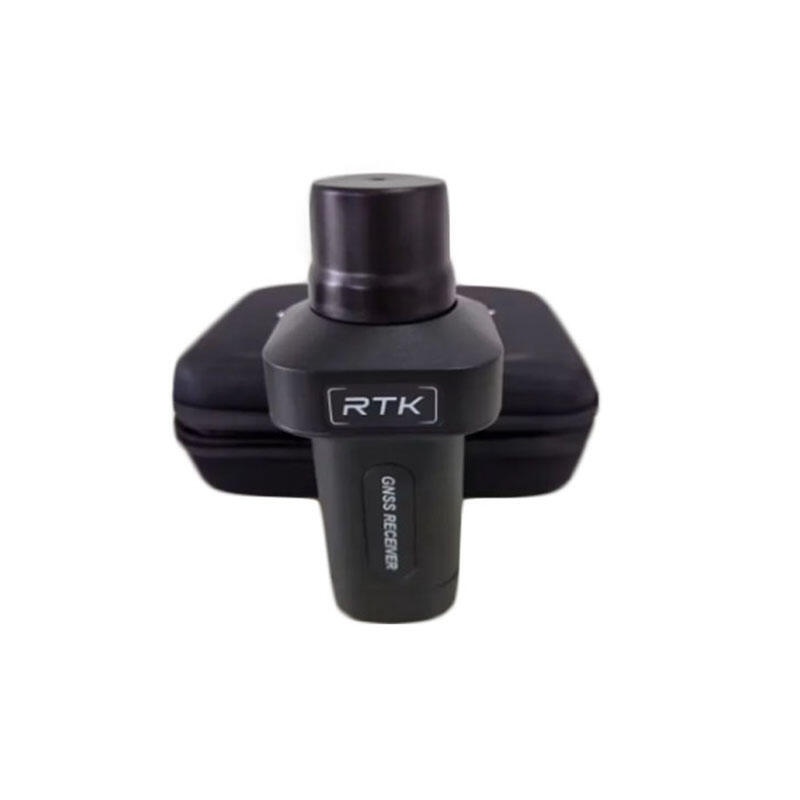
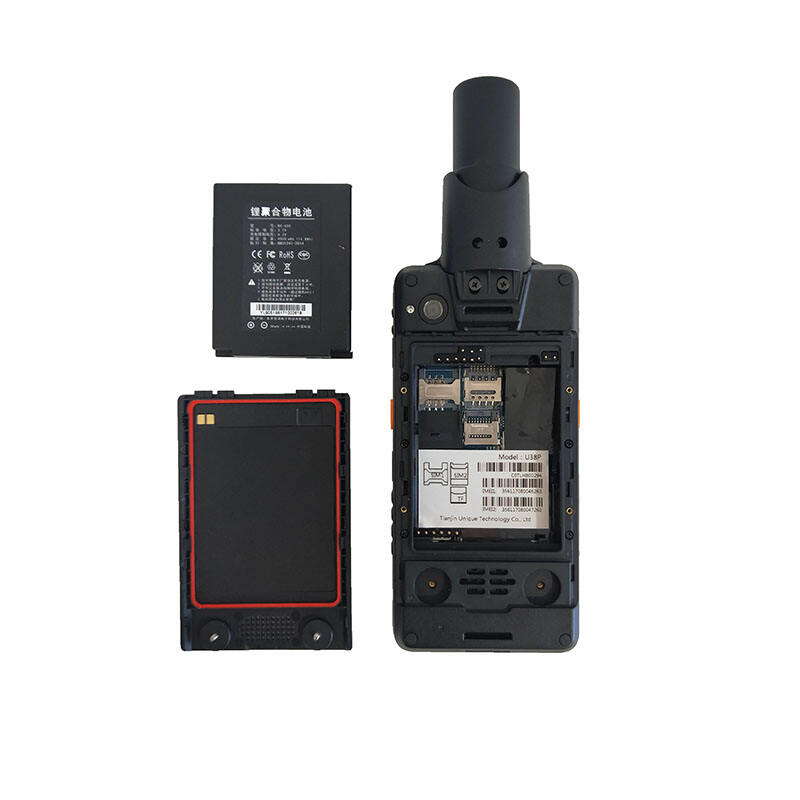
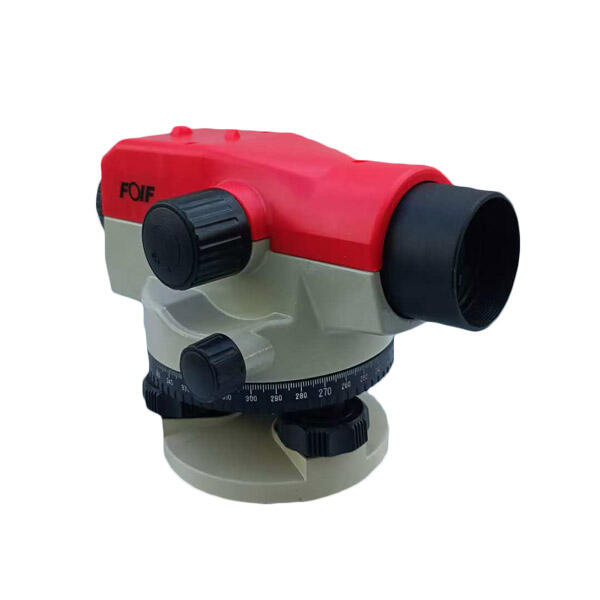
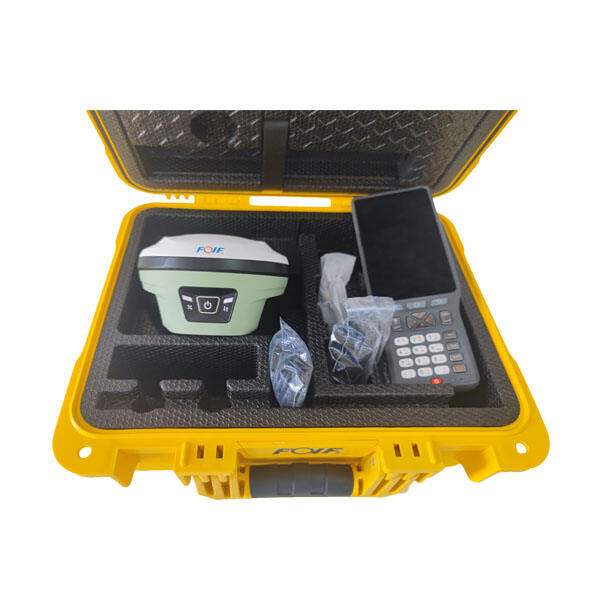
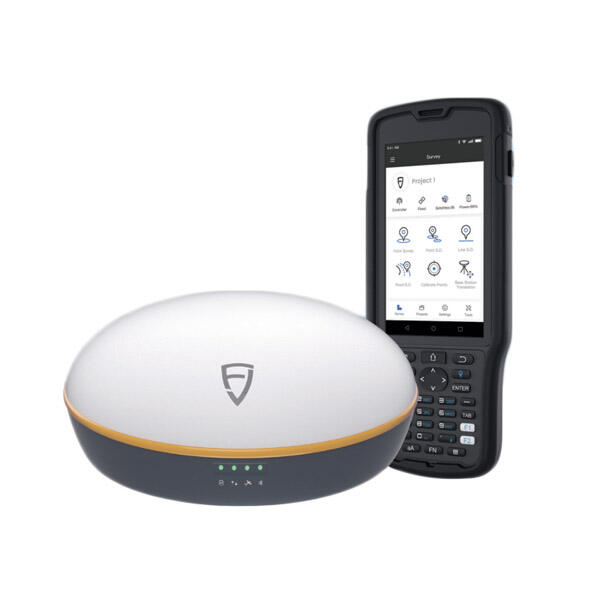
Professional Multiband GNSS Receiver - Enhanced Precision Positioning Technology

All Categories

multiband gnss receiver

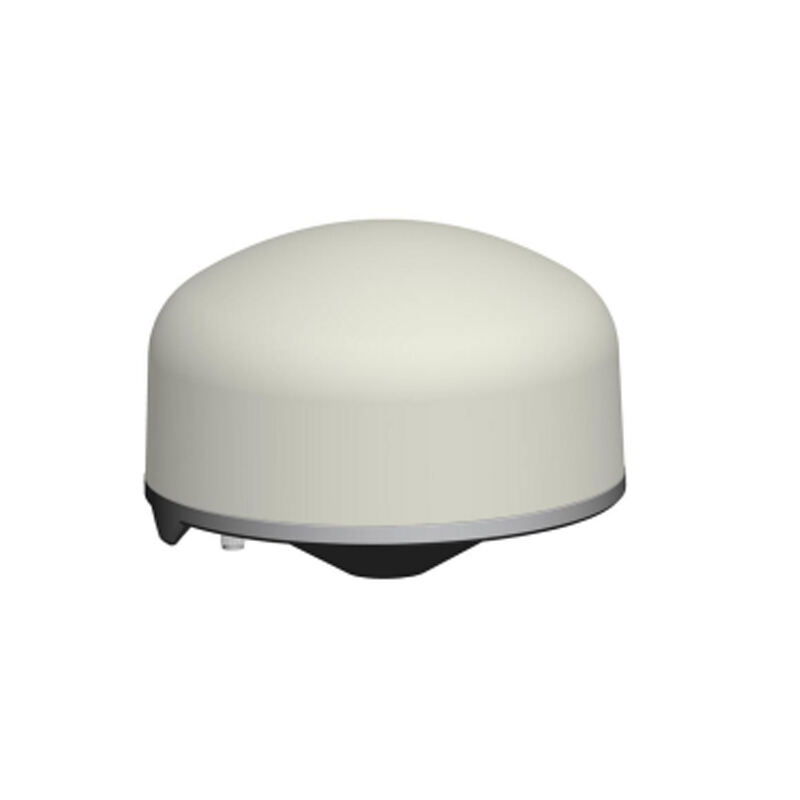
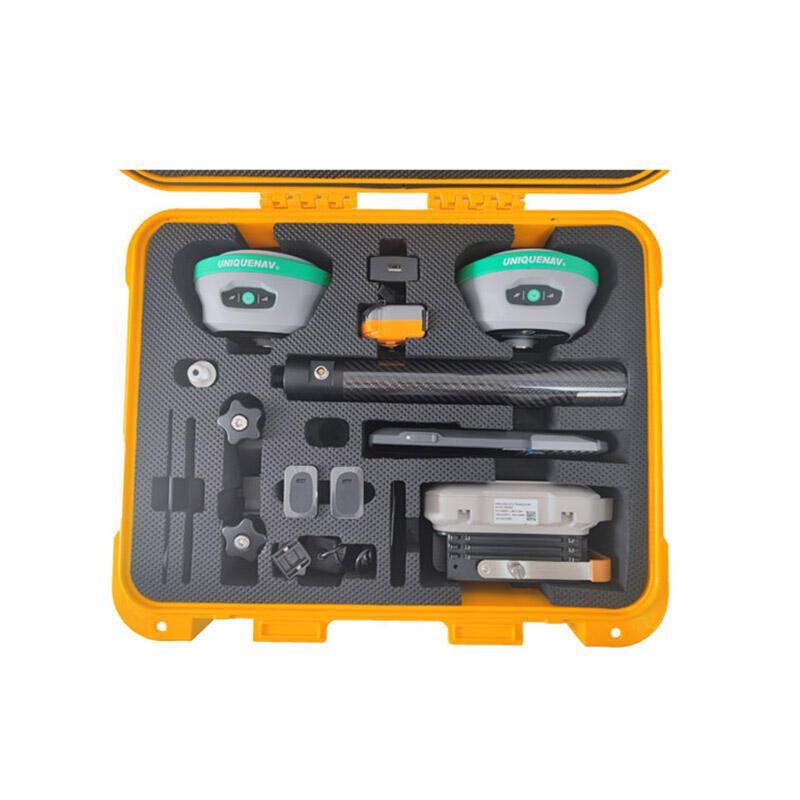
A multiband gnss receiver represents cutting-edge positioning technology that simultaneously tracks signals from multiple Global Navigation Satellite System frequencies. Unlike traditional single-frequency receivers, this advanced device captures signals across various frequency bands including L1, L2, and L5 for GPS, along with corresponding frequencies from GLONASS, Galileo, and BeiDou satellite constellations. The core functionality revolves around processing multiple signal streams to deliver unprecedented accuracy in position determination. The receiver employs sophisticated algorithms to analyze ionospheric delays, atmospheric interference, and signal propagation characteristics across different frequency bands. This multi-frequency approach enables the device to calculate and eliminate common error sources that typically plague single-band systems. The technological architecture incorporates high-sensitivity antennas capable of receiving weak satellite signals, advanced signal processing chips that handle complex calculations in real-time, and robust firmware that manages constellation switching seamlessly. Modern multiband gnss receiver units feature rapid satellite acquisition capabilities, often achieving first position fixes within seconds of activation. The device maintains continuous tracking of satellite signals even in challenging environments where signal strength varies significantly. Integration capabilities allow seamless connection with various external systems through multiple communication protocols including USB, Ethernet, and wireless connectivity options. Power management systems ensure extended operation periods while maintaining optimal performance levels. The receiver supports various coordinate systems and datum transformations, making it compatible with different regional mapping standards. Real-time kinematic processing capabilities enable centimeter-level accuracy when used with base station corrections. The device stores extensive satellite almanac data and maintains accurate time synchronization with atomic clock standards. Advanced filtering techniques eliminate multipath effects and signal reflections that can compromise positioning accuracy. These technological features combine to create a versatile positioning solution suitable for demanding professional applications.

New Product Releases

The multiband gnss receiver delivers exceptional positioning accuracy that surpasses conventional single-frequency devices by significant margins. Users experience consistent centimeter-level precision in optimal conditions, with typical accuracy improvements ranging from 50 to 90 percent compared to standard receivers. This enhanced precision stems from the device's ability to process multiple frequency bands simultaneously, effectively canceling out atmospheric disturbances that commonly affect satellite signals. The receiver maintains reliable performance across diverse environmental conditions, including urban canyons, dense forests, and challenging weather scenarios where traditional devices often struggle. Signal availability increases substantially as the multiband gnss receiver accesses multiple satellite constellations concurrently, providing users with more positioning sources and reducing dependency on any single navigation system. This redundancy ensures continuous operation even when individual satellites become temporarily unavailable due to orbital positioning or maintenance activities. The device significantly reduces time-to-first-fix, allowing users to obtain accurate positions much faster than conventional alternatives. Cold start times typically decrease by 40 to 60 percent, enabling immediate productivity in time-sensitive applications. Interference resistance capabilities protect against jamming attempts and electromagnetic disruption, maintaining operational integrity in challenging radio frequency environments. The receiver automatically adapts to changing signal conditions, switching between available frequencies and constellations to maintain optimal performance without user intervention. Battery life extends considerably due to efficient power management algorithms that optimize energy consumption while maintaining full functionality. The device supports various correction services including real-time kinematic and precise point positioning, enabling users to achieve survey-grade accuracy without additional complex equipment. Integration flexibility allows seamless incorporation into existing workflows and systems, reducing implementation costs and training requirements. Data logging capabilities ensure comprehensive record-keeping for quality assurance and regulatory compliance purposes. The multiband gnss receiver processes signals faster and more efficiently, reducing computational overhead and improving overall system responsiveness. Users benefit from enhanced reliability in mission-critical applications where positioning failure could result in significant consequences. The device provides consistent performance across global locations, adapting automatically to regional satellite constellation availability and signal characteristics without requiring manual configuration adjustments.

Latest News

Choosing the Best GNSS RTK System for Your Project

27

Nov

Choosing the Best GNSS RTK System for Your Project

When precision positioning is critical for your surveying, construction, or engineering project, selecting the right GNSS RTK system becomes a pivotal decision that can determine project success. Modern surveying demands centimeter-level accuracy, re...
View More
What Should Engineers Check Before Choosing an RTK System?

22

Dec

What Should Engineers Check Before Choosing an RTK System?

Selecting the right RTK system represents one of the most critical decisions in modern surveying and construction projects. Engineers must navigate through numerous technical specifications, accuracy requirements, and operational considerations to en...
View More
Why Is RTK GNSS Essential for High-Accuracy Industrial Positioning?

22

Dec

Why Is RTK GNSS Essential for High-Accuracy Industrial Positioning?

In today's rapidly evolving industrial landscape, precise positioning has become the cornerstone of operational excellence across multiple sectors. RTK GNSS technology represents a quantum leap forward in positioning accuracy, delivering centimeter-l...
View More
What Should Buyers Compare When Sourcing RTK GPS Equipment?

13

Jan

What Should Buyers Compare When Sourcing RTK GPS Equipment?

Modern construction, surveying, and agricultural operations increasingly rely on precise positioning technology to achieve millimeter-level accuracy in their work. When sourcing RTK GPS equipment, buyers face numerous technical specifications, featur...
View More

Get a Free Quote

Our representative will contact you soon.
Email
Name
Company Name
Message
0/1000

multiband gnss receiver

Superior Multi-Constellation Signal Processing

Superior Multi-Constellation Signal Processing

The multiband gnss receiver revolutionizes positioning accuracy through its advanced multi-constellation signal processing capabilities that simultaneously track satellites from GPS, GLONASS, Galileo, and BeiDou systems. This comprehensive approach provides users with access to over 100 satellites globally, compared to the limited 24-32 satellites available through single-system receivers. The device intelligently selects the optimal combination of satellite signals based on geometric positioning, signal strength, and atmospheric conditions to deliver consistent sub-meter accuracy in standard applications and centimeter-level precision when enhanced with correction services. The sophisticated signal processing algorithms continuously monitor signal quality across all tracked frequencies, automatically compensating for ionospheric delays, tropospheric effects, and clock synchronization errors that typically introduce positioning uncertainties. This real-time error correction capability ensures that users receive reliable positioning data even in challenging environments where atmospheric conditions fluctuate rapidly. The receiver's ability to process L1, L2, and L5 frequency bands simultaneously enables advanced techniques like ionosphere-free linear combinations, which virtually eliminate the largest source of satellite positioning errors. Users benefit from dramatically improved availability and reliability, as the system maintains accurate positioning even when individual satellites are obscured or experiencing technical issues. The multi-constellation approach provides enhanced coverage in polar regions and equatorial zones where single-system receivers often experience reduced satellite visibility. Professional applications requiring continuous positioning data, such as autonomous vehicle navigation, precision agriculture, and surveying operations, gain significant operational advantages from this comprehensive satellite tracking capability. The system's ability to seamlessly transition between different constellation signals ensures uninterrupted positioning services during satellite maintenance periods or temporary signal disruptions, providing users with unprecedented reliability for mission-critical applications.

Real-Time Atmospheric Correction Technology

Real-Time Atmospheric Correction Technology

The multiband gnss receiver incorporates revolutionary real-time atmospheric correction technology that addresses the primary source of positioning errors in satellite navigation systems. Atmospheric interference, particularly from the ionosphere and troposphere, can introduce positioning errors ranging from several meters to tens of meters in conventional single-frequency receivers. This advanced device eliminates these errors by simultaneously measuring signal delays across multiple frequency bands and applying sophisticated mathematical models to calculate precise atmospheric corrections in real-time. The ionosphere affects satellite signals differently depending on frequency, allowing the multiband gnss receiver to determine exact delay characteristics by comparing signal arrival times across L1, L2, and L5 bands. This dual-frequency measurement technique enables the device to calculate ionosphere-free solutions that maintain accuracy even during periods of high solar activity when atmospheric disturbances peak. Tropospheric correction algorithms account for weather-related signal delays caused by water vapor and temperature variations in the lower atmosphere. The receiver continuously updates these corrections based on local atmospheric conditions, ensuring consistent accuracy throughout varying weather patterns. Users operating in coastal regions, mountainous terrain, or areas with rapidly changing weather conditions benefit significantly from this adaptive correction capability. The technology proves particularly valuable for precision agriculture applications where consistent accuracy across large fields is essential for effective crop management and automated machinery operation. Survey professionals achieve professional-grade results without requiring expensive base station infrastructure, as the receiver's atmospheric correction capabilities often eliminate the need for differential correction services. The system maintains correction accuracy across extended operating periods, automatically recalibrating atmospheric models based on observed signal characteristics and environmental sensors. Emergency response teams and search and rescue operations gain critical advantages from reliable positioning that remains accurate regardless of atmospheric conditions or geographic location. The real-time processing capability ensures that corrections are applied immediately without post-processing requirements, enabling immediate decision-making based on accurate positioning data.
Advanced Signal Integrity and Anti-Jamming Protection

Advanced Signal Integrity and Anti-Jamming Protection

The multiband gnss receiver features comprehensive signal integrity monitoring and anti-jamming protection systems that ensure reliable operation in challenging electromagnetic environments. Modern applications often operate in areas with significant radio frequency interference from communication systems, industrial equipment, and potential intentional jamming sources that can compromise traditional receiver performance. This advanced device employs multiple defense mechanisms including adaptive antenna nulling, signal authentication protocols, and intelligent frequency switching to maintain positioning accuracy even under adverse conditions. The receiver continuously monitors signal quality indicators across all tracked frequencies, instantly detecting anomalies that might indicate interference or spoofing attempts. When interference is detected on specific frequencies, the system automatically shifts to alternative frequency bands or satellite constellations while maintaining continuous positioning output. Advanced signal processing algorithms distinguish between authentic satellite signals and potential interference sources by analyzing signal characteristics, timing patterns, and geometric consistency across multiple satellites. This multi-layered approach provides users with confidence in positioning data integrity, particularly crucial for safety-critical applications like aviation navigation, maritime operations, and autonomous vehicle systems. The device incorporates cryptographic signal authentication capabilities that verify the authenticity of received satellite signals, protecting against sophisticated spoofing attacks that attempt to provide false positioning information. Military-grade encryption support ensures secure operation in sensitive applications where positioning data confidentiality is essential. The anti-jamming technology adapts dynamically to changing interference patterns, learning from environmental conditions to optimize protection strategies automatically. Users operating near airports, military installations, or industrial facilities benefit from consistent positioning accuracy despite high levels of electromagnetic interference typically present in these environments. The system maintains detailed logs of interference events and signal quality metrics, enabling post-mission analysis and helping users identify problematic locations or times when interference is most likely to occur. Emergency services and critical infrastructure operations gain enhanced reliability through these robust protection mechanisms that ensure continuous positioning availability even during coordinated jamming attempts or equipment failures.

Get a Free Quote

Our representative will contact you soon.
Email
Name
Company Name
Message
0/1000