
 EN
EN
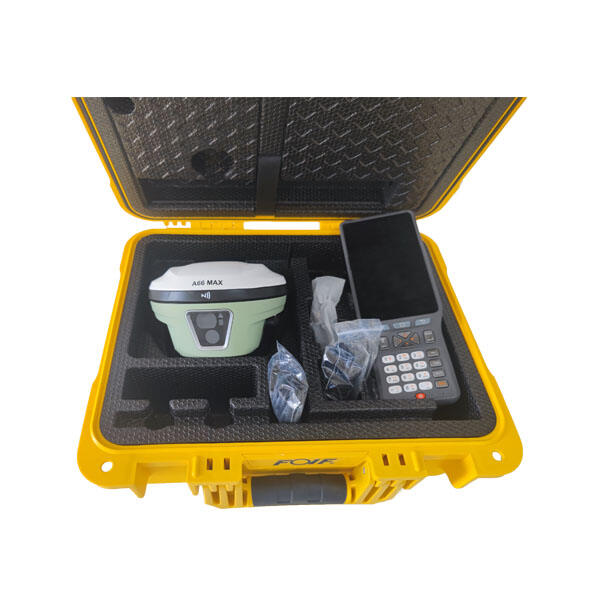
In today's rapidly evolving industrial landscape, precise positioning has become the cornerstone of operational excellence across multiple sectors. RTK GNSS technology represents a quantum leap forward in positioning accuracy, delivering centimeter-level precision that traditional GPS systems simply cannot match. From construction and mining to agriculture and surveying, industries worldwide are increasingly recognizing that RTK GNSS is not just an enhancement but an essential tool for maintaining competitive advantage and ensuring operational safety.
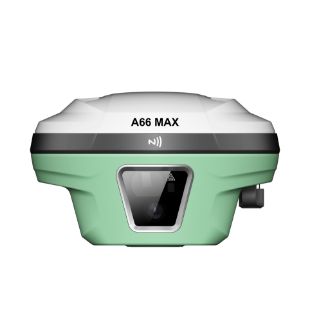
The fundamental principle behind RTK GNSS lies in its ability to correct satellite positioning errors in real-time through a network of reference stations. Unlike standard GPS systems that provide accuracy within several meters, RTK GNSS technology achieves positioning accuracy within 1-2 centimeters, making it indispensable for applications requiring extreme precision. This remarkable accuracy improvement stems from the system's sophisticated error correction mechanisms that account for atmospheric delays, satellite orbit variations, and other factors that typically degrade positioning accuracy.
Understanding RTK GNSS Technology Fundamentals
Real-Time Kinematic Positioning Principles
RTK GNSS operates on the principle of differential positioning, where a base station with a known precise location continuously calculates positioning errors by comparing its known position with satellite-derived coordinates. These error corrections are then transmitted to mobile receivers in real-time, enabling them to achieve centimeter-level accuracy. The system utilizes carrier phase measurements rather than simple code-based positioning, which significantly enhances accuracy but requires continuous communication between base and rover units.
The carrier phase measurement technique employed by RTK GNSS systems tracks the phase of satellite signals with extraordinary precision. By measuring the phase difference between signals received at the base station and rover, the system can determine relative positions with remarkable accuracy. This method requires resolving integer ambiguities in the carrier phase measurements, a process that typically takes seconds to minutes depending on conditions and receiver quality.
Network RTK Architecture and Benefits
Modern RTK GNSS implementations often utilize network RTK architecture, where multiple reference stations work together to provide corrections over wide geographic areas. This approach eliminates the need for operators to establish their own base stations, significantly reducing setup time and operational complexity. Network RTK systems can maintain high accuracy over distances of 50 kilometers or more from reference stations, making them highly practical for large-scale industrial operations.
The network approach also provides enhanced reliability through redundancy and improved correction quality through spatial interpolation. When multiple reference stations contribute to error modeling, the resulting corrections account for regional atmospheric variations and provide more robust positioning solutions. This distributed architecture has made RTK GNSS technology more accessible and cost-effective for industrial applications.
Critical Industrial Applications Requiring High-Precision Positioning
Construction and Infrastructure Development
The construction industry has embraced RTK GNSS technology as an essential tool for precise site surveying, machine control, and quality assurance. Modern earthmoving equipment integrated with RTK GNSS systems can achieve grade accuracy within centimeters, dramatically reducing the need for manual surveying and rework. This precision translates directly into cost savings through reduced material waste, faster project completion, and improved construction quality.
Infrastructure projects such as highways, bridges, and utilities require positioning accuracy that only RTK GNSS can provide. Traditional surveying methods are time-consuming and often inadequate for complex projects requiring continuous monitoring and adjustment. RTK GNSS enables real-time monitoring of structural movements, precise placement of utilities, and accurate as-built documentation that meets stringent regulatory requirements.
Precision Agriculture and Land Management
Agriculture has undergone a technological revolution with the integration of RTK GNSS systems in precision farming applications. Autonomous tractors and harvesting equipment rely on centimeter-level positioning accuracy to optimize planting patterns, fertilizer application, and crop harvesting. This precision reduces input costs, maximizes yield potential, and minimizes environmental impact through targeted application of chemicals and nutrients.
Variable rate application systems powered by RTK GNSS technology enable farmers to apply inputs precisely where needed based on soil conditions and crop requirements. This targeted approach can reduce fertilizer usage by 10-15% while maintaining or improving crop yields. The technology also enables precise field mapping for drainage systems, irrigation planning, and crop rotation strategies that optimize long-term soil health and productivity.
Economic Impact and Return on Investment
Productivity Gains Through Enhanced Accuracy
The implementation of RTK GNSS technology delivers measurable productivity improvements across industrial applications. In construction, machine control systems utilizing RTK GNSS can complete grading operations 30-50% faster than conventional methods while achieving superior accuracy. This efficiency gain stems from reduced rework, elimination of traditional staking procedures, and the ability to work effectively in low-visibility conditions.
Mining operations benefit significantly from RTK GNSS technology through improved fleet management, precise ore grade mapping, and optimized extraction planning. The technology enables real-time tracking of equipment location and productivity, facilitating better resource allocation and maintenance scheduling. These operational improvements typically generate returns on investment within 12-18 months of implementation.
Cost Reduction Through Error Elimination
Traditional positioning methods are prone to human error and environmental factors that can result in costly mistakes. RTK GNSS technology virtually eliminates positioning errors, reducing rework costs and project delays that often plague industrial operations. In surveying applications, the technology can reduce field time by 60-70% while providing more comprehensive and accurate data than traditional methods.
The automation capabilities enabled by RTK GNSS also reduce labor costs and safety risks associated with manual positioning tasks. Workers no longer need to operate in hazardous areas for surveying or equipment guidance, and the reduced need for manual intervention minimizes the potential for human error. These safety and efficiency benefits contribute significantly to the overall economic value proposition of RTK GNSS technology.
Technical Considerations for Industrial Implementation
System Integration and Compatibility
Successful implementation of RTK GNSS technology requires careful consideration of system integration requirements and compatibility with existing equipment. Modern RTK GNSS receivers must interface seamlessly with industrial control systems, data management platforms, and machinery automation systems. This integration capability is crucial for realizing the full potential of precision positioning in industrial workflows.
Compatibility considerations extend beyond hardware interfaces to include data formats, communication protocols, and software integration requirements. RTK GNSS systems must be capable of outputting positioning data in formats compatible with existing industrial software platforms while maintaining real-time performance requirements. The selection of RTK GNSS equipment should prioritize open standards and flexible integration capabilities to ensure long-term compatibility and system evolution.
Environmental Robustness and Reliability
Industrial environments present unique challenges for RTK GNSS systems, including electromagnetic interference, extreme temperatures, vibration, and exposure to dust and moisture. Professional-grade RTK GNSS equipment must meet stringent environmental specifications to ensure reliable operation under these demanding conditions. This includes ruggedized housing, temperature-compensated oscillators, and advanced filtering to maintain signal quality in challenging environments.
Signal availability and continuity are critical factors in industrial RTK GNSS applications where interruptions can halt operations or compromise safety. Modern systems incorporate multiple GNSS constellations, advanced antenna designs, and sophisticated signal processing algorithms to maximize availability and maintain accuracy even in challenging signal environments. Backup positioning systems and integrity monitoring capabilities provide additional layers of reliability for mission-critical applications.
Future Developments and Emerging Trends
Integration with Emerging Technologies
The future of RTK GNSS technology lies in its integration with emerging technologies such as artificial intelligence, machine learning, and Internet of Things platforms. These integrations promise to enhance positioning accuracy further while providing predictive capabilities and automated decision-making that will revolutionize industrial operations. AI-enhanced RTK GNSS systems can learn from environmental conditions and operational patterns to optimize performance and predict potential issues before they impact operations.
The convergence of RTK GNSS with 5G communications technology will enable new applications requiring ultra-low latency and high-bandwidth data transmission. This combination will support more sophisticated real-time applications, enhanced remote monitoring capabilities, and improved coordination between multiple autonomous systems operating in the same area.
Advanced Signal Processing and Multi-Constellation Support
Next-generation RTK GNSS systems are incorporating advanced signal processing techniques and expanded constellation support to improve performance and reliability. The integration of signals from GPS, GLONASS, Galileo, and BeiDou constellations provides more satellites for positioning calculations, improving accuracy and availability, particularly in challenging environments with limited sky visibility.
Advanced signal processing algorithms are being developed to better handle multipath effects, interference, and atmospheric variations that can degrade RTK GNSS performance. These improvements will extend the operational envelope of RTK GNSS technology to previously challenging environments such as urban canyons, dense forests, and indoor-outdoor transition zones.
FAQ
What is the typical accuracy range of RTK GNSS systems
RTK GNSS systems typically achieve horizontal accuracy of 1-2 centimeters and vertical accuracy of 2-3 centimeters under optimal conditions. This represents a significant improvement over standard GPS systems, which typically provide accuracy within 3-5 meters. The actual accuracy depends on factors such as satellite geometry, atmospheric conditions, and distance from reference stations.
How does RTK GNSS perform in challenging environments
RTK GNSS performance can be affected by obstructions such as buildings, trees, or terrain features that block satellite signals. However, modern systems incorporate multiple GNSS constellations and advanced signal processing to maintain performance in challenging conditions. Professional-grade equipment often includes features such as tilt compensation and inertial navigation integration to maintain accuracy during temporary signal interruptions.
What are the ongoing operational costs of RTK GNSS systems
Operational costs for RTK GNSS systems include subscription fees for correction services, typically ranging from $100-500 per month depending on coverage area and service level. Additional costs may include cellular data plans for communication, equipment maintenance, and software licensing. Many users find that the productivity gains and error reduction achieved through RTK GNSS technology more than offset these operational expenses.
How quickly can RTK GNSS systems achieve centimeter-level accuracy
Modern RTK GNSS systems typically achieve centimeter-level accuracy within 10-30 seconds of initialization, depending on conditions and receiver quality. This initialization time, known as time-to-fix, has been significantly reduced in recent years through improved algorithms and faster processors. Once initialized, the system maintains continuous centimeter-level accuracy as long as adequate satellite signals are available.