
 EN
EN
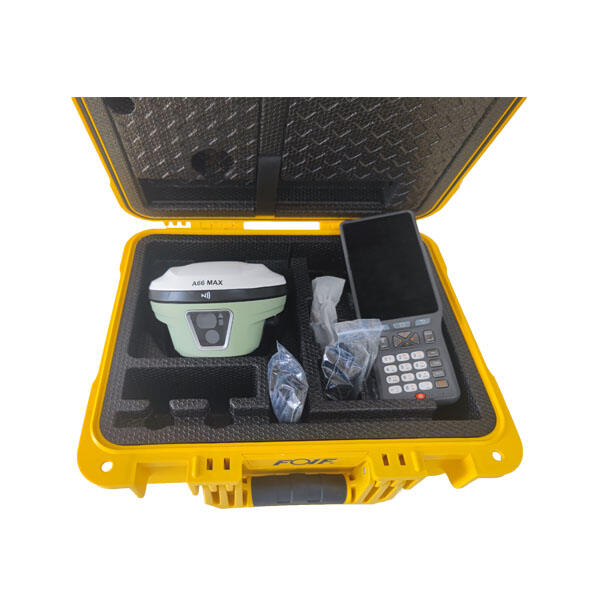
Modern mapping teams face unprecedented demands for precision and speed in their surveying operations. The evolution of positioning technologies has revolutionized how professionals approach field data collection, with RTK for real-time positioning emerging as the gold standard for accuracy-critical applications. This advanced GNSS correction technique delivers centimeter-level precision instantaneously, eliminating the traditional trade-off between speed and accuracy that has long challenged surveying professionals.
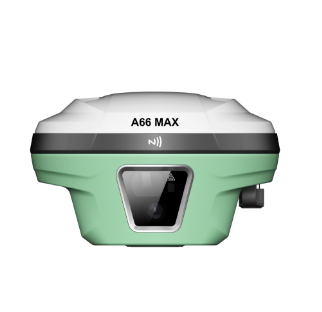
The adoption of RTK for real-time positioning has transformed workflow efficiency across multiple industries, from construction and engineering to environmental monitoring and precision agriculture. Unlike traditional post-processing methods that require hours or days to achieve high accuracy, RTK systems provide immediate feedback, enabling teams to make critical decisions in the field. This real-time capability has become essential for projects with tight deadlines and dynamic working conditions where traditional surveying methods would create bottlenecks.
Fundamentals of RTK Technology in Modern Surveying
Core Components and Signal Processing Architecture
RTK for real-time positioning operates through a sophisticated network of base stations and rover units that continuously exchange carrier phase observations. The base station, positioned at a precisely known coordinate, transmits correction data to mobile receivers, enabling them to resolve ambiguities in satellite signals with remarkable speed. This differential correction process eliminates atmospheric delays, satellite orbit errors, and clock discrepancies that typically degrade standalone GPS accuracy.
The mathematical foundation of RTK relies on analyzing carrier wave phases rather than just signal travel times, providing measurement precision at the millimeter level. Modern RTK systems process multiple GNSS constellation signals simultaneously, including GPS, GLONASS, Galileo, and BeiDou, creating redundancy that enhances reliability and reduces initialization times. This multi-constellation approach ensures consistent performance even in challenging environments with limited sky visibility.
Real-Time Communication Protocols and Data Transmission
Effective RTK for real-time positioning depends on robust communication links between base stations and field units. Radio modems, cellular networks, and internet-based correction services facilitate instantaneous data transmission, with latency requirements typically under one second for optimal performance. The RTCM (Radio Technical Commission for Maritime Services) protocol standardizes correction message formats, ensuring compatibility across different manufacturer systems.
Network RTK solutions have expanded coverage capabilities by connecting multiple reference stations across regional areas. These networks interpolate correction data for any location within their coverage zone, eliminating the need for dedicated base station deployment on every project site. This infrastructure approach has made RTK technology more accessible to smaller surveying operations while maintaining the precision standards required for professional mapping applications.
Precision Advantages Over Traditional Positioning Methods
Accuracy Specifications and Performance Metrics
RTK for real-time positioning consistently delivers horizontal accuracy within 1-3 centimeters and vertical accuracy within 2-5 centimeters under optimal conditions. This precision level represents a significant improvement over conventional GPS methods, which typically achieve meter-level accuracy without differential correction. The deterministic nature of RTK accuracy allows mapping teams to confidently stake out construction points, establish property boundaries, and create detailed topographic surveys without the uncertainty associated with autonomous positioning.
Repeatability studies demonstrate that RTK measurements maintain consistent accuracy across multiple observation sessions, providing reliable results for monitoring applications and control surveys. The technology's ability to achieve specified precision immediately upon initialization sets it apart from static surveying methods that require extended occupation times. This consistency enables mapping professionals to establish confidence intervals for their measurements and meet stringent accuracy requirements for regulatory compliance.
Temporal Efficiency and Productivity Gains
The real-time nature of RTK positioning eliminates post-processing workflows that traditionally consumed significant project time. Mapping teams using RTK for real-time positioning can complete field surveys in a fraction of the time required for static methods, often reducing multi-day projects to single-day operations. This efficiency gain translates directly to cost savings through reduced equipment rental periods, decreased labor hours, and faster project deliverables.
Field verification capabilities allow surveyors to identify and resolve data collection issues immediately rather than discovering problems during office processing. This immediate feedback loop prevents the costly re-mobilization often required when post-processed data reveals inadequate coverage or measurement errors. The ability to generate preliminary results on-site enhances client confidence and enables real-time project decision-making.
Field Implementation Strategies and Best Practices
Equipment Configuration and Calibration Procedures
Successful deployment of RTK for real-time positioning requires careful attention to equipment setup and environmental factors. Base station placement demands consideration of sky visibility, multipath interference sources, and communication range limitations. Experienced mapping teams establish base stations on stable surfaces with unobstructed horizons, typically achieving optimal performance when satellite elevation angles exceed 15 degrees above the horizon.
Rover unit configuration involves proper antenna leveling, height measurements, and communication parameter settings. Modern RTK for real-time positioning systems incorporate automatic calibration routines that streamline initialization procedures while maintaining accuracy standards. Quality control protocols include redundant measurements at check points and systematic monitoring of solution quality indicators throughout data collection sessions.
Environmental Considerations and Mitigation Strategies
Physical obstacles and atmospheric conditions significantly impact RTK performance, requiring mapping teams to develop adaptive strategies for challenging environments. Dense vegetation, urban canyons, and metallic structures can degrade satellite signal quality, necessitating alternative positioning techniques or extended observation periods. Professional surveyors recognize these limitations and plan field operations accordingly, often combining RTK measurements with total station observations in problematic areas.
Weather conditions affect RTK for real-time positioning through atmospheric disturbances and communication system reliability. Ionospheric activity during geomagnetic storms can temporarily reduce positioning accuracy, while heavy precipitation may disrupt radio communications. Experienced teams monitor space weather forecasts and maintain backup communication methods to ensure project continuity during adverse conditions.
Quality Control and Accuracy Validation Methods
Real-Time Quality Indicators and Solution Monitoring
RTK receivers provide continuous quality metrics that enable mapping teams to assess measurement reliability in real-time. Solution type indicators distinguish between fixed, float, and autonomous positioning modes, with fixed solutions providing the highest accuracy for surveying applications. Position dilution of precision (PDOP) values quantify geometric satellite configuration quality, helping operators identify optimal measurement windows.
Advanced RTK for real-time positioning systems incorporate statistical quality control algorithms that flag measurements exceeding predetermined accuracy thresholds. These automated checks prevent the accumulation of systematic errors and maintain consistent data quality throughout extended survey sessions. Experienced operators interpret quality indicators in conjunction with environmental observations to make informed decisions about measurement acceptance or rejection.
Independent Verification and Calibration Procedures
Professional mapping teams implement systematic verification protocols to validate RTK positioning accuracy against established control networks. Comparison measurements at published survey monuments provide confidence checks for system calibration and atmospheric correction effectiveness. Regular verification ensures that RTK systems maintain specified accuracy levels and detect potential equipment malfunctions or systematic biases.
Redundant measurement strategies involve collecting multiple observations at critical points using different satellite configurations or observation times. This approach provides statistical confidence in positioning results and enables detection of measurement outliers that could compromise survey accuracy. Post-mission analysis compares RTK measurements with independent positioning methods to quantify achieved accuracy and identify areas for operational improvement.
Integration with Modern Mapping Workflows
Data Collection Software and Mobile Computing Platforms
Contemporary RTK for real-time positioning systems integrate seamlessly with field data collection software running on rugged mobile devices. These applications provide intuitive interfaces for survey point management, attribute data entry, and real-time mapping visualization. Cloud-based data synchronization enables immediate sharing of survey results with office personnel and project stakeholders, facilitating collaborative decision-making processes.
Modern mapping software incorporates intelligent feature coding systems that streamline data collection and ensure consistent attribute assignments. Automated quality control routines validate measurement accuracy and completeness before data upload to project databases. This integration eliminates manual data transfer steps that historically introduced errors and delays in survey processing workflows.
Project Management and Deliverable Generation
RTK positioning data flows directly into computer-aided design and geographic information system software, enabling immediate generation of preliminary mapping products. Automated coordinate transformation routines convert field measurements into project coordinate systems without manual intervention. This streamlined workflow reduces processing time and minimizes transcription errors that could compromise survey accuracy.
Real-time progress monitoring capabilities allow project managers to track survey completion percentages and identify potential scheduling issues before they impact project deadlines. RTK for real-time positioning enables adaptive survey strategies that respond to field conditions and client requirements without compromising data quality standards. This flexibility has become increasingly valuable in dynamic construction environments where design modifications occur frequently.
Cost-Benefit Analysis for Mapping Operations
Equipment Investment and Operational Economics
The initial capital investment for RTK for real-time positioning equipment has decreased significantly as technology maturity and competition have driven down unit costs. Modern systems offer improved reliability and extended service life, resulting in favorable return-on-investment calculations for surveying businesses. Leasing options and subscription-based correction services have made RTK technology accessible to smaller firms without substantial upfront expenditures.
Operational cost analysis reveals significant savings in labor expenses due to increased field productivity and reduced post-processing requirements. Travel cost reductions result from faster project completion and decreased re-mobilization needs for data collection errors. Equipment rental savings accumulate when projects complete ahead of schedule, freeing resources for additional revenue-generating activities.
Competitive Advantages and Market Positioning
Surveying firms utilizing RTK for real-time positioning gain competitive advantages through faster project delivery and enhanced accuracy capabilities. Client satisfaction increases when preliminary results are available immediately upon survey completion, enabling accelerated design and construction schedules. This responsiveness often translates to premium pricing opportunities and repeat business from satisfied clients.
Professional reputation benefits emerge from consistent delivery of high-accuracy surveys within compressed timeframes. RTK capability enables firms to pursue specialized projects requiring immediate positioning feedback, such as machine guidance applications and real-time construction layout. These niche markets often provide higher profit margins compared to traditional surveying services.
Future Developments and Technology Trends
Emerging Correction Service Technologies
Satellite-based augmentation systems are expanding RTK for real-time positioning coverage to previously underserved regions while maintaining accuracy standards. These space-based correction services eliminate terrestrial infrastructure requirements, providing global coverage for mapping applications in remote locations. Integration with existing RTK networks creates seamless transition capabilities between different correction sources.
Precise Point Positioning (PPP) techniques are converging with RTK methods to create hybrid systems that combine rapid initialization with global coverage. These developments promise to eliminate the traditional limitations of RTK baseline distances while maintaining centimeter-level accuracy. Artificial intelligence algorithms optimize correction parameters in real-time, adapting to local atmospheric conditions and satellite geometry variations.
Hardware Miniaturization and Integration Trends
Continued miniaturization of GNSS receivers enables integration of RTK for real-time positioning into smaller, more portable devices suitable for diverse mapping applications. Smartphone integration developments are democratizing access to high-precision positioning technology for specialized surveying tasks. These compact systems maintain professional accuracy standards while offering improved mobility and reduced equipment costs.
Multi-sensor integration combines RTK positioning with inertial measurement units, cameras, and LiDAR systems to create comprehensive mobile mapping platforms. These integrated solutions provide redundant positioning capabilities and enhanced data products that support diverse client requirements. Advanced sensor fusion algorithms optimize measurement accuracy by leveraging complementary strengths of different positioning technologies.
FAQ
What accuracy levels can mapping teams expect from RTK positioning systems?
RTK for real-time positioning typically achieves horizontal accuracy within 1-3 centimeters and vertical accuracy within 2-5 centimeters under optimal conditions. These accuracy levels depend on factors such as satellite geometry, atmospheric conditions, baseline distance, and equipment quality. Professional-grade RTK systems consistently meet these specifications when properly configured and operated according to manufacturer guidelines.
How does RTK compare to post-processed kinematic positioning methods?
RTK for real-time positioning provides equivalent accuracy to post-processed methods while delivering results immediately in the field. Post-processed kinematic (PPK) surveys require data download and office processing time, typically taking hours or days to complete. RTK enables immediate quality assessment and field verification, preventing costly re-mobilization when data collection issues are discovered during post-processing.
What communication requirements are necessary for effective RTK operations?
Effective RTK for real-time positioning requires reliable data transmission between base stations and rover units with latency under one second. Communication options include radio modems for local operations, cellular networks for regional coverage, or internet-based correction services for wide-area applications. Backup communication methods ensure operational continuity when primary links experience interference or coverage limitations.
Can RTK systems work effectively in challenging environments like dense forests or urban areas?
RTK for real-time positioning performance degrades in environments with limited satellite visibility or significant multipath interference. Dense vegetation, tall buildings, and metallic structures can disrupt satellite signals and communication links. Experienced mapping teams employ adaptive strategies such as extended observation times, alternative positioning methods, or hybrid techniques combining RTK with total station measurements in problematic areas.
Table of Contents
- Fundamentals of RTK Technology in Modern Surveying
- Precision Advantages Over Traditional Positioning Methods
- Field Implementation Strategies and Best Practices
- Quality Control and Accuracy Validation Methods
- Integration with Modern Mapping Workflows
- Cost-Benefit Analysis for Mapping Operations
- Future Developments and Technology Trends
-
FAQ
- What accuracy levels can mapping teams expect from RTK positioning systems?
- How does RTK compare to post-processed kinematic positioning methods?
- What communication requirements are necessary for effective RTK operations?
- Can RTK systems work effectively in challenging environments like dense forests or urban areas?