RTK Accuracy: Centimeter-Precision Positioning Technology for Professional Applications

All Categories

accuracy of rtk

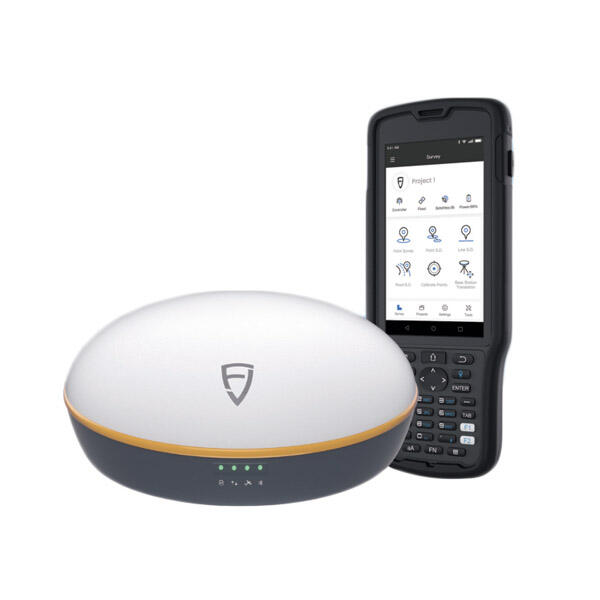
Real-Time Kinematic (RTK) positioning represents a revolutionary advancement in satellite navigation technology, delivering unprecedented levels of location precision that transforms how industries approach surveying, mapping, and positioning tasks. The accuracy of RTK systems typically achieves centimeter-level precision, often reaching accuracies of 1-2 centimeters horizontally and 2-3 centimeters vertically under optimal conditions. This remarkable precision stems from RTK's sophisticated approach to correcting satellite signal errors in real-time, making it an indispensable tool for applications requiring exact positioning data. RTK technology operates by establishing a base station at a known location that continuously receives satellite signals and calculates positioning corrections. These corrections are then transmitted to mobile receivers in the field, enabling them to eliminate common sources of error such as atmospheric interference, satellite clock drift, and orbital uncertainties. The accuracy of RTK depends heavily on maintaining radio communication between the base station and rover units, typically effective within a 10-kilometer radius. Modern RTK systems utilize multiple satellite constellations including GPS, GLONASS, Galileo, and BeiDou, significantly enhancing reliability and availability. The technological foundation of RTK accuracy relies on carrier phase measurements rather than code-based positioning, allowing for precise determination of the integer number of carrier cycles between satellites and receivers. This carrier-phase ambiguity resolution process is crucial for achieving the exceptional accuracy of RTK systems. Applications span numerous industries including precision agriculture, construction surveying, autonomous vehicle navigation, drone mapping, and geological monitoring. The accuracy of RTK makes it particularly valuable for tasks requiring millimeter to centimeter precision, such as machine control in construction, crop monitoring in agriculture, and topographical mapping. Recent developments in RTK technology have introduced network RTK solutions, where multiple reference stations provide corrections over larger areas, further enhancing the reliability and coverage of high-precision positioning services.

New Product Releases

The accuracy of RTK technology delivers transformative benefits that revolutionize operational efficiency across multiple industries and applications. Real-time positioning capabilities eliminate the need for time-consuming post-processing workflows, allowing professionals to make immediate decisions based on precise location data. This instantaneous feedback significantly accelerates project timelines and reduces overall costs associated with surveying and mapping operations. The superior accuracy of RTK systems dramatically minimizes measurement errors that can lead to costly rework and project delays. In construction projects, this precision translates to reduced material waste, improved structural alignment, and enhanced quality control throughout the building process. Agricultural operations benefit enormously from RTK accuracy through optimized field operations, precise seed placement, and efficient fertilizer application, resulting in increased crop yields and reduced input costs. The reliability of RTK positioning enables automated and semi-automated machinery to operate with confidence, reducing human error and increasing productivity. Equipment operators can work more efficiently knowing their positioning data is consistently accurate within centimeters, leading to improved work quality and reduced supervision requirements. The accuracy of RTK systems supports advanced applications such as precision guidance for heavy machinery, enabling operators to follow predetermined paths with exceptional accuracy. This capability proves particularly valuable in large-scale earthmoving projects, road construction, and pipeline installation where precise alignment is critical. Survey professionals appreciate how RTK accuracy streamlines data collection processes, eliminating the need for multiple verification measurements and reducing field time requirements. The technology enables single-person survey operations in many cases, significantly reducing labor costs while maintaining high precision standards. Network RTK solutions extend these benefits over larger geographical areas, providing consistent accuracy of RTK positioning across entire regions without requiring individual base station setup. This scalability makes high-precision positioning accessible to smaller organizations and projects that previously could not justify the investment in traditional RTK infrastructure. The accuracy of RTK technology also enhances safety in various applications by enabling precise navigation in challenging environments and supporting collision avoidance systems in autonomous vehicles and machinery. Modern RTK systems integrate seamlessly with existing software platforms and mobile devices, making the technology more accessible and user-friendly than ever before.

Latest News

How GNSS RTK Systems Deliver High-Precision Results

27

Nov

How GNSS RTK Systems Deliver High-Precision Results

Modern surveying and positioning applications demand exceptional accuracy that traditional GPS systems simply cannot deliver. Global Navigation Satellite System Real-Time Kinematic (GNSS RTK Systems) have revolutionized precision positioning by provi...
View More
How Do RTK GNSS Receivers Maintain Stability in Complex Terrains?

22

Dec

How Do RTK GNSS Receivers Maintain Stability in Complex Terrains?

Navigation accuracy in challenging environments has become a critical requirement across industries ranging from construction and surveying to autonomous vehicles and precision agriculture. RTK GNSS receivers represent the pinnacle of satellite-based...
View More
What Should You Evaluate Before Purchasing a Total Station?

13

Jan

What Should You Evaluate Before Purchasing a Total Station?

When investing in surveying equipment, selecting the right total station represents one of the most critical decisions for engineering professionals, construction teams, and surveying companies. A total station serves as the backbone of precise measu...
View More
How Does RTK GPS Reduce Errors in Professional Survey Work?

13

Jan

How Does RTK GPS Reduce Errors in Professional Survey Work?

Professional surveying demands precision that can make the difference between project success and costly mistakes. Traditional GPS systems, while revolutionary, often fall short of the accuracy requirements needed for construction, engineering, and l...
View More

Get a Free Quote

Our representative will contact you soon.
Email
Name
Company Name
Message
0/1000

accuracy of rtk

Centimeter-Level Precision for Critical Applications

Centimeter-Level Precision for Critical Applications

The accuracy of RTK technology stands as its most compelling feature, delivering consistent centimeter-level precision that transforms how professionals approach location-dependent tasks across diverse industries. This exceptional precision stems from RTK's advanced carrier-phase measurement techniques, which analyze the precise phase of satellite carrier waves rather than relying solely on coded signals used in standard GPS systems. The result is positioning accuracy that typically achieves 1-2 centimeters horizontally and 2-3 centimeters vertically under optimal conditions, representing a thousandfold improvement over conventional GPS accuracy. This level of precision enables applications previously impossible with standard positioning technology, such as automated machine control in construction, precision agriculture guidance systems, and high-accuracy topographical mapping. The accuracy of RTK systems maintains consistency across different environmental conditions and times of day, providing reliable performance that professionals can depend upon for critical operations. In construction applications, this precision enables automated grading equipment to achieve exact elevations and slopes, reducing material waste and eliminating the need for extensive manual adjustments. Survey professionals benefit from RTK accuracy by completing detailed mapping projects in significantly less time while achieving superior data quality compared to traditional surveying methods. The technology's ability to maintain centimeter-level accuracy in real-time eliminates the uncertainty and delays associated with post-processing workflows, enabling immediate quality verification and decision-making in the field. Agricultural operators leverage this precision for variable-rate applications, precise planting operations, and efficient field mapping, resulting in optimized crop management and increased yields. The accuracy of RTK positioning supports advanced automation technologies, enabling unmanned vehicles and robotic systems to navigate with human-like precision while maintaining safety and efficiency. This precision level proves particularly valuable in applications where small deviations can result in significant consequences, such as pipeline installation, structural alignment, and environmental monitoring. Modern RTK systems achieve this accuracy through sophisticated algorithms that resolve carrier-phase ambiguities and apply real-time corrections for atmospheric disturbances, satellite clock errors, and other sources of positioning uncertainty. The consistency and reliability of RTK accuracy make it an essential technology for any application requiring precise positioning data.
Real-Time Corrections for Immediate Results

Real-Time Corrections for Immediate Results

The real-time correction capability represents a fundamental advantage of RTK technology, distinguishing it from post-processed positioning methods and delivering immediate, actionable positioning data to field operators. The accuracy of RTK systems depends on this continuous correction process, where a base station at a known location calculates positioning errors and transmits corrections to mobile receivers within its coverage area. This real-time correction mechanism operates continuously, updating position calculations multiple times per second to maintain optimal accuracy under changing conditions. The immediate availability of corrected positioning data eliminates workflow delays associated with post-processing, enabling operators to verify measurements, adjust operations, and make critical decisions without leaving the field. This capability proves particularly valuable in time-sensitive operations such as emergency response, construction deadlines, and agricultural planting windows where delays can result in significant operational or financial consequences. The accuracy of RTK corrections adapts dynamically to environmental conditions, automatically compensating for atmospheric disturbances, satellite geometry changes, and other factors that could degrade positioning quality. Modern RTK systems utilize multiple communication methods including radio, cellular networks, and internet connections to ensure reliable delivery of correction data, maintaining positioning accuracy even in challenging communication environments. The real-time nature of RTK corrections enables advanced applications such as machine automation, where equipment must respond immediately to position changes and guidance commands. Construction machinery equipped with RTK receivers can automatically adjust blade positions, maintain precise grades, and follow complex design profiles without operator intervention, significantly improving productivity and accuracy. The accuracy of RTK technology through real-time corrections supports collaborative operations where multiple teams or machines must coordinate their activities based on precise positioning data. Survey crews can establish control networks and share positioning data instantaneously, enabling parallel operations that reduce overall project duration. Agricultural operations benefit from real-time RTK corrections through precision guidance systems that enable efficient field operations, optimal overlap management, and accurate application rates for seeds, fertilizers, and pesticides. The immediate feedback provided by RTK corrections allows operators to identify and correct deviations before they compound into larger errors, maintaining consistent quality throughout extended operations. This real-time capability also enhances safety by providing continuous position monitoring for personnel and equipment operating in hazardous environments or complex work sites.

Multi-Constellation Support for Enhanced Reliability

Multi-Constellation Support for Enhanced Reliability

Modern RTK systems leverage multiple satellite constellations to maximize the accuracy of RTK positioning while providing unprecedented reliability and availability across diverse operating environments and geographical locations. The integration of GPS, GLONASS, Galileo, BeiDou, and other regional satellite systems creates a robust positioning infrastructure that significantly enhances the performance and dependability of RTK technology. This multi-constellation approach increases the number of available satellites at any given time and location, improving satellite geometry and reducing the impact of signal obstructions or satellite outages on positioning accuracy. The accuracy of RTK systems benefits substantially from this constellation diversity, as more satellites provide additional redundancy and enable better error detection and correction capabilities. When operating in challenging environments such as urban canyons, dense forests, or mountainous terrain, multi-constellation RTK systems maintain positioning accuracy by utilizing satellites from multiple systems to ensure adequate signal availability. The enhanced satellite availability reduces the time required for RTK initialization and ambiguity resolution, enabling faster startup and more reliable continuous operation throughout the workday. Different satellite constellations operate on various frequencies and utilize distinct signal structures, providing RTK systems with multiple independent positioning solutions that can be combined to achieve optimal accuracy and reliability. The accuracy of RTK positioning improves through sophisticated algorithms that intelligently select and weight signals from different constellations based on signal quality, satellite geometry, and atmospheric conditions. This selective approach ensures that only the highest quality signals contribute to position calculations, maintaining accuracy even when some satellites experience interference or poor signal conditions. Multi-constellation support also enhances RTK performance in high-latitude regions where traditional GPS coverage may be limited, ensuring global applicability of high-precision positioning technology. The redundancy provided by multiple constellations protects against regional service interruptions or technical issues affecting individual satellite systems, maintaining operational continuity for critical applications. Professional users benefit from improved productivity as multi-constellation RTK systems require less time for signal acquisition and maintain positioning accuracy in previously challenging locations. The accuracy of RTK technology continues to improve as additional satellites are launched and new constellations become operational, providing an expanding foundation for high-precision positioning applications. Modern RTK receivers automatically manage multi-constellation signals, optimizing performance without requiring specialized knowledge or complex configuration from operators, making advanced positioning technology accessible to a broader range of users and applications.

Get a Free Quote

Our representative will contact you soon.
Email
Name
Company Name
Message
0/1000