Professional GNSS Surveying Solutions - High-Precision Satellite Positioning Technology

All Categories

gnss surveying

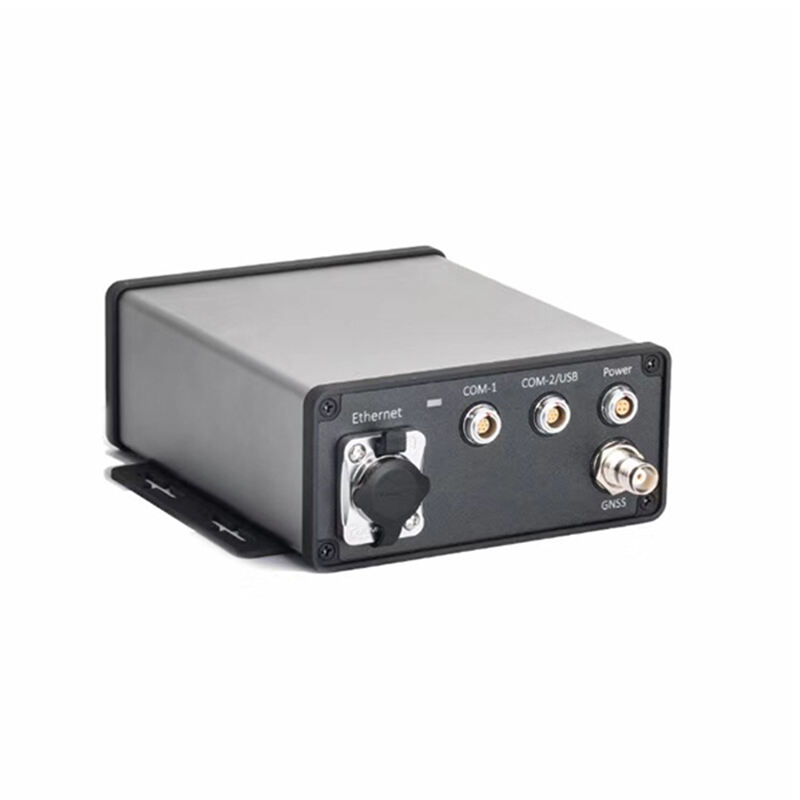
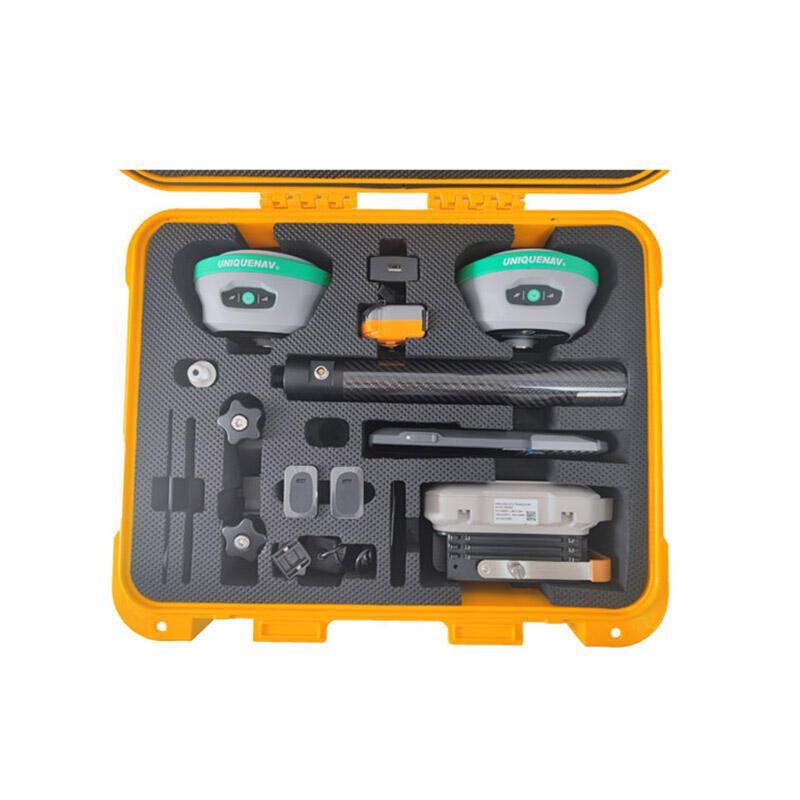
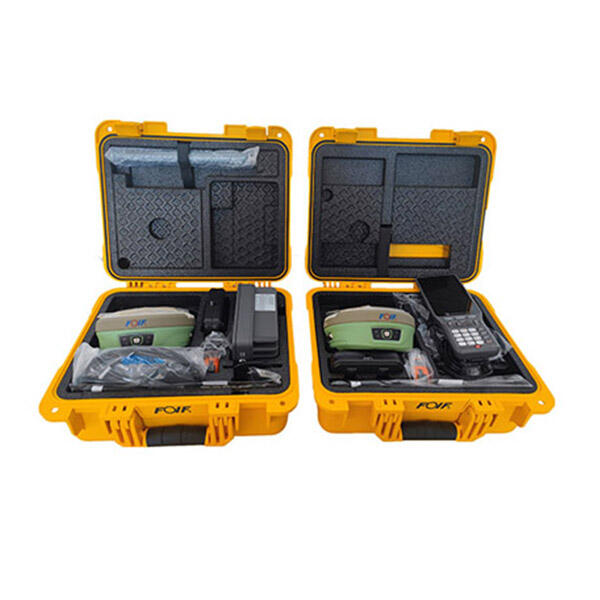
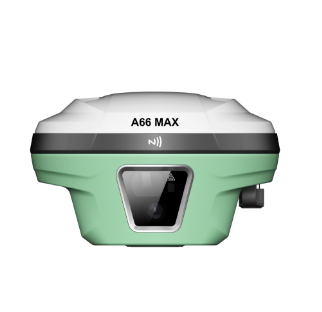
Global Navigation Satellite System (GNSS) surveying represents a revolutionary advancement in modern land measurement and positioning technology. This sophisticated system utilizes multiple satellite constellations including GPS, GLONASS, Galileo, and BeiDou to provide precise location data for surveying applications. GNSS surveying has fundamentally transformed how professionals conduct topographic mapping, construction layout, boundary determination, and geodetic measurements across various industries worldwide. The technology operates by receiving signals from multiple satellites simultaneously, calculating precise coordinates through triangulation methods that deliver centimeter-level accuracy in optimal conditions. Modern GNSS surveying equipment incorporates advanced receivers capable of processing signals from multiple satellite systems concurrently, significantly improving reliability and precision compared to traditional surveying methods. The system functions effectively in most weather conditions and provides continuous operation capabilities that enhance productivity for surveying teams. Real-time kinematic (RTK) and post-processing kinematic (PPK) technologies within GNSS surveying enable surveyors to achieve millimeter-level precision for critical applications. The integration of correction services and base station networks further enhances accuracy by compensating for atmospheric disturbances and satellite orbit errors. GNSS surveying equipment typically includes handheld controllers with intuitive software interfaces that streamline data collection and field operations. These systems support various coordinate systems and datum transformations, making them adaptable to regional surveying standards and requirements. The technology also enables seamless integration with geographic information systems (GIS) and computer-aided design (CAD) software, facilitating efficient data processing workflows. Modern GNSS surveying solutions offer robust data storage capabilities and wireless connectivity options for real-time data sharing and cloud-based project management.

New Product Recommendations

GNSS surveying delivers substantial time savings compared to conventional surveying methods by eliminating the need for line-of-sight measurements between survey points. Traditional surveying often requires hours to establish control networks and conduct traverses, while GNSS surveying enables direct positioning of points within minutes. This efficiency translates to significant cost reductions for surveying projects, allowing companies to complete more work with fewer resources and shorter project timelines. The technology provides exceptional versatility across diverse terrain types and environmental conditions where traditional methods face limitations. Surveyors can collect accurate measurements in densely forested areas, steep slopes, and remote locations that would be challenging or impossible to access with conventional equipment. GNSS surveying offers superior accuracy consistency throughout the survey area, maintaining precision levels regardless of distance from reference points. This characteristic eliminates the error accumulation problems inherent in traditional traversing methods where small errors compound over long distances. The system provides real-time positioning capabilities that enable immediate verification of measurements and instant detection of potential errors during fieldwork. This immediate feedback helps prevent costly mistakes and reduces the need for return visits to survey sites. GNSS surveying equipment operates with minimal setup requirements, reducing the physical demands on survey crews and enabling single-person operation in many scenarios. The technology integrates seamlessly with modern digital workflows, automatically formatting data for direct import into design software and eliminating manual transcription errors. Weather independence represents another significant advantage, as GNSS surveying functions effectively in rain, snow, fog, and other conditions that would halt traditional optical measurements. The global availability of satellite signals ensures consistent performance across different geographic regions without requiring local infrastructure. Modern GNSS surveying systems provide comprehensive data logging capabilities that create detailed audit trails for quality assurance and regulatory compliance purposes.

Tips And Tricks

Choosing the Best GNSS RTK System for Your Project

27

Nov

Choosing the Best GNSS RTK System for Your Project

When precision positioning is critical for your surveying, construction, or engineering project, selecting the right GNSS RTK system becomes a pivotal decision that can determine project success. Modern surveying demands centimeter-level accuracy, re...
View More
How Can RTK Improve Surveying Precision for Large Construction Sites?

22

Dec

How Can RTK Improve Surveying Precision for Large Construction Sites?

Modern construction projects demand unprecedented accuracy and efficiency, particularly when dealing with expansive development sites spanning hundreds of acres. Traditional surveying methods often fall short when faced with the complexities of large...
View More
How Do Total Stations Support High-Accuracy Layout in Construction?

13

Jan

How Do Total Stations Support High-Accuracy Layout in Construction?

Construction projects demand exceptional precision when establishing accurate layout points and measurements across job sites. Modern surveying instruments have revolutionized how construction professionals approach dimensional control and spatial po...
View More
How Does a Digital Level Improve Accuracy in Construction Measurements?

13

Jan

How Does a Digital Level Improve Accuracy in Construction Measurements?

Construction professionals understand that precision forms the foundation of every successful project. Modern building techniques demand measurement accuracy that surpasses traditional methods, making the digital level an indispensable tool for contr...
View More

Get a Free Quote

Our representative will contact you soon.
Email
Name
Company Name
Message
0/1000

gnss surveying

Precision Real-Time Kinematic Technology

Precision Real-Time Kinematic Technology

The real-time kinematic (RTK) capability of modern GNSS surveying systems represents the pinnacle of field positioning accuracy, delivering centimeter-level precision that meets the most demanding professional requirements. This advanced technology utilizes a base station that broadcasts correction data to rover receivers, compensating for atmospheric delays, satellite orbit errors, and other factors that could compromise measurement accuracy. The RTK process establishes a radio or cellular communication link between the base station and field receivers, enabling real-time correction of positioning data as surveyors collect measurements. This immediate processing eliminates the traditional wait time associated with post-processing workflows, allowing survey teams to verify accuracy and complete quality checks while still in the field. The system maintains fixed solution status indicators that confirm when measurements achieve the highest accuracy levels, providing confidence for critical surveying applications. Professional-grade GNSS surveying equipment with RTK capabilities typically achieves horizontal accuracy of 1-2 centimeters and vertical accuracy of 2-3 centimeters under optimal conditions. This precision level supports demanding applications including construction staking, property boundary surveys, topographic mapping, and engineering layout work. The technology automatically manages multiple satellite constellations and frequency bands to maximize signal availability and maintain robust positioning solutions even in challenging environments. RTK-enabled GNSS surveying systems offer flexible base station deployment options, including temporary setups for project-specific work or connections to permanent reference station networks. These networks provide wider area coverage and eliminate the need for surveyors to establish their own base stations, further streamlining field operations and reducing equipment requirements.
Multi-Constellation Satellite Support

Multi-Constellation Satellite Support

Modern GNSS surveying systems leverage multiple satellite constellations simultaneously to deliver unprecedented reliability and accuracy in diverse operational environments. This multi-constellation approach combines signals from GPS (United States), GLONASS (Russia), Galileo (European Union), and BeiDou (China) systems to provide superior satellite visibility and positioning robustness compared to single-system solutions. The integration of multiple satellite networks significantly increases the number of available positioning signals, typically providing 20-30 visible satellites at any given time versus 8-12 satellites from a single constellation. This enhanced satellite geometry improves dilution of precision (DOP) values and maintains accurate positioning even when obstacles block some satellite signals. The redundancy offered by multi-constellation GNSS surveying proves invaluable in urban environments where buildings create signal shadows, forested areas with canopy interference, and mountainous terrain with topographic masking. Each satellite constellation operates on different frequencies and employs unique signal structures, providing diverse positioning solutions that complement each other and enhance overall system reliability. Advanced GNSS surveying receivers automatically select optimal satellite combinations and dynamically adjust to changing signal conditions throughout the day. The system continuously monitors signal quality parameters and seamlessly switches between satellite sources to maintain positioning integrity without manual intervention. Multi-constellation capability also provides future-proofing benefits as new satellites and enhanced signals become operational, ensuring long-term equipment viability and performance improvements. Regional augmentation systems further enhance multi-constellation GNSS surveying by providing additional correction signals tailored to specific geographic areas. These augmentation services deliver improved accuracy and integrity monitoring that supports safety-critical surveying applications in aviation, maritime, and precision agriculture sectors.
Integrated Data Management and Connectivity

Integrated Data Management and Connectivity

Contemporary GNSS surveying systems feature sophisticated data management capabilities and connectivity options that streamline field operations and enhance project workflow efficiency. These integrated solutions eliminate traditional data collection bottlenecks by providing seamless transfer of survey measurements to office-based processing systems through wireless communication technologies. Modern field controllers incorporate robust data storage with automatic backup features that protect valuable survey data against loss while maintaining detailed project organization and file management capabilities. The systems support multiple data formats and coordinate systems, enabling direct compatibility with popular CAD, GIS, and surveying software packages without requiring complex conversion procedures. Real-time data sharing capabilities allow survey teams to collaborate effectively across multiple project sites while maintaining centralized project control and quality assurance oversight. Cloud-based data management platforms integrated with GNSS surveying equipment provide secure storage, automatic synchronization, and remote access to project information from any internet-connected device. These platforms support real-time project monitoring, progress tracking, and instant reporting capabilities that enhance client communication and project management efficiency. Advanced GNSS surveying systems include built-in quality control tools that automatically validate measurements against established tolerances and alert operators to potential issues requiring attention. The integrated workflow capabilities extend to automatic report generation, creating standardized deliverables that meet industry requirements and client specifications without manual formatting. Mobile connectivity options including cellular, WiFi, and Bluetooth enable flexible communication solutions adapted to diverse field environments and project requirements. The data management systems maintain comprehensive audit trails documenting measurement procedures, equipment settings, and environmental conditions for each survey point, supporting regulatory compliance and professional liability requirements. Integration with enterprise resource planning systems allows surveying companies to track equipment utilization, project costs, and resource allocation for improved business management and profitability analysis.


Get a Free Quote

Our representative will contact you soon.
Email
Name
Company Name
Message
0/1000