
 EN
EN
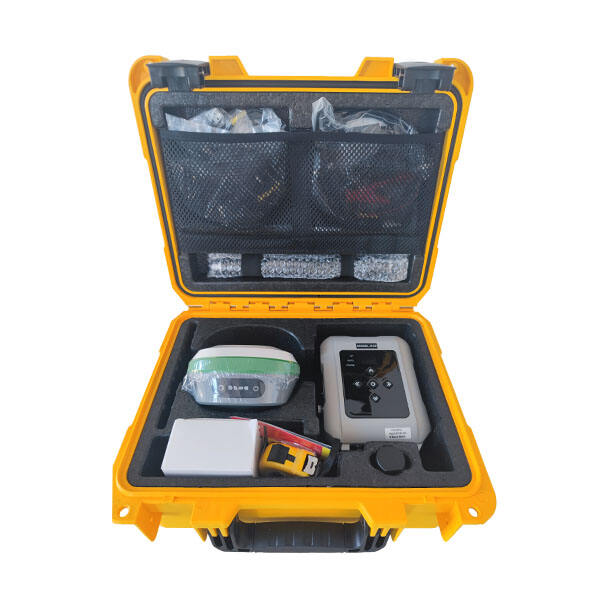
Modern construction projects demand unprecedented accuracy and efficiency, particularly when dealing with expansive development sites spanning hundreds of acres. Traditional surveying methods often fall short when faced with the complexities of large-scale construction, where millimeter-level precision can determine project success or failure. RTK surveying precision has emerged as the gold standard for addressing these challenges, offering real-time kinematic positioning that transforms how construction professionals approach site measurement and layout tasks.

The construction industry has witnessed a remarkable shift toward technology-driven solutions that minimize human error while maximizing operational efficiency. Large construction sites present unique challenges that require sophisticated positioning systems capable of maintaining accuracy across vast distances and varying terrain conditions. RTK surveying precision addresses these demands by providing continuous, real-time corrections that ensure consistent measurement quality throughout the entire project lifecycle.
Understanding the fundamental principles behind RTK technology reveals why this approach has become indispensable for modern construction operations. The system operates through a network of base stations that transmit correction signals to mobile receivers, enabling surveyors to achieve centimeter-level accuracy in real-time. This technological advancement has revolutionized how construction teams approach everything from initial site surveys to final quality control inspections.
Understanding RTK Technology in Construction Applications
Real-Time Kinematic Positioning Fundamentals
Real-Time Kinematic positioning represents a significant advancement in satellite navigation technology, building upon traditional GPS systems to deliver enhanced accuracy through sophisticated error correction mechanisms. The technology operates by establishing a reference station at a known location, which continuously monitors satellite signals and calculates positioning errors in real-time. These corrections are then transmitted to mobile receivers operating within the coverage area, enabling them to achieve RTK surveying precision that surpasses conventional methods by orders of magnitude.
The mathematical foundation of RTK technology relies on carrier phase measurements rather than the code-based positioning used in standard GPS applications. This approach allows the system to resolve integer ambiguities in satellite signals, resulting in positioning accuracy that typically ranges from one to five centimeters under optimal conditions. For large construction sites, this level of precision proves essential when establishing control networks, setting grade stakes, and performing layout operations that require absolute accuracy.
Modern RTK systems incorporate advanced signal processing algorithms that can maintain accuracy even in challenging environments commonly found on construction sites. These include areas with partial satellite visibility due to tall structures, electromagnetic interference from heavy machinery, and atmospheric conditions that might affect signal propagation. The robust nature of contemporary RTK surveying precision systems ensures reliable performance throughout various construction phases.
Integration with Construction Workflows
Successful implementation of RTK technology within construction workflows requires careful consideration of existing processes and equipment compatibility. Most modern RTK systems are designed to integrate seamlessly with popular construction software platforms, enabling direct data transfer between field measurements and office-based design applications. This integration eliminates traditional transcription errors and reduces the time required to process survey data, ultimately accelerating project timelines.
The workflow integration extends beyond simple data collection to encompass comprehensive project management capabilities. RTK surveying precision systems can store multiple coordinate systems, manage point databases, and generate standardized reports that meet industry requirements. Construction teams benefit from streamlined data management processes that maintain consistency across different project phases and team members.
Training requirements for RTK systems have been significantly reduced through intuitive user interfaces and automated calibration procedures. Modern equipment designs prioritize ease of use without compromising measurement capabilities, allowing construction teams to implement RTK surveying precision techniques without extensive specialized training. This accessibility has contributed to widespread adoption across various construction market segments.
Advantages of RTK Systems for Large-Scale Projects
Enhanced Productivity and Time Management
Large construction projects typically involve extensive surveying requirements that can consume substantial time and resources when addressed through conventional methods. RTK surveying precision offers significant productivity advantages by eliminating the need for post-processing procedures and enabling immediate quality verification in the field. Survey crews can complete layout operations, verify as-built conditions, and perform quality control inspections with unprecedented efficiency.
The real-time nature of RTK corrections means that survey teams can identify and correct potential issues immediately rather than discovering problems during office processing hours or days later. This immediate feedback capability prevents costly rework and ensures that construction activities proceed according to plan. The time savings realized through RTK surveying precision implementation often justify equipment investments within the first few projects.
Coordination between multiple survey crews becomes significantly more effective when using RTK systems, as all team members work from the same reference framework with consistent accuracy standards. Large construction sites often require simultaneous operations in different areas, and RTK technology ensures that all measurements maintain the same high precision standards regardless of location or crew composition.
Cost Reduction and Resource Optimization
The economic benefits of implementing RTK surveying precision extend far beyond initial equipment costs, encompassing reduced labor requirements, minimized rework, and improved project scheduling efficiency. Traditional surveying methods often require multiple site visits to complete measurements and verification procedures, while RTK systems enable comprehensive data collection during single field sessions. This efficiency translates directly into reduced labor costs and improved resource allocation.
Quality control improvements associated with RTK surveying precision contribute to significant cost savings by preventing construction errors before they occur. The ability to verify measurements immediately allows construction teams to identify and address potential issues during the planning phase rather than after expensive materials and equipment have been mobilized. This proactive approach to quality management has proven particularly valuable for large-scale projects where correction costs scale proportionally with project size.
Equipment utilization rates improve substantially when using RTK systems, as the technology enables more efficient crew deployment and reduces idle time associated with traditional surveying procedures. Construction managers can optimize resource allocation based on real-time progress information, ensuring that personnel and equipment are deployed where they can provide maximum value to project objectives.
Technical Specifications and Performance Metrics
Accuracy Standards and Measurement Capabilities
Contemporary RTK systems deliver positioning accuracy that meets or exceeds the most stringent construction industry requirements, with horizontal accuracy typically ranging from 8 to 15 millimeters and vertical accuracy achieving similar performance levels under optimal conditions. These specifications represent significant improvements over conventional surveying methods, which may struggle to achieve consistent accuracy better than several centimeters across large project areas.
The measurement capabilities of modern RTK surveying precision systems extend beyond basic positioning to include advanced features such as slope staking, cross-section surveys, and volumetric calculations. These integrated capabilities enable construction teams to perform comprehensive site analysis using a single instrument system, reducing equipment requirements and simplifying field operations. The versatility of RTK technology makes it suitable for various construction applications, from initial site preparation through final quality verification.
Performance consistency represents a critical advantage of RTK systems, as the technology maintains accuracy standards across extended operating periods without requiring frequent recalibration or adjustment procedures. This reliability ensures that survey measurements remain consistent throughout project lifecycles that may span several years, providing construction teams with confidence in their positioning data quality.
Range and Coverage Considerations
The effective operating range of RTK systems has expanded significantly with recent technological advances, with many systems now capable of providing reliable RTK surveying precision at distances exceeding 10 kilometers from base stations under favorable conditions. This extended range capability proves particularly valuable for large construction projects that may span several square kilometers, as it reduces the number of base stations required to achieve comprehensive site coverage.
Network RTK implementations can further extend coverage areas by utilizing multiple reference stations that work collectively to provide correction signals across entire regions. This approach enables construction companies to establish permanent infrastructure that supports multiple concurrent projects while maintaining consistent accuracy standards across all operations. The scalability of network RTK solutions makes them particularly attractive for companies managing multiple large-scale construction projects simultaneously.
Coverage reliability remains consistent even in challenging terrain conditions commonly encountered on construction sites, including areas with significant elevation changes, dense vegetation, or proximity to tall structures. Modern RTK surveying precision systems incorporate advanced signal processing capabilities that maintain performance quality across diverse environmental conditions, ensuring reliable operation throughout various construction phases.
Implementation Strategies for Construction Teams
Equipment Selection and System Configuration
Selecting appropriate RTK equipment requires careful evaluation of project requirements, site conditions, and integration needs with existing construction management systems. Modern RTK surveying precision solutions offer various configurations ranging from basic positioning systems to comprehensive measurement platforms that include laser scanning capabilities, digital cameras, and specialized construction software. Understanding these options enables construction teams to choose systems that provide optimal value for their specific applications.
System configuration considerations include base station placement strategies, communication methods for correction data transmission, and coordinate system setup procedures that ensure compatibility with existing project control networks. Proper configuration establishes the foundation for reliable RTK surveying precision throughout project lifecycles, making initial setup procedures critical for long-term success.
Equipment compatibility with existing construction software platforms and data management systems influences implementation success significantly. Modern RTK systems typically offer multiple data export formats and direct integration capabilities with popular CAD and construction management applications, enabling seamless workflow integration that maximizes productivity benefits while minimizing disruption to established procedures.
Training and Quality Assurance Protocols
Effective RTK implementation requires comprehensive training programs that address both technical operation procedures and quality assurance protocols specific to construction applications. Training programs should encompass equipment operation, system maintenance, troubleshooting procedures, and quality control verification techniques that ensure consistent RTK surveying precision across all team members and project phases.
Quality assurance protocols establish verification procedures that maintain measurement accuracy and reliability throughout project lifecycles. These protocols typically include regular system performance checks, coordinate verification procedures, and documentation requirements that support project quality management objectives. Establishing clear quality assurance standards helps construction teams realize the full benefits of RTK surveying precision while maintaining compliance with industry standards and client requirements.
Ongoing training and certification programs ensure that team capabilities keep pace with technological advances and evolving industry practices. The rapid development of RTK technology means that periodic updates to training programs help teams maximize equipment capabilities and maintain competitive advantages in increasingly sophisticated construction markets.
Case Studies and Real-World Applications
Infrastructure Development Projects
Large-scale infrastructure projects demonstrate the transformative impact of RTK surveying precision on construction efficiency and quality outcomes. Highway construction projects spanning dozens of kilometers benefit significantly from RTK technology, as the system enables consistent accuracy across entire project lengths while facilitating coordination between multiple construction crews operating simultaneously in different locations.
Bridge construction projects exemplify the precision requirements that make RTK technology essential for modern construction operations. The millimeter-level accuracy achievable with RTK surveying precision ensures proper alignment of structural components, prevents costly fit-up issues, and enables efficient quality verification throughout construction phases. These benefits become particularly pronounced for complex projects involving multiple spans and challenging geometric requirements.
Airport runway construction represents another application where RTK surveying precision proves indispensable, as the stringent accuracy requirements for aviation infrastructure exceed the capabilities of traditional surveying methods. The ability to maintain consistent precision across large areas while accommodating complex drainage and safety requirements demonstrates the versatility and reliability of modern RTK systems.
Commercial and Residential Development
Large residential developments benefit from RTK surveying precision through improved lot layout accuracy, efficient utility installation verification, and streamlined final survey procedures that accelerate project completion schedules. The technology enables developers to optimize site utilization while ensuring compliance with regulatory requirements that often specify precise setback and elevation standards.
Commercial construction projects utilize RTK technology for complex site preparation operations, building layout procedures, and utility coordination activities that require precise positioning across multiple elevation levels. The real-time feedback capabilities of RTK surveying precision systems enable construction teams to identify and resolve potential conflicts before they impact project schedules or budgets.
Mixed-use development projects demonstrate how RTK technology supports complex construction operations that involve multiple building types, infrastructure systems, and coordination requirements across extended project timelines. The consistency and reliability of RTK surveying precision enable effective project management across various construction phases while maintaining quality standards throughout the entire development process.
Future Developments and Technology Trends
Integration with Emerging Technologies
The future of RTK surveying precision involves increasing integration with complementary technologies such as unmanned aerial systems, three-dimensional laser scanning, and artificial intelligence applications that enhance measurement capabilities and automate data processing procedures. These technological convergences promise to expand RTK applications while reducing operational complexity and training requirements for construction teams.
Machine learning algorithms are beginning to influence RTK system performance through predictive error correction, optimized satellite selection, and automated quality verification procedures that enhance measurement reliability. These advances represent the next generation of RTK surveying precision capabilities that will further improve accuracy while reducing the technical expertise required for effective system operation.
Cloud-based data management and processing capabilities are transforming how construction teams utilize RTK technology, enabling real-time collaboration between field and office personnel while providing comprehensive project documentation that supports quality management and regulatory compliance requirements. These developments make RTK surveying precision more accessible to construction companies of all sizes while enhancing the value proposition for technology adoption.
Market Evolution and Adoption Trends
The construction industry continues to embrace RTK surveying precision technology at an accelerating pace, driven by increasing project complexity, tighter accuracy requirements, and competitive pressures that favor technologically advanced contractors. Market trends indicate that RTK technology is transitioning from specialized applications to standard practice across various construction market segments.
Cost reductions in RTK equipment and infrastructure development are making the technology accessible to smaller construction companies and specialized contractors who previously could not justify the investment. This democratization of RTK surveying precision capabilities is expanding market adoption while driving further innovation and feature development across equipment manufacturers.
Regulatory developments and industry standards increasingly recognize the advantages of RTK technology, with many specifications now requiring or preferring RTK surveying precision for critical construction applications. This regulatory support accelerates adoption while establishing performance benchmarks that drive continued technological advancement and market growth.
FAQ
What is the typical accuracy range for RTK surveying systems on large construction sites
RTK surveying precision systems typically achieve horizontal accuracy ranging from 8 to 15 millimeters and vertical accuracy of similar performance levels under optimal conditions. On large construction sites, these accuracy standards remain consistent across the entire project area when properly implemented, representing significant improvements over traditional surveying methods that may struggle to maintain centimeter-level precision across extended distances.
How does weather affect RTK surveying precision performance
Modern RTK systems incorporate advanced atmospheric correction algorithms that minimize weather-related impacts on measurement accuracy. While extreme atmospheric conditions such as heavy precipitation or significant temperature variations can influence signal propagation, contemporary RTK surveying precision technology maintains reliable performance across most weather conditions encountered during normal construction operations. System design features including multiple satellite constellation support and sophisticated error modeling ensure consistent accuracy regardless of typical weather variations.
What training requirements are necessary for construction teams to operate RTK equipment effectively
RTK surveying precision systems are designed with intuitive user interfaces that minimize training requirements compared to traditional surveying equipment. Most construction professionals can achieve operational proficiency within a few days of focused training that covers equipment setup, measurement procedures, and quality verification techniques. Comprehensive training programs typically include both classroom instruction and hands-on field experience to ensure teams can utilize RTK technology effectively across various construction applications and site conditions.
How does RTK technology integrate with existing construction management software and workflows
Contemporary RTK systems offer extensive integration capabilities with popular construction management software platforms through standardized data formats and direct communication protocols. RTK surveying precision equipment typically supports multiple export formats including CAD files, GIS databases, and construction-specific formats that enable seamless data transfer between field measurements and office-based design applications. This integration eliminates manual data entry requirements while ensuring consistency between survey measurements and project design information throughout construction lifecycles.
Table of Contents
- Understanding RTK Technology in Construction Applications
- Advantages of RTK Systems for Large-Scale Projects
- Technical Specifications and Performance Metrics
- Implementation Strategies for Construction Teams
- Case Studies and Real-World Applications
- Future Developments and Technology Trends
-
FAQ
- What is the typical accuracy range for RTK surveying systems on large construction sites
- How does weather affect RTK surveying precision performance
- What training requirements are necessary for construction teams to operate RTK equipment effectively
- How does RTK technology integrate with existing construction management software and workflows