
 EN
EN
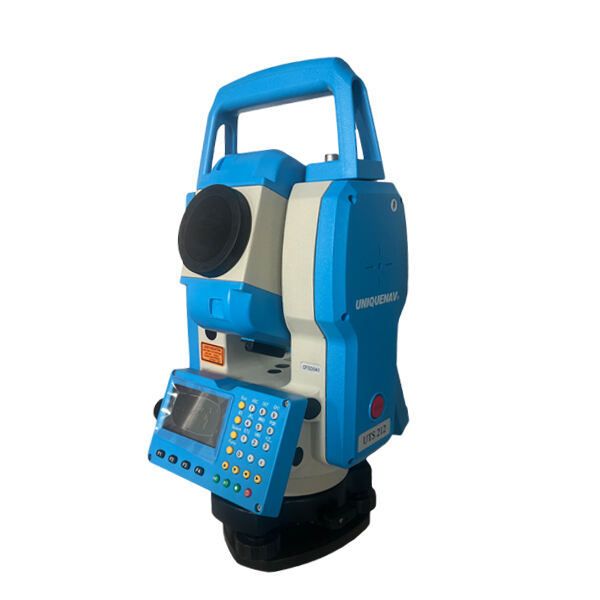
Construction projects demand exceptional precision when establishing accurate layout points and measurements across job sites. Modern surveying instruments have revolutionized how construction professionals approach dimensional control and spatial positioning. Among these advanced tools, total stations represent the pinnacle of surveying technology, combining electronic distance measurement with precise angular readings to deliver unparalleled accuracy in construction layout applications. These sophisticated instruments have become indispensable for contractors, engineers, and surveyors who require millimeter-level precision in their daily operations.
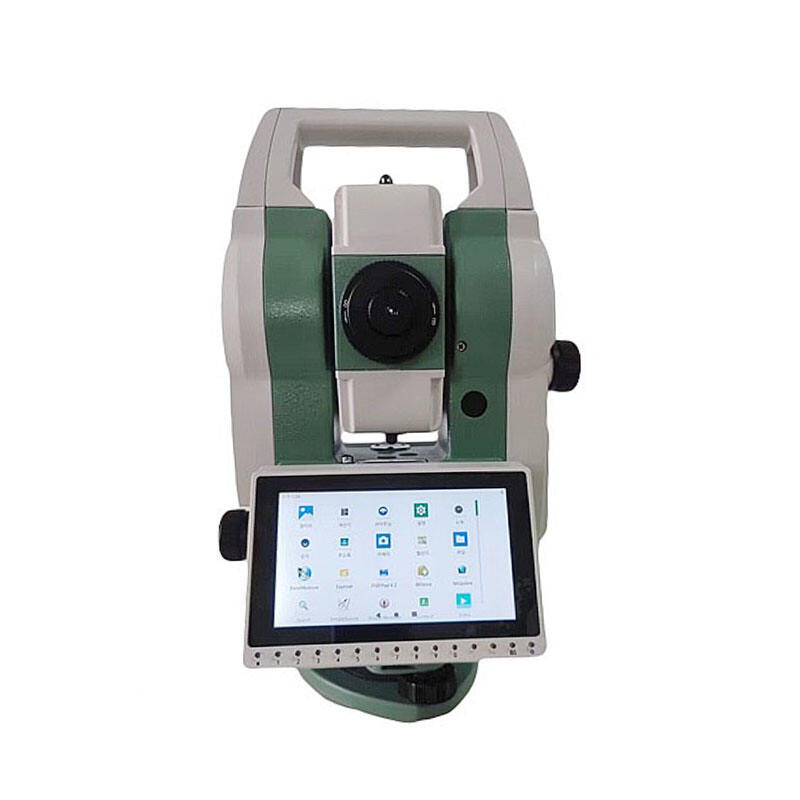
The integration of total stations into construction workflows has transformed traditional layout methodologies, enabling teams to achieve previously unattainable levels of accuracy while significantly reducing time and labor costs. Professional construction crews rely on these instruments to establish precise reference points, verify structural alignments, and maintain dimensional integrity throughout complex building projects. The technological advancement of total stations continues to push the boundaries of what is possible in construction surveying, offering enhanced measurement capabilities and improved productivity for demanding applications.
Understanding Total Station Technology for Construction Applications
Core Components and Measurement Principles
Total stations incorporate sophisticated electronic distance measurement technology combined with precise angular measurement systems to deliver comprehensive positioning data. The instrument's electronic distance meter utilizes infrared or laser technology to measure distances with extraordinary precision, typically achieving accuracies within one to three millimeters over hundreds of meters. This capability makes total stations essential for establishing primary control networks and secondary layout points throughout construction sites.
The angular measurement system within total stations employs advanced encoders and optical systems to determine horizontal and vertical angles with exceptional accuracy. Modern instruments can measure angles to precisions of one to five arc seconds, enabling surveyors to establish precise directional references and maintain angular control across extensive project areas. These measurement capabilities combine to provide three-dimensional positioning data that forms the foundation for accurate construction layout operations.
Advanced Features and Technological Integration
Contemporary total stations incorporate numerous advanced features that enhance their utility for construction layout applications. Automatic target recognition systems enable instruments to identify and track reflective targets, reducing operator intervention and improving measurement efficiency. Electronic data collection capabilities allow surveyors to store coordinate information directly within the instrument, facilitating seamless data transfer to computer-aided design systems and construction management software.
Many modern total stations feature integrated computing capabilities that enable real-time coordinate calculations and layout computations directly within the instrument. These onboard processing systems can perform complex geometric calculations, coordinate transformations, and layout point calculations, providing immediate feedback to field operators. The integration of wireless communication systems further enhances operational efficiency by enabling remote instrument control and data sharing capabilities.
Precision Layout Applications in Construction Projects
Foundation and Structural Layout Requirements
Foundation construction demands exceptional precision in establishing excavation boundaries, footing locations, and structural reference points. Total stations provide the accuracy necessary to ensure foundation elements are positioned within specified tolerances, preventing costly corrections and maintaining structural integrity. The instrument's ability to establish precise elevations and horizontal positions enables construction teams to maintain tight dimensional control throughout foundation installation processes.
Structural steel erection requires precise positioning of columns, beams, and connection points to ensure proper fit and structural performance. Total stations enable surveyors to establish accurate reference points for structural elements, verify installation positions, and maintain dimensional control throughout the erection process. The instruments' three-dimensional measurement capabilities facilitate accurate positioning of complex structural assemblies and ensure compliance with engineering specifications.
Building Envelope and Architectural Element Positioning
Architectural construction requires precise positioning of building envelope components, including exterior walls, window and door openings, and facade elements. Total stations provide the accuracy necessary to establish these critical layout points and maintain dimensional relationships between architectural elements. The instruments enable construction teams to verify the positioning of precast concrete panels, curtain wall systems, and other precision-manufactured building components.
Interior layout applications benefit significantly from the precision capabilities of total stations, particularly in projects requiring tight dimensional tolerances. The instruments enable accurate positioning of partition walls, mechanical and electrical systems, and specialized equipment installations. Total stations facilitate the establishment of level reference points and elevation control throughout multi-story construction projects, ensuring vertical alignment and dimensional consistency across building floors.
Accuracy Standards and Quality Control Methodologies
Measurement Precision and Error Management
Construction layout applications require careful consideration of measurement uncertainties and error propagation effects. Total stations provide exceptional measurement precision, but understanding instrument limitations and proper measurement techniques remains essential for achieving optimal results. Environmental conditions, target visibility, and measurement distances all influence the achievable accuracy of total station measurements in construction applications.
Professional surveyors employ systematic quality control procedures to minimize measurement errors and ensure layout accuracy. These procedures include regular instrument calibration, redundant measurements, and statistical analysis of measurement data. The implementation of closed traverse loops and independent check measurements helps identify and eliminate systematic errors that could compromise layout accuracy. Total stations support these quality control methodologies through their advanced measurement capabilities and data recording systems.
Tolerance Management and Specification Compliance
Construction projects operate under strict tolerance requirements that vary depending on the type of structure and intended use. Total stations enable surveyors to work within these tight tolerance bands while providing verification that layout points meet specification requirements. The instruments' precision capabilities often exceed project tolerance requirements, providing confidence that construction elements will be positioned within acceptable limits.
Documentation and verification of layout accuracy become critical components of construction quality assurance programs. Total stations facilitate comprehensive documentation of layout measurements through their data collection capabilities, enabling project teams to maintain detailed records of positional accuracy. This documentation supports quality control processes and provides evidence of compliance with project specifications and industry standards.
Operational Efficiency and Productivity Benefits
Time Savings and Labor Optimization
The implementation of total stations in construction layout operations delivers significant time savings compared to traditional surveying methods. The instruments' ability to measure distances and angles simultaneously eliminates the need for separate measurement operations, reducing the time required to establish layout points. Automated target recognition and tracking capabilities further enhance operational efficiency by minimizing manual targeting requirements.
Modern total stations support single-operator functionality, reducing labor requirements for layout operations. Advanced instruments can operate with minimal supervision once properly set up, enabling surveyors to work more efficiently and accomplish more layout work with fewer personnel. The integration of robotic capabilities in some total stations enables remote operation, further optimizing labor utilization and improving productivity on construction sites.
Data Integration and Workflow Enhancement
Total stations integrate seamlessly with computer-aided design systems and building information modeling platforms, enabling efficient data exchange between field measurements and design models. This integration eliminates manual data entry requirements and reduces the potential for transcription errors. Field measurements can be directly compared with design coordinates, providing immediate feedback on dimensional accuracy and compliance with project specifications.
The ability to download layout coordinates directly to total stations streamlines field operations and ensures consistency between design intent and field implementation. Surveyors can navigate directly to layout points using coordinate-based navigation systems, reducing the time required to establish measurement points and improving overall operational efficiency. Real-time coordinate calculations and stakeout capabilities enable immediate positioning of construction elements without additional computation requirements.
Technology Advancement and Future Developments
Enhanced Automation and Intelligence Features
The evolution of total stations continues to incorporate advanced automation and artificial intelligence capabilities that enhance measurement accuracy and operational efficiency. Machine learning algorithms enable instruments to optimize measurement procedures based on environmental conditions and target characteristics. These intelligent systems can automatically adjust measurement parameters to maintain optimal accuracy under varying field conditions.
Predictive maintenance capabilities and self-diagnostic systems help ensure total stations maintain peak performance throughout their operational life. Advanced instruments can monitor their own calibration status and alert operators when maintenance or adjustment becomes necessary. These proactive maintenance features help prevent measurement errors and ensure consistent accuracy over extended periods of use.
Integration with Emerging Construction Technologies
Total stations are increasingly integrated with emerging construction technologies, including augmented reality systems, unmanned aerial vehicles, and automated construction equipment. These integrations enable new applications and enhanced capabilities that extend the utility of total stations beyond traditional surveying applications. The combination of precise positioning data from total stations with visual overlay systems creates powerful tools for construction layout and quality control.
Cloud-based data management and real-time collaboration platforms enable total stations to participate in connected construction ecosystems. These systems facilitate immediate data sharing between field operations and project management teams, enabling rapid decision-making and improved project coordination. The integration of total stations with enterprise construction management systems creates comprehensive data flows that enhance project visibility and control capabilities.
Frequently Asked Questions
What accuracy levels can total stations achieve in construction layout applications
Modern total stations typically achieve distance measurement accuracies of one to three millimeters plus one to three parts per million of the measured distance. Angular measurements can achieve precisions of one to five arc seconds, depending on the instrument specification. These accuracy levels enable construction layout operations to meet the tight tolerance requirements of most building projects, including high-precision applications such as structural steel erection and precast concrete installation.
How do environmental conditions affect total station measurement accuracy
Environmental factors including temperature variations, atmospheric pressure changes, and humidity levels can influence total station measurement accuracy. Modern instruments incorporate atmospheric correction capabilities that compensate for these environmental effects. Proper measurement techniques, including the use of appropriate prisms and consideration of line-of-sight conditions, help minimize environmental influences on measurement precision.
What training requirements exist for operating total stations in construction applications
Effective operation of total stations requires comprehensive training in surveying principles, instrument operation, and construction layout procedures. Operators must understand coordinate systems, measurement uncertainties, and quality control procedures to achieve optimal results. Many manufacturers offer training programs and certification courses that cover both theoretical principles and practical applications specific to construction surveying requirements.
How do total stations integrate with building information modeling systems
Total stations can exchange data directly with building information modeling platforms through standardized file formats and specialized software interfaces. This integration enables seamless transfer of design coordinates to field instruments and allows measured data to be imported directly into project models. The integration supports real-time comparison between design intent and field measurements, facilitating immediate identification of discrepancies and enabling rapid corrective actions during construction operations.
Table of Contents
- Understanding Total Station Technology for Construction Applications
- Precision Layout Applications in Construction Projects
- Accuracy Standards and Quality Control Methodologies
- Operational Efficiency and Productivity Benefits
- Technology Advancement and Future Developments
-
Frequently Asked Questions
- What accuracy levels can total stations achieve in construction layout applications
- How do environmental conditions affect total station measurement accuracy
- What training requirements exist for operating total stations in construction applications
- How do total stations integrate with building information modeling systems