
 EN
EN
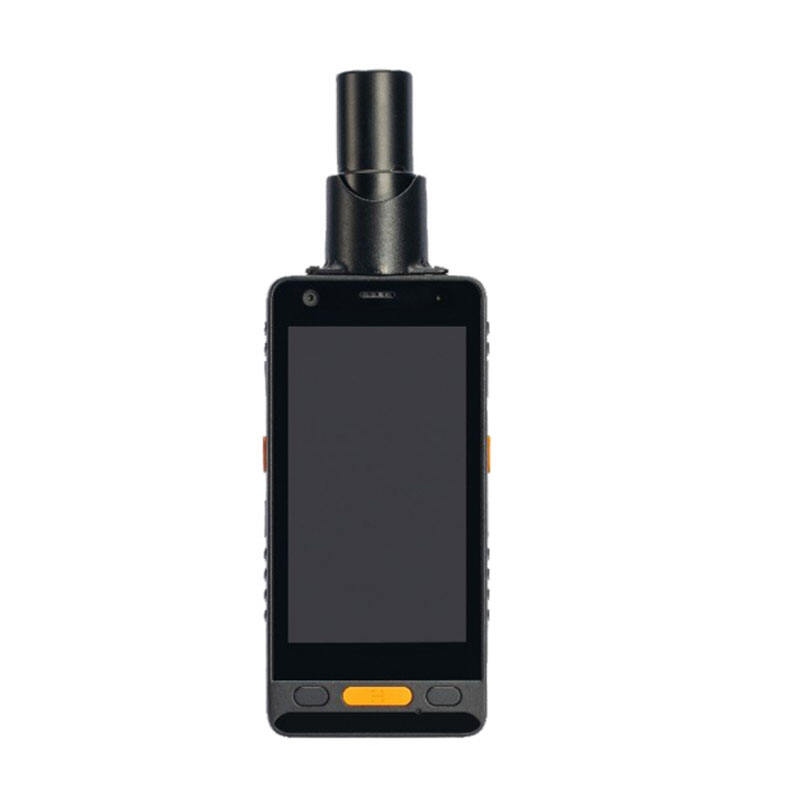
Surveying has always demanded precision, accountability, and reliable data collection under real-world field conditions. Whether a team is mapping land boundaries, conducting topographic assessments, or supporting infrastructure development, the margin for error is razor-thin. This is exactly why high accuracy handheld GPS has become a non-negotiable tool in the professional surveyor's kit. The ability to capture centimeter-level positional data while moving freely across complex terrain transforms what teams can accomplish in a single field day.
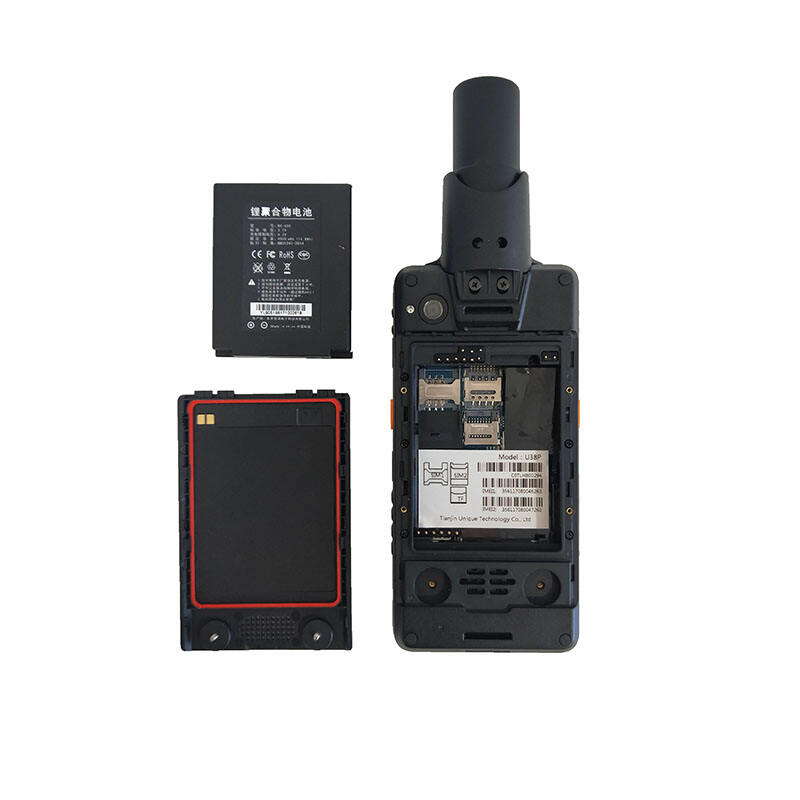
The adoption of high accuracy handheld GPS in surveying is not simply a technology upgrade — it reflects a fundamental shift in how field professionals approach data quality, workflow efficiency, and project liability. Traditional measurement tools and standard consumer-grade GPS units simply cannot meet the spatial accuracy requirements demanded by modern surveying projects. Understanding why precision-grade handheld positioning systems are essential means understanding the stakes involved every time a field crew records a coordinate point.
The Accuracy Gap That Defines Professional Surveying
Why Standard GPS Falls Short in Survey Applications
Consumer-grade GPS devices, including those built into smartphones and basic handheld units, typically deliver positional accuracy in the range of 3 to 10 meters under open sky conditions. For navigation or casual outdoor use, this level of precision is entirely adequate. However, surveying tasks — boundary determination, construction stakeout, utility corridor mapping, or hydrographic surveys — require accuracy measured in centimeters rather than meters. A 5-meter error in a property boundary survey could result in significant legal and financial consequences for all parties involved.
High accuracy handheld GPS systems address this gap by incorporating RTK (Real-Time Kinematic) or SBAS correction technologies that dramatically reduce positional error. RTK-enabled devices can achieve horizontal accuracy of 1 to 2 centimeters and vertical accuracy approaching the same threshold. This level of precision is what separates a professional-grade survey from an approximate location record. The ability to trust your data at the centimeter level is foundational to every credible survey outcome.
The accuracy gap is especially critical in environments where errors compound. In large-scale cadastral surveys, for example, small positional errors at individual measurement points can create cumulative discrepancies that invalidate entire datasets. High accuracy handheld GPS systems with real-time correction capabilities allow surveyors to verify their positional quality at each point before moving on, eliminating the costly process of returning to the field for re-measurement.
The Role of GNSS Multi-Constellation Support in Achieving Precision
Modern high accuracy handheld GPS devices support multiple satellite constellations — including GPS, GLONASS, BeiDou, and Galileo. This multi-constellation capability is directly responsible for improved accuracy, particularly in challenging environments such as urban canyons, forested terrain, and deep valleys where satellite visibility is limited. By drawing on a larger pool of visible satellites, the receiver can calculate a more reliable and precise position fix.
Multi-constellation support also improves convergence time, meaning the device reaches its peak accuracy level faster after powering on or moving to a new location. In practical field terms, this means less waiting and more productive data collection. Surveyors working on tight schedules benefit directly from the responsiveness that multi-constellation high accuracy handheld GPS units provide. The more satellites a receiver can track simultaneously, the more robust and trustworthy the positional output becomes.
Operational Efficiency Gains Enabled by Precision Handheld GPS
Reducing Field-to-Office Rework Cycles
One of the most tangible business arguments for deploying high accuracy handheld GPS in surveying is the dramatic reduction in rework. When data is collected at insufficient accuracy levels, field crews are frequently required to return to site — sometimes days later — to re-collect measurements that failed quality checks. This rework cycle is expensive, disruptive, and damaging to project timelines. Precision-grade devices eliminate this problem at the source by ensuring that every recorded point meets the accuracy specification before the crew leaves the area.
Modern high accuracy handheld GPS receivers integrate seamlessly with field data collection software, allowing surveyors to review positional quality indicators, dilution of precision (DOP) values, and correction status in real time. This immediate quality feedback loop means that data integrity is verified continuously throughout the field session, not discovered as a problem hours later back at the office. The cost savings generated by avoiding even one or two rework events per project can easily justify the investment in a precision device.
Survey managers and project coordinators increasingly recognize that the per-unit cost of high accuracy handheld GPS equipment is modest compared to the labor, logistics, and scheduling costs associated with field rework. Equipping every crew member with a precision device is now considered standard risk management practice on projects where spatial data quality carries contractual or regulatory significance.
Supporting One-Person Survey Operations
Traditional surveying with total stations typically requires at least two people — one to operate the instrument and one to hold the prism rod. High accuracy handheld GPS changes this dynamic fundamentally. A single surveyor equipped with a precision handheld unit can independently collect GIS-grade data across large areas without requiring a second crew member for every measurement. This dramatically improves crew deployment flexibility and reduces staffing costs on appropriate survey tasks.
This single-operator capability is particularly valuable in applications such as asset inventory surveys, utility mapping, environmental monitoring, and preliminary site assessments. In these scenarios, the high accuracy handheld GPS acts as a fully self-sufficient positioning and data collection platform. The field professional can record attributes, take photographs, and log precise coordinates simultaneously — all from a single compact device held in one hand.
Why Precision Matters Across Different Surveying Disciplines
Cadastral and Boundary Surveys
Cadastral surveying is perhaps the discipline where the stakes of positional accuracy are highest. Property boundaries defined by survey data carry legal weight and determine ownership rights, development permissions, and tax assessments. Any error in a boundary survey can lead to disputes, litigation, and significant remediation costs. High accuracy handheld GPS with centimeter-level RTK correction provides the positional confidence that cadastral surveyors and their clients demand.
The portability of a high accuracy handheld GPS unit also makes it significantly easier to work along property lines that traverse difficult terrain — dense vegetation, steep slopes, or irregular ground surfaces. Where a traditional total station setup would require significant effort and multiple instrument stations, the handheld GPS allows the surveyor to move fluidly along the boundary while continuously recording precise positional data. This agility translates directly into faster project completion without compromising accuracy.
Construction and Infrastructure Stakeout
Construction stakeout — the process of marking the ground to guide builders in placing structures, roads, pipelines, and utilities according to design plans — demands positioning accuracy that matches the design tolerance of the project. High accuracy handheld GPS enables field crews to stake out design coordinates in real time, comparing live position to design position and guiding the crew to the exact target location within centimeters. This precision directly reduces material waste, construction errors, and costly corrections after work has commenced.
In infrastructure projects where underground utilities must be located and avoided, high accuracy handheld GPS used in conjunction with subsurface investigation tools allows precise as-built recording of utility positions. The accuracy of these records protects future contractors, reduces the risk of utility strikes during excavation, and supports long-term asset management. The value of centimeter-accurate positional records compounds over the entire lifecycle of an infrastructure asset.
Environmental and Natural Resource Surveys
Environmental monitoring, forestry inventory, coastal mapping, and natural resource management all require accurate spatial data collection across large, often remote areas. High accuracy handheld GPS is particularly well-suited to these applications because it combines portability and rugged field design with the positional precision that scientific and regulatory reporting standards require. Field ecologists, geologists, and environmental consultants can collect survey-grade data without requiring heavy equipment or additional support personnel.
For compliance purposes, environmental surveys submitted to regulatory agencies must meet defined spatial accuracy standards. Using a high accuracy handheld GPS unit allows field teams to document their collection methodology, accuracy statistics, and correction status as part of the metadata record. This documented precision supports the credibility and defensibility of the submitted data, protecting the organization from challenges to its reporting.
Device Features That Drive Accuracy in the Field
RTK Correction Technology and Network Connectivity
The defining technical capability of a high accuracy handheld GPS surveying device is its ability to receive and apply real-time kinematic correction data. RTK corrections can be received via radio link from a nearby base station or, increasingly, via cellular network connection to an NTRIP correction service. Network RTK is particularly valuable in areas with good cellular coverage because it eliminates the need to deploy and maintain a local base station, simplifying the field setup significantly.
Built-in cellular modem support is therefore an important feature to evaluate when selecting a high accuracy handheld GPS for surveying use. Devices that can connect to correction networks directly through their own SIM card allow surveyors to begin collecting RTK-accurate data almost immediately after arriving on site. This seamless connectivity reduces setup time and minimizes the technical complexity faced by field personnel, especially on projects where crew members have varying levels of technical expertise.
Rugged Hardware Design for Field Reliability
A high accuracy handheld GPS device used in surveying must be built to survive the physical demands of field deployment. Exposure to rain, dust, extreme temperatures, accidental drops, and constant handling are routine realities in survey fieldwork. Devices meeting IP67 or higher ingress protection ratings provide confidence that the electronics will continue functioning reliably in wet conditions. Drop resistance ratings and reinforced housing designs protect against damage from typical field handling incidents.
Battery life is another critical hardware consideration. Survey field days can run eight hours or longer, and a device that requires mid-day charging creates workflow disruptions and potentially compromises data coverage across large survey areas. Leading high accuracy handheld GPS units designed for professional surveying offer full-day battery performance, with many supporting hot-swap battery configurations that allow continuous operation without powering down. This operational endurance is essential for productivity on demanding project sites.
The physical ergonomics of the device also matter in extended field use. A well-balanced, properly weighted handheld GPS unit reduces operator fatigue during long collection sessions, improving both data quality and field safety. Displays designed for outdoor readability — high-brightness screens with anti-glare coatings — ensure that surveyors can read positional data and quality indicators clearly even under direct sunlight, a condition that is standard rather than exceptional in field survey environments.
FAQ
What level of accuracy can a high accuracy handheld GPS achieve in surveying?
With RTK correction enabled, a high accuracy handheld GPS can achieve horizontal accuracy in the range of 1 to 2 centimeters and similar vertical accuracy under favorable sky conditions. Without RTK corrections, the same device may deliver accuracy in the sub-meter to meter range using SBAS corrections. The achievable accuracy depends on the correction method used, satellite geometry, multipath environment, and the quality of the GNSS receiver hardware itself.
Can a high accuracy handheld GPS replace a total station for all survey tasks?
A high accuracy handheld GPS is highly effective for open-sky and semi-open surveying tasks such as boundary surveys, topographic surveys, and GIS data collection. However, total stations remain preferred for tasks requiring line-of-sight precision in environments where GPS signal is obstructed, such as inside buildings, in deep urban canyons, or under heavy forest canopy. Professional surveyors often deploy both tools, using the high accuracy handheld GPS for accessible areas and total stations where GPS coverage is insufficient.
How does network RTK improve the performance of a high accuracy handheld GPS?
Network RTK provides real-time correction data to the high accuracy handheld GPS over a cellular or internet connection, eliminating the need to set up a local base station on every project. This correction data reduces positional error to centimeter levels by accounting for atmospheric delays, satellite clock errors, and orbital inaccuracies. Network RTK also improves reliability across larger project areas because the correction coverage extends as far as the correction network infrastructure reaches, rather than being limited to the radio range of a single base station.
What should I consider when selecting a high accuracy handheld GPS for professional surveying?
Key selection factors include the supported GNSS constellations and frequencies, the available correction methods (RTK, SBAS, network RTK), the device's ingress protection and drop resistance ratings, battery capacity and management options, compatibility with your field data collection software, and the quality of the device's GNSS chipset. A high accuracy handheld GPS intended for professional survey applications should meet recognized accuracy standards, carry appropriate IP ratings for field use, and be supported by reliable technical documentation and firmware update resources.
Table of Contents
- The Accuracy Gap That Defines Professional Surveying
- Operational Efficiency Gains Enabled by Precision Handheld GPS
- Why Precision Matters Across Different Surveying Disciplines
- Device Features That Drive Accuracy in the Field
-
FAQ
- What level of accuracy can a high accuracy handheld GPS achieve in surveying?
- Can a high accuracy handheld GPS replace a total station for all survey tasks?
- How does network RTK improve the performance of a high accuracy handheld GPS?
- What should I consider when selecting a high accuracy handheld GPS for professional surveying?