
 EN
EN
Selecting the right choke ring GPS antenna for your RTK base station is critical for achieving high-precision positioning and maintaining consistent performance across varying environmental conditions. RTK systems depend entirely on the quality and reliability of the antenna at the base station, making this choice one of the most consequential decisions for any surveying, construction, or geospatial operation. A poorly selected antenna can introduce multipath errors, reduce signal acquisition speed, and compromise the accuracy that RTK technology promises.
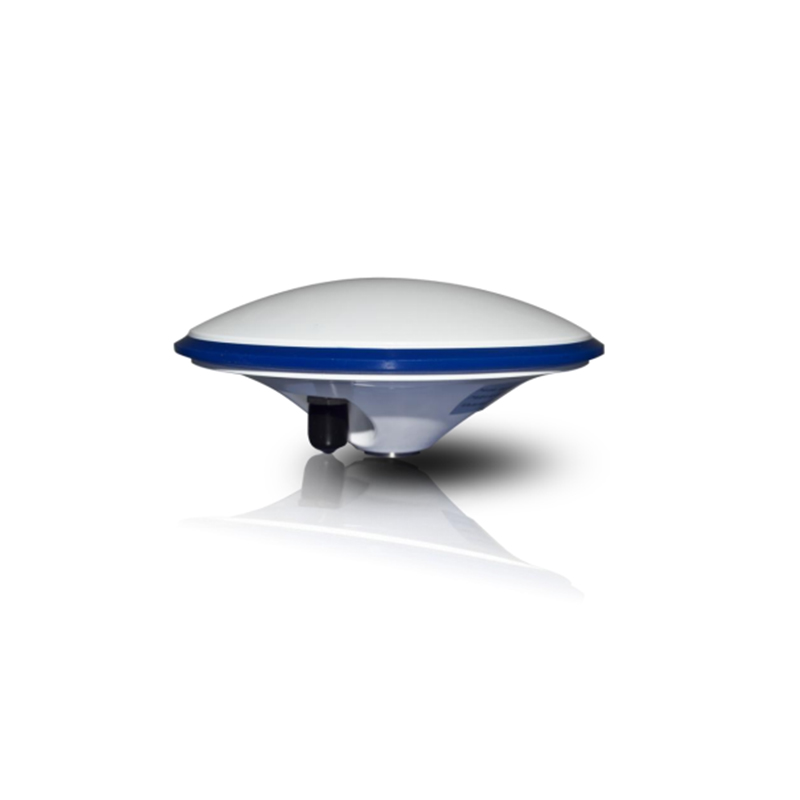
The best choke ring GPS antenna for RTK base stations combines advanced multipath rejection, wide frequency coverage, robust construction, and proven field performance. RTK applications demand antennas that can operate reliably in challenging environments, from dense urban areas with signal reflections to open-sky surveying sites. Understanding the fundamental characteristics that distinguish high-performance RTK antennas from standard models will help you make an informed investment that delivers long-term value and precision positioning reliability.
Understanding RTK Antenna Performance Requirements
Multipath Rejection and Signal Quality
Multipath interference occurs when GPS signals reflect off nearby surfaces before reaching the antenna, creating phase delays that degrade RTK accuracy. A choke ring GPS antenna designed for RTK uses concentric ground plane rings that absorb reflected signals at oblique angles while allowing direct signals from satellites to pass through. RTK base stations operating in mixed environments benefit significantly from this multipath rejection capability because it reduces the noise floor and improves signal-to-noise ratio across all tracked frequencies. When evaluating an RTK antenna, look for documented multipath performance specifications and independent test results that demonstrate how the antenna performs in both urban and open-sky conditions.
Frequency Coverage and GNSS Constellation Support
Modern RTK systems benefit from multi-constellation support, including GPS, GLONASS, Galileo, and BeiDou signals. An RTK antenna must cover all relevant frequency bands with consistent phase center stability to maintain positioning accuracy when switching between constellations or when satellite geometry changes. The best choke ring GPS antennas for RTK provide flat gain across the full frequency range and maintain precise phase center characteristics regardless of elevation angle or signal direction. RTK performance improves measurably when your base station antenna can simultaneously track signals from multiple satellite systems, reducing position dilution of geometric error and improving overall system robustness.
Key Selection Criteria for RTK Base Station Antennas
Phase Center Stability and Calibration
Phase center variation directly impacts the accuracy of RTK corrections transmitted from the base station to rover units. An RTK antenna with stable phase center characteristics maintains consistent reference geometry across different elevation angles and azimuth directions, which is essential for precise baseline determination and network RTK operations. When selecting a choke ring GPS antenna for RTK, verify that the manufacturer provides calibration data and phase center offset specifications for all supported frequency bands. Some advanced RTK antennas include individually calibrated phase center models that account for environmental effects, further improving correction accuracy. RTK networks often require antenna-specific calibration files to achieve their maximum performance potential.
Durability and Environmental Specifications
RTK base stations operate continuously in outdoor environments exposed to extreme temperatures, moisture, wind, and UV radiation. The best choke ring GPS antennas for RTK feature sealed connectors, corrosion-resistant materials, and robust mechanical construction that withstands years of field deployment. Verify that the RTK antenna meets relevant IP ratings for weatherproofing and thermal operating ranges that match your geographic deployment area. Additionally, check the radome material specification to ensure UV resistance and minimal signal attenuation, as degraded radomes can introduce frequency-dependent gain variations that compromise RTK accuracy over time. RTK operators in coastal regions or challenging climates should prioritize antennas with advanced environmental protection.
Installation and Integration Considerations
Mounting Platform and Electromagnetic Environment
The location and mounting of your choke ring GPS antenna directly affects RTK performance through ground plane interactions and environmental multipath sources. An RTK antenna performs optimally when mounted on a clear, flat ground plane at least 1.2 meters in diameter, positioned away from metal structures and RF noise sources. When evaluating RTK antenna options, consider the practical mounting constraints at your base station site, including cable routing accessibility, weatherproofing requirements, and future maintenance needs. Verify that your selected RTK antenna accommodates standard survey tripod mounting hardware and that the connector orientation suits your planned installation geometry. Proper RTK antenna positioning eliminates a major source of performance degradation that cannot be corrected through software or processing algorithms.
Cable Specifications and Signal Integrity
The RTK antenna connects to your receiver through specialized RF cables that must maintain precise impedance matching and signal integrity across GPS and GNSS frequency bands. Low-quality or improperly terminated cables can introduce return loss, signal reflections, and noise coupling that degrades the RTK positioning accuracy. When installing a choke ring GPS antenna for RTK operations, use cables specified by the manufacturer or equivalent quality shielded coax with proper connectors. RTK systems are particularly sensitive to cable-induced phase delays when baselines exceed 10 kilometers, making cable quality specifications often overlooked by operators implementing rapid RTK deployments. Invest in certified cables and proper installation practices to protect your RTK antenna investment.
FAQ
What is the difference between a standard GPS antenna and an RTK antenna?
Standard GPS antennas are designed for positioning accuracy within meters, while RTK antennas must deliver centimeter-level accuracy through superior multipath rejection, phase center stability, and consistent gain across all satellite elevation angles. RTK antennas use specialized design features like choke ring technology and precise phase center calibration that are unnecessary for basic navigation applications but critical for professional surveying and precision agriculture. The best choke ring GPS antenna for RTK incorporates advanced signal processing characteristics that simply don't apply to low-accuracy positioning use cases.
How does a choke ring improve RTK base station performance?
A choke ring antenna uses concentric conductive rings to suppress multipath signals arriving from below the horizon while allowing direct satellite signals to pass through with minimal distortion. This multipath suppression is particularly valuable for RTK operations in urban environments and near reflective surfaces where secondary signal paths would otherwise introduce phase errors. RTK base stations with choke ring antennas maintain higher signal-to-noise ratios and achieve faster convergence times compared to antennas without multipath rejection, directly improving the speed and reliability of RTK positioning for rover units.
What specifications should I verify before purchasing an RTK antenna?
Before selecting a choke ring GPS antenna for RTK deployment, verify multipath rejection performance, phase center stability across frequency bands, GNSS constellation support, environmental ratings for your climate zone, and availability of calibration data. Additionally, confirm that the RTK antenna connector type matches your receiver input, that mounting hardware is compatible with your deployment platform, and that the manufacturer provides technical support specific to RTK applications. RTK system performance ultimately depends on the antenna specification accuracy matching your actual operational requirements and environmental constraints.