
 EN
EN
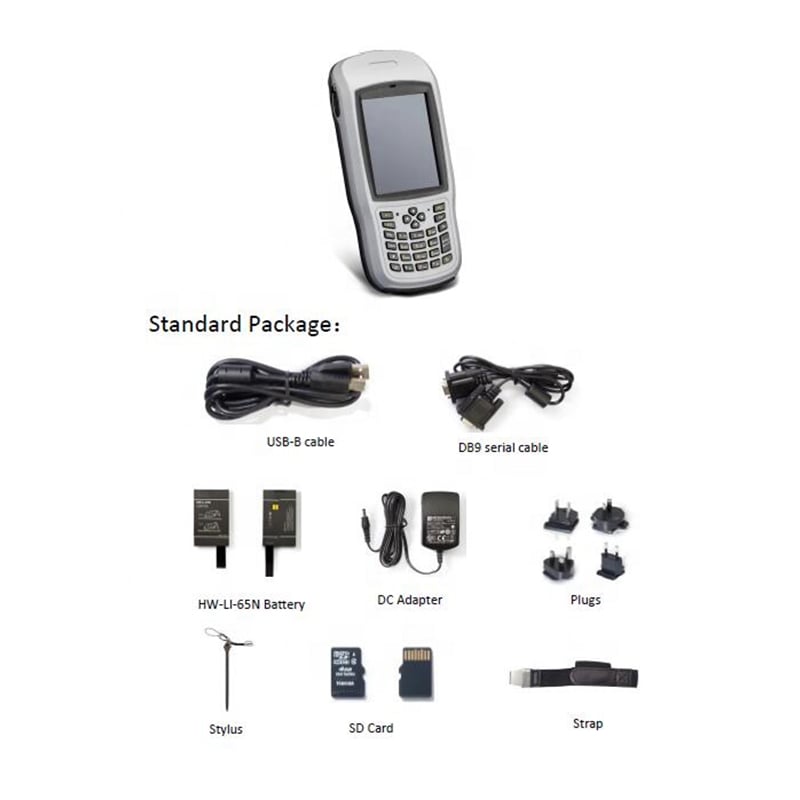
Achieving millimeter-level positioning accuracy has become a critical requirement in modern surveying, construction, and autonomous navigation applications. The choke ring GPS antenna represents a significant technological advancement that enables precise RTK solutions by dramatically reducing multipath errors and signal distortion. Unlike traditional antennas, choke ring GPS antennas incorporate specialized ground plane designs that minimize reflected signals bouncing off surrounding surfaces, ensuring that RTK receivers capture only the cleanest satellite data. This foundational technology underpins the accuracy and reliability that professionals demand from RTK systems in demanding field environments where even small measurement errors can lead to costly mistakes.
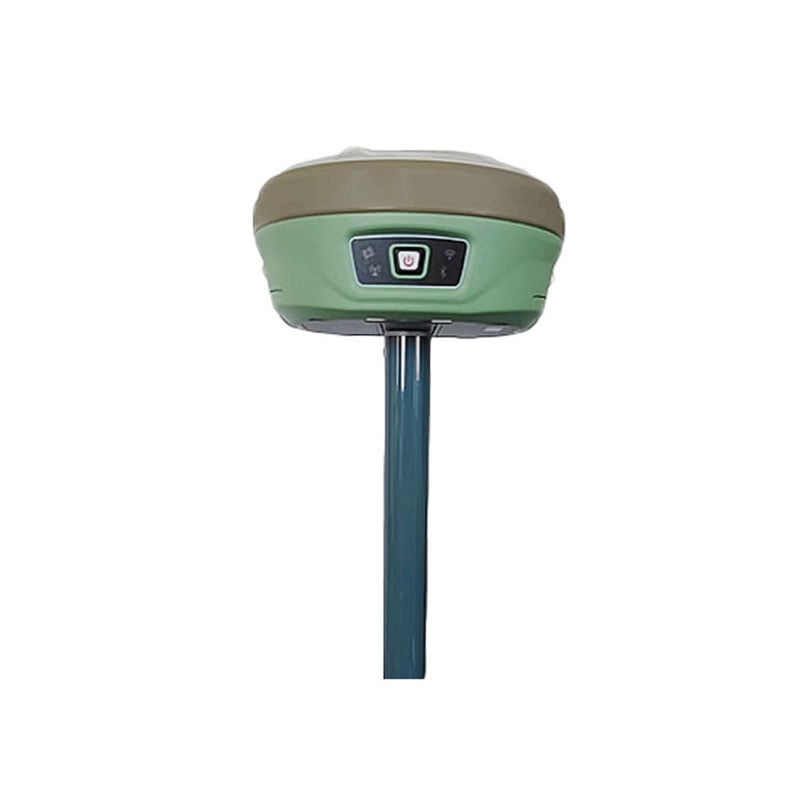
RTK technology operates by using real-time satellite corrections from ground-based reference stations, allowing GPS receivers to calculate positions with centimeter or millimeter precision instead of the meter-level accuracy provided by standard GPS. The choke ring antenna's ability to maintain signal integrity directly enhances RTK performance by ensuring that the receiver obtains high-quality pseudorange and carrier phase measurements from all visible satellites. When RTK systems receive contaminated signals riddled with multipath errors, the correction algorithms struggle to converge reliably, leading to initialization failures and positioning uncertainty. By implementing a choke ring GPS antenna in your RTK setup, you invest in antenna hardware that fundamentally improves the robustness and convergence speed of RTK solutions, reducing time-to-fix and increasing operational efficiency across your surveying and navigation workflows.
Understanding Multipath Mitigation in RTK Antennas
How Choke Ring Design Eliminates Signal Reflections
The choke ring GPS antenna achieves superior signal purity through its distinctive circular groove pattern machined or etched into the ground plane surrounding the phase center. These grooves act as electromagnetic barriers that absorb and redirect reflected signals attempting to reach the antenna element from oblique angles. In typical surveying scenarios, signals reflected from metal fences, nearby buildings, water surfaces, or vehicle bodies create multipath errors that degrade RTK accuracy. The choke ring design prevents these secondary reflections from interfering with direct satellite signals, ensuring that RTK receivers process only legitimate satellite transmissions. This multipath rejection capability makes choke ring GPS antennas ideal for challenging environments where conventional antennas would struggle to maintain RTK positioning accuracy and consistency.
RTK Performance Gains from Signal Integrity
When RTK systems operate with multipath-contaminated signals, the real-time kinematic processing engine must work harder to filter erroneous data and achieve convergence. A choke ring GPS antenna reduces this computational burden by delivering clean measurements that require minimal correction and outlier rejection. Field measurements consistently demonstrate that RTK baselines using choke ring antennas achieve faster convergence times, typically initializing within seconds rather than minutes compared to conventional antennas. The enhanced signal-to-noise ratio directly translates to higher-accuracy positions and greater reliability in demanding RTK applications. Professional surveyors and construction teams recognize that investing in RTK antenna quality pays dividends through reduced field time, fewer retry cycles, and guaranteed centimeter-level positioning accuracy on every shot.
RTK Implementation Strategies for Millimeter Precision
Establishing RTK Base Stations with Optimal Antenna Selection
RTK systems begin with a fixed base station antenna that receives satellite signals and calculates correction data to broadcast to mobile rovers in real-time. Choosing a choke ring GPS antenna for your RTK base station ensures that all correction calculations originate from high-integrity measurements uncontaminated by multipath. This foundation directly impacts the accuracy of every RTK fix your rovers achieve in the field. When base station antennas introduce multipath error into the correction model, rover units inherit those errors regardless of their own antenna quality, perpetuating positioning uncertainty across your entire RTK network. Deploying a choke ring GPS antenna at the RTK base station location represents a strategic investment that guarantees consistent, reliable corrections flowing to all rover units operating within your RTK system architecture.
Mobile RTK Rovers and Real-Time Convergence
RTK rovers mounted on survey poles, construction equipment, or autonomous platforms benefit equally from choke ring antenna technology by achieving faster convergence to centimeter-level positions in the field. Mobile RTK antennas face particularly challenging conditions because rovers operate near ground surfaces, buildings, and metallic equipment that generate intense multipath environments. A choke ring GPS antenna dramatically suppresses these reflections, enabling RTK receivers to lock onto satellite signals reliably even in cluttered site conditions. Surveyors using RTK rovers with choke ring antennas consistently report reduced initialization time, fewer ambiguity resolution failures, and higher success rates during rapid-static and kinematic positioning workflows. This operational reliability transforms RTK from an occasionally frustrating technology into a dependable positioning tool that field teams can trust to deliver millimeter-level accuracy on demand throughout their projects.
RTK Accuracy Validation and Performance Monitoring
Quality Indicators for RTK Positioning Success
RTK systems report several diagnostic indicators that reveal antenna quality and signal health, including dilution of precision metrics, satellite geometry, and individual pseudorange residuals. When RTK receivers paired with choke ring antennas process satellite data, these quality metrics exhibit tighter distributions and fewer outliers compared to conventional antenna setups. Professionals monitoring RTK performance can observe faster position convergence, reduced fluctuation in reported coordinates, and improved consistency across multiple initialization cycles. These diagnostic improvements directly result from the choke ring antenna's superior multipath rejection, which ensures that RTK algorithms receive the highest-quality input data available. By selecting a choke ring GPS antenna for your RTK infrastructure, you gain not only millimeter-level positioning accuracy but also the visibility and diagnostics needed to validate RTK performance and optimize your surveying operations.
RTK Application Success Across Industries
Precision agriculture relies on RTK systems to guide autonomous tractors and variable-rate application equipment with centimeter accuracy across thousands of acres. Construction projects depend on RTK for stake-out operations, machine control, and volumetric calculations that determine project profitability. Surveying professionals use RTK to establish control networks, perform boundary demarcation, and capture topographic data with millimeter confidence. Each of these applications demands that RTK systems deliver consistent, repeatable accuracy regardless of environmental conditions. Choke ring antennas provide the foundation for this reliability by ensuring that RTK receivers process only legitimate satellite signals free from multipath contamination. Organizations deploying RTK technology in production workflows understand that antenna selection directly impacts project success, timeline adherence, and regulatory compliance—making choke ring GPS antenna investment a practical necessity rather than an optional upgrade.
FAQ
What RTK accuracy level can choke ring antennas realistically achieve?
Choke ring GPS antennas enable RTK systems to achieve horizontal positioning accuracy of plus or minus 1 to 2 centimeters and vertical accuracy of plus or minus 2 to 3 centimeters when combined with proper base station geometry and atmospheric correction models. Actual performance depends on satellite constellation geometry, atmospheric conditions, correction latency, and the quality of baseline calibration. RTK systems using high-quality choke ring antennas consistently demonstrate repeatable accuracy within these specifications across diverse field environments and applications.
How does RTK antenna multipath rejection improve field productivity?
RTK antennas with superior multipath rejection accelerate convergence times from minutes down to seconds, allowing surveyors and equipment operators to capture positions faster and move to the next measurement or stake-out point. Reduced initialization failures mean fewer retry attempts and less downtime troubleshooting signal problems. Choke ring antennas directly enable this productivity improvement by delivering clean measurements that RTK algorithms can process immediately without extensive error correction overhead.
Can RTK systems work without choke ring antennas?
RTK systems function with conventional antennas in ideal field conditions with clear sky views and minimal multipath, but accuracy degrades noticeably in challenging environments near buildings, structures, or dense vegetation. Choke ring GPS antennas extend RTK capability into difficult real-world sites where conventional antennas would fail to achieve reliable convergence. For professional applications where positioning consistency and uptime are critical, deploying RTK systems with choke ring antennas represents best practice that eliminates environmental limitations and guarantees performance.