
 EN
EN
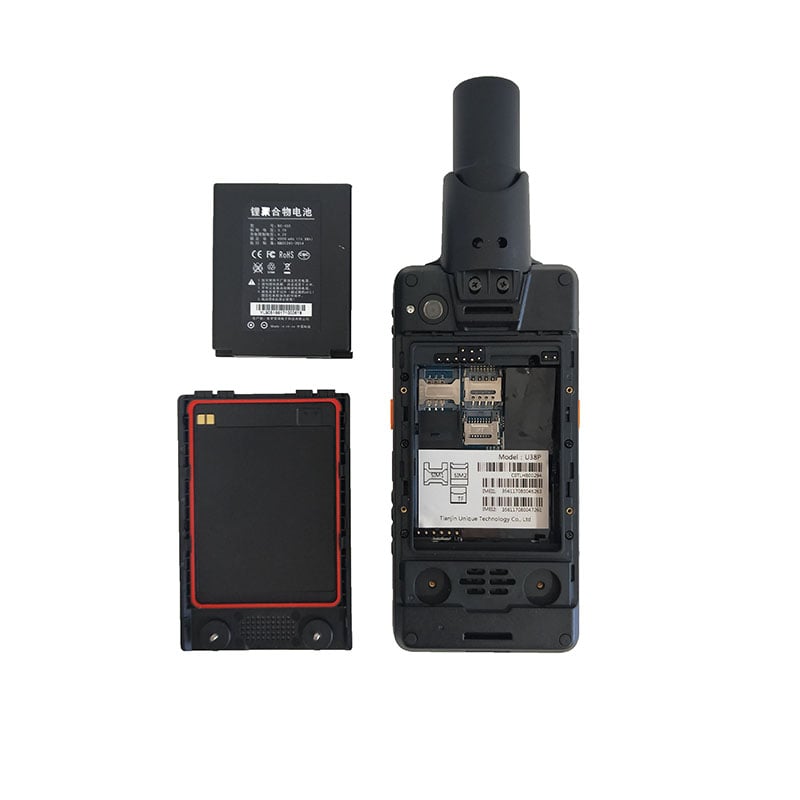
When you invest in a high accuracy handheld GPS device for field operations, surveying, or precision data collection, the manufacturer's stated specifications are only the beginning of the story. Real-world reliability depends on how the device performs under the actual conditions your team faces — variable satellite coverage, challenging terrain, electromagnetic interference, and demanding workflows that push hardware to its limits. Without a structured reliability testing approach, you risk deploying equipment that underperforms at critical moments, leading to costly rework, data integrity problems, or project delays.
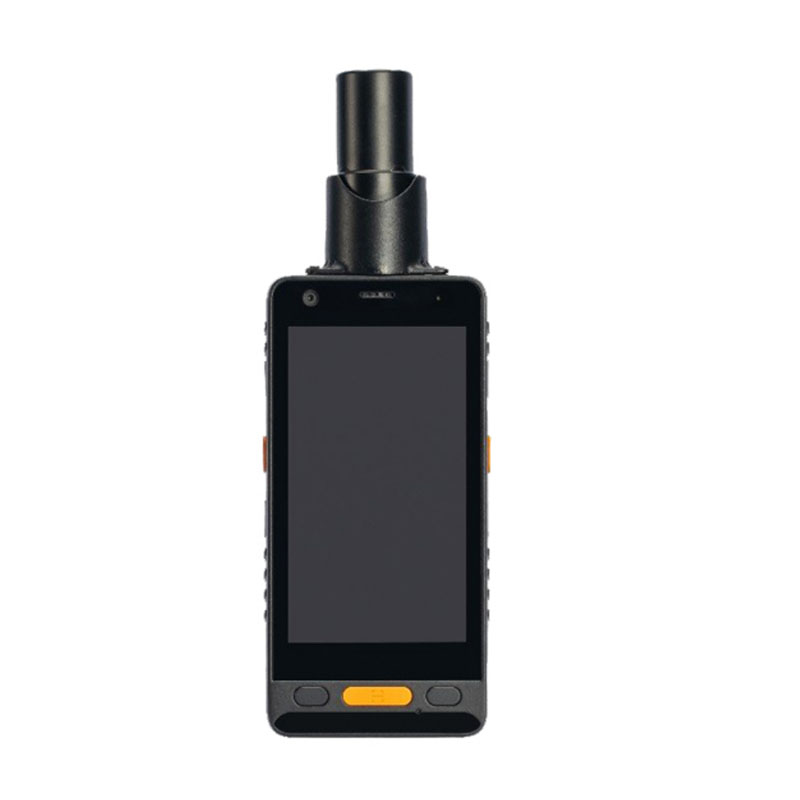
This article walks through a practical, systematic framework for testing the reliability of a high accuracy handheld GPS unit before committing it to professional use. From positional accuracy benchmarks and signal acquisition tests to environmental stress assessments and battery endurance evaluations, every layer of reliability must be examined with discipline and repeatability. The goal is not simply to confirm that a device 'works' — it is to understand precisely how it performs, where its limits lie, and whether those limits are acceptable for your specific operational demands.
Understanding What Reliability Means for a High Accuracy Handheld GPS
Beyond Specification Sheets
A specification sheet for a high accuracy handheld GPS typically lists values such as horizontal accuracy in centimeters under RTK fixed conditions, satellite constellation support, and IP rating for weather resistance. These numbers represent ideal or controlled performance. Reliability, by contrast, is the consistency with which the device achieves near-specification performance across diverse, uncontrolled real-world environments. A device that achieves 2 cm accuracy in an open sky but degrades to 1.5 meter accuracy in a light canopy environment may not qualify as truly reliable for forestry or urban corridor surveying.
When reliability testing is conducted systematically, it reveals the gap between rated performance and operational performance. This gap is what separates a device that is adequate for occasional use from one that professionals can depend on during high-stakes field campaigns. Understanding this distinction is the first step toward building a meaningful test protocol for your high accuracy handheld GPS hardware.
Reliability also encompasses the consistency of software and firmware behavior. Freezes, connectivity dropouts with correction services, or unexpected reboots during active data collection are reliability failures just as much as inaccurate positioning. Any comprehensive test plan must evaluate both hardware and software stability over extended operating sessions.
Defining Your Operational Requirements First
Before conducting any test, you must define the operational envelope in which your high accuracy handheld GPS will be deployed. Will it be used in open agricultural fields, dense urban canyons, forested slopes, or coastal survey zones? Each environment presents different satellite geometry challenges, multipath interference risks, and physical demands on the device. Your test design should reflect these real conditions rather than simulate generic scenarios.
Additionally, consider the accuracy threshold your work requires. Sub-centimeter accuracy is essential for cadastral surveying and structural inspection, while sub-meter accuracy may suffice for asset inventory or trail mapping. Knowing your threshold allows you to evaluate whether the device's reliability is acceptable — meaning it consistently hits your accuracy target across the majority of your test scenarios, not just optimal ones.
Core Positioning Accuracy Tests
Static Benchmark Testing Against Known Control Points
The most foundational test for any high accuracy handheld GPS unit is the static benchmark comparison. This involves setting up the device over a geodetic control point with a precisely known coordinate — typically a National or regional survey monument — and recording positions over a defined observation period. The collected positions are then compared against the known coordinate to calculate horizontal and vertical error.
Conduct this test across multiple sessions at different times of day to capture variations in satellite geometry, represented by the Dilution of Precision (DOP) values. A reliable high accuracy handheld GPS should produce consistent results regardless of session timing, provided the satellite constellation count remains adequate. If accuracy degrades significantly during sessions with higher PDOP values, note the specific thresholds at which degradation begins — this becomes a practical operating guideline for field teams.
Perform this test in both RTK-fixed mode and standalone GNSS mode if applicable. RTK mode accuracy should be significantly superior, and the time-to-fix-RTK (the elapsed time between powering on and achieving a fixed solution) should be measured and recorded as a key reliability metric. Devices that consistently achieve RTK fix within two to three minutes under good satellite conditions demonstrate a level of operational reliability that translates directly into field productivity.
Kinematic Accuracy Testing Along Known Transects
Static tests confirm the best-case positional potential of a high accuracy handheld GPS. Kinematic testing evaluates accuracy during movement, which is the actual use case for most handheld field data collection. Establish a reference transect — a measured path between two or more known points — and walk the device along this path at a consistent pace while recording positions at a fixed interval.
Compare the recorded track against the known transect geometry to assess position drift, fix instability, and heading accuracy. Pay particular attention to areas where obstructions such as building edges, tree lines, or terrain features cause brief signal interruptions. A reliable device will recover RTK fix quickly after passing obstructions rather than dropping to a float or autonomous solution for extended periods.
Repeat this kinematic test across several environments that represent your real deployment conditions. Document fix-to-float transitions, float-to-fix recovery times, and maximum observed positional error during recovery phases. These metrics together paint a comprehensive picture of how well the high accuracy handheld GPS maintains precision during active fieldwork.
Signal Acquisition and Environmental Resilience Testing
Multi-Environment Signal Performance Assessment
A high accuracy handheld GPS device must be tested in multiple environment types to assess signal acquisition and retention performance. Open sky environments establish a baseline, while partially obscured environments — urban streets flanked by mid-rise buildings, forest edges, or river valleys — reveal how the device handles compromised satellite geometry. These are the conditions where reliability differentiates good devices from excellent ones.
During these tests, monitor satellite count, signal strength values, and fix type in real time using the device's diagnostic display or a connected data collector application. Record how quickly the device acquires initial fix in each environment and whether fix type remains stable during slow walking. A device that drops to float solution frequently in moderately obstructed environments will create data quality problems in real operational conditions.
Also test multi-constellation performance. Modern high accuracy handheld GPS hardware typically supports GPS, GLONASS, BeiDou, and Galileo. Verify that the device correctly uses signals from all supported constellations and that enabling all constellations improves fix reliability in challenging environments. In some cases, conflicting signal processing can introduce instability — testing allows you to identify and mitigate this before deployment.
Multipath and Interference Resistance Evaluation
Multipath interference — where satellite signals reflect off nearby surfaces before reaching the antenna — is one of the most common sources of positional error in real-world GNSS use. To evaluate how a high accuracy handheld GPS handles multipath, test the device in environments with prominent reflective surfaces: glass-faced buildings, metal rooftops, standing water bodies, or vehicle bodies nearby.
Compare readings taken at identical control points with and without nearby reflective surfaces to quantify the multipath-induced error contribution. Devices with advanced antenna designs and multipath mitigation algorithms will show smaller error increases in these conditions. This test result is particularly important for applications in urban infrastructure inspection, industrial facility mapping, or coastal survey work where reflective surfaces are unavoidable.
Electromagnetic interference from power lines, communication towers, or industrial equipment can also degrade high accuracy handheld GPS performance. If your operational environment includes these sources, conduct proximity tests near representative interference sources and document any degradation in fix type, accuracy, or signal-to-noise ratios. This helps set exclusion zones or procedural guidelines for field teams.
Hardware Durability and Operational Endurance Testing
Environmental Stress and Ingress Protection Verification
A high accuracy handheld GPS intended for professional field use must withstand the physical demands of outdoor environments. Manufacturer IP ratings indicate resistance to dust and water ingress, but real-world field conditions often involve exposure patterns more complex than standardized IP test scenarios. Practical durability testing should include controlled water exposure — such as operating the device during moderate rainfall or rinsing under running water — and verification that device performance is unaffected afterward.
Temperature range testing is equally critical. If your operations span seasons or geographic regions with extreme temperatures, test the device at both the high and low ends of its rated operating temperature range. Cold temperatures can reduce battery capacity significantly, affect touchscreen responsiveness, and in some cases alter GNSS chipset timing behavior. Verify that the device initializes correctly and maintains accurate positioning across the full temperature envelope you expect to encounter.
Drop and shock resistance testing is also warranted for handheld devices. A controlled drop test from typical working heights — such as waist height or shoulder height — onto representative surfaces confirms whether the device survives common field accidents without compromising internal calibration or physical integrity. This is not about abuse testing but about confirming that the device is robust enough for daily professional handling.
Battery Life and Long-Session Operational Testing
Battery endurance is a critical reliability dimension for any high accuracy handheld GPS used in extended field campaigns. Manufacturer-stated battery life figures are typically derived from controlled test conditions that do not fully represent intensive RTK data collection with active Bluetooth communication, display at typical brightness, and correction data streaming. Real-world battery life is often 20 to 30 percent shorter than rated values under intensive use.
Conduct a full-session battery test by operating the device continuously under representative conditions — RTK mode active, data recording ongoing, and all communication interfaces enabled — until the battery is depleted. Record the actual session duration and compare it to your field campaign requirements. If a typical field day requires eight hours of operation and the device provides only five under full load, you must plan for battery swapping or charging solutions, which affects field logistics and team productivity.
Also test battery behavior near depletion. Some high accuracy handheld GPS devices begin to show positional drift, logging interruptions, or communication instability as battery voltage drops below a certain threshold. Identifying this behavior during controlled testing allows field teams to set conservative low-battery thresholds for ending data collection sessions before quality degradation occurs.
Data Integrity and Software Reliability Testing
Data Logging Consistency and Format Validation
Position accuracy alone does not constitute full reliability for a high accuracy handheld GPS used in professional data workflows. The integrity of logged data — including coordinate accuracy, timestamp precision, and file format compliance — must be systematically validated. Conduct extended data logging sessions and review output files for missing epochs, duplicate records, timestamp gaps, or coordinate anomalies that may indicate firmware-level logging errors.
Validate that exported data formats — whether RINEX, NMEA, or proprietary collector formats — import correctly into your GIS or post-processing software without attribute loss or coordinate transformation errors. Some devices introduce subtle datum or projection mismatches when data is exported to generic formats. Discovering these issues during structured testing rather than mid-project prevents costly data correction work in the field or office.
Test data logging behavior during fix-type transitions, such as when the device switches from RTK fixed to float and back. Confirm that fix quality flags are correctly recorded in the output data so that post-processing workflows can filter or flag lower-quality observations appropriately. A high accuracy handheld GPS that accurately records its own confidence state is far more reliable in practice than one that logs all positions as equivalent regardless of underlying fix quality.
Correction Service Connectivity and Robustness
Most high accuracy handheld GPS devices rely on external correction data — delivered via RTK base station, NTRIP network, or satellite-based augmentation — to achieve centimeter-level accuracy. The reliability of the correction data link is therefore an integral part of overall system reliability. Test connectivity robustness by simulating common real-world scenarios: brief cellular coverage gaps, NTRIP caster timeouts, and reconnection after communication interruption.
Evaluate how quickly the device re-establishes correction data connectivity and re-achieves RTK fix after a communication dropout. Devices that recover seamlessly within seconds minimize data gaps in continuous collection workflows. Those that require manual intervention to reconnect or take several minutes to re-fix after a brief signal gap will impose a practical reliability burden on field teams working in areas with intermittent connectivity.
Also test the device's behavior when correction data is available but of marginal quality — for example, when the baseline to the reference station is near the operating range limit, or when the reference station is experiencing local interference. Monitoring position quality indicators during these marginal conditions reveals how gracefully the high accuracy handheld GPS degrades and whether it correctly communicates data quality status to the operator.
FAQ
How many test sessions should I conduct before approving a high accuracy handheld GPS for operational deployment?
There is no single universal answer, but a robust pre-deployment evaluation typically involves a minimum of five to seven independent test sessions conducted across different times of day, satellite configurations, and environmental conditions. This sample size allows you to identify performance patterns and outliers rather than drawing conclusions from a single favorable or unfavorable test outcome. For critical applications such as cadastral surveying or infrastructure monitoring, extending the test program to ten or more sessions across multiple environments is a sound investment that reduces deployment risk significantly.
Can I trust a high accuracy handheld GPS to maintain centimeter accuracy in dense urban environments?
Centimeter-level RTK accuracy in dense urban environments is challenging for any high accuracy handheld GPS due to satellite signal obstruction, multipath interference from building facades, and degraded satellite geometry. Most devices will achieve RTK-fixed solutions in open urban areas or streets with moderate building height but may drop to float or autonomous mode in deep urban canyons. Testing in your specific target environment before project commitment is essential — do not assume that a device's open-sky accuracy rating translates directly into urban performance without field verification.
What is the most important single metric to evaluate when testing a high accuracy handheld GPS for reliability?
If a single metric must be prioritized, RTK fix consistency rate — the percentage of total observation time during which the device maintains a fixed RTK solution under representative field conditions — is arguably the most operationally meaningful reliability indicator. A device with excellent peak accuracy but poor fix consistency will produce unreliable datasets with mixed-quality observations that are difficult to use in professional workflows. High fix consistency, even if peak accuracy is slightly lower, typically delivers more predictable and usable field data across extended campaigns.
How often should reliability testing be repeated after initial deployment of a high accuracy handheld GPS?
Reliability should be re-evaluated after any firmware update, after physical damage events such as drops or liquid exposure, and at regular intervals of six to twelve months for devices in intensive daily use. Firmware updates can alter GNSS chipset behavior, correction data processing logic, or data logging routines in ways that affect field performance. Periodic re-testing against known control points and documented previous results ensures that performance has not drifted and that the high accuracy handheld GPS continues to meet your operational accuracy standards over its service life.
Table of Contents
- Understanding What Reliability Means for a High Accuracy Handheld GPS
- Core Positioning Accuracy Tests
- Signal Acquisition and Environmental Resilience Testing
- Hardware Durability and Operational Endurance Testing
- Data Integrity and Software Reliability Testing
-
FAQ
- How many test sessions should I conduct before approving a high accuracy handheld GPS for operational deployment?
- Can I trust a high accuracy handheld GPS to maintain centimeter accuracy in dense urban environments?
- What is the most important single metric to evaluate when testing a high accuracy handheld GPS for reliability?
- How often should reliability testing be repeated after initial deployment of a high accuracy handheld GPS?