
 EN
EN

Real-time kinematic positioning, or RTK, has become the gold standard for high-precision location services in surveying, mapping, construction, and autonomous systems. The foundation of any RTK system depends fundamentally on the antenna that captures satellite signals. A multi-constellation choke ring GPS antenna that supports RTK across GPS, GLONASS, and Beidou systems represents a significant advancement in positioning accuracy and reliability. Understanding how RTK benefits from multi-constellation support is essential for professionals seeking to optimize their positioning infrastructure and achieve consistent sub-centimeter accuracy.
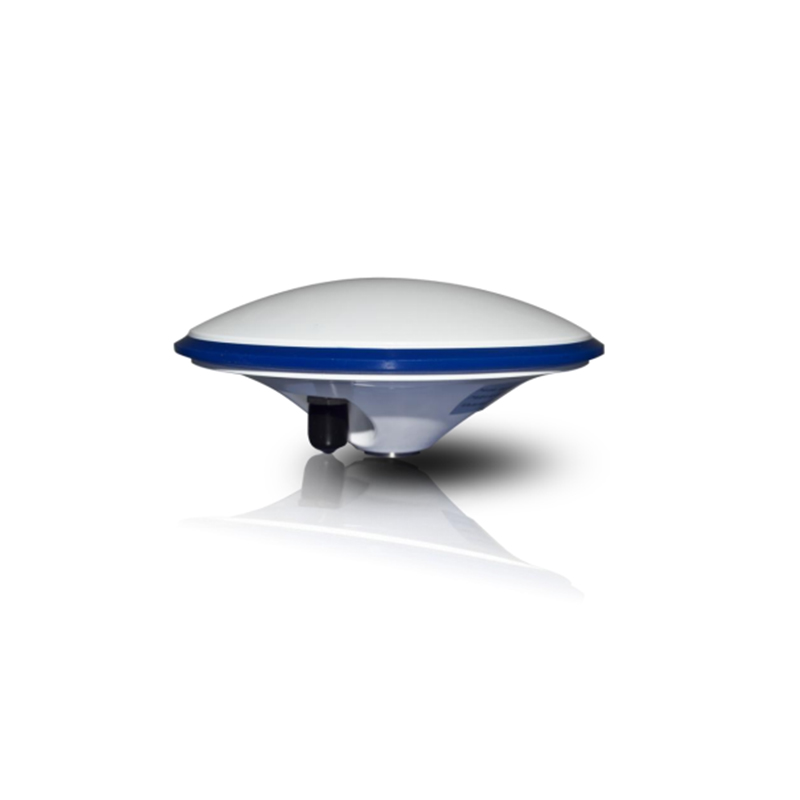
An RTK system requires constant satellite visibility and signal strength to maintain the integer ambiguity resolution that defines RTK positioning. When you integrate a multi-constellation antenna into your RTK workflow, you gain access to satellites from multiple global navigation satellite systems simultaneously. This redundancy directly enhances RTK performance by increasing satellite geometry, reducing dilution of precision, and maintaining RTK lock during challenging signal conditions such as urban canyons or forest environments.
Understanding RTK and Multi-Constellation Integration
What RTK Requires from Antenna Hardware
Real-time kinematic positioning demands that your antenna deliver phase measurements with exceptional consistency and minimal noise. RTK achieves centimeter-level accuracy by resolving the integer ambiguity of carrier-phase measurements between a rover and a reference station. Any degradation in signal quality, multipath reflections, or loss of satellite lock directly undermines RTK performance. A choke ring antenna design specifically addresses multipath suppression by creating a ring of resonant elements that attenuate ground-reflected signals. When this proven multipath rejection technology is combined with multi-constellation RTK support, the antenna becomes capable of receiving signals from GPS, GLONASS, and Beidou simultaneously, dramatically improving the robustness of your RTK solution.
How Multi-Constellation Systems Enhance RTK Availability
Single-constellation RTK systems, whether relying solely on GPS, depend on a limited number of visible satellites at any given time and location. In contrast, multi-constellation RTK leverages all available satellite signals across different systems. GPS alone may provide 12 to 14 visible satellites in open sky; adding GLONASS typically adds another 8 to 10 satellites, and Beidou regional coverage adds yet more. This expanded satellite pool means that RTK systems maintain better geometry, faster integer resolution, and greater resilience to signal blockage. The redundancy inherent in multi-constellation RTK directly translates to shorter initialization times, more stable solution locks, and superior performance in partially obstructed environments where single-constellation RTK might struggle or fail.
Technical Performance Advantages of Choke Ring Antennas for RTK
Multipath Suppression and Signal Integrity
Multipath occurs when satellite signals reflect off nearby structures, water, or ground surfaces before reaching the antenna. These reflected signals arrive slightly delayed and interfere with direct signals, corrupting phase measurements critical to RTK accuracy. A choke ring antenna design features concentric conducting rings tuned to specific frequencies. These rings suppress ground-reflected signals while allowing direct signals to pass through. For RTK applications, this multipath rejection capability is not merely an improvement—it is a foundational requirement. When combined with multi-constellation support for RTK, the antenna maintains clean phase measurements across all satellite systems, ensuring that your RTK positioning maintains its integrity regardless of which constellation provides the dominant signal at any moment.
Broadband Coverage and System Flexibility
Modern multi-constellation RTK antennas must support GPS L1 and L2 frequencies, GLONASS L1 and L4 frequencies, and Beidou B1 and B3 frequencies simultaneously. A properly designed choke ring antenna achieves broadband performance across these overlapping frequency bands without performance degradation. This multi-band capability means that a single antenna installation supports RTK positioning regardless of which satellite constellation is dominant at your location or time of observation. RTK systems that can seamlessly track across all available constellations achieve higher solution reliability and faster convergence than systems limited to single constellations. The engineering behind broadband choke ring antennas ensures that RTK performance remains consistent across all supported frequencies.
Practical Implementation of Multi-Constellation RTK Systems
Integration with RTK Reference Networks and Corrections
Real-world RTK deployments depend on reference stations that broadcast correction data to rovers. Modern reference station networks increasingly support multi-constellation RTK by transmitting corrections for GPS, GLONASS, and Beidou simultaneously. Your rover antenna must be capable of receiving and processing all these correction streams to realize the full benefit. A multi-constellation choke ring antenna designed for RTK applications allows your rover to select the optimal combination of satellites and corrections in real time. In areas where GPS signals are weak or intermittent, your RTK system automatically leverages stronger GLONASS or Beidou signals without requiring manual reconfiguration. This automatic constellation switching represents a key operational advantage of multi-constellation RTK infrastructure.
Field Deployment Scenarios and Performance Optimization
Surveying operations, construction machine control, and precision agriculture all benefit from multi-constellation RTK support. In dense urban environments where tall buildings block direct satellite signals, multi-constellation RTK maintains position lock more reliably than single-constellation systems. Forest and agricultural field applications experience similar advantages because the broader satellite pool increases the probability of maintaining sufficient signal geometry. RTK positioning with multi-constellation support also reduces the survey team's dependency on time-of-day and season-specific RTK availability. Winter months in northern latitudes, when GPS satellite geometry becomes unfavorable, show measurable RTK performance improvements when GLONASS and Beidou constellations supplement GPS coverage. Professional surveyors and operators who deploy multi-constellation RTK antennas report faster initialization, fewer solution dropouts, and higher confidence in positioning accuracy throughout the day.
FAQ
Why is a choke ring antenna design specifically important for RTK positioning?
Choke ring antennas suppress multipath reflections that degrade the phase measurements underlying RTK accuracy. Multipath causes errors in the integer ambiguity resolution process that defines RTK. By rejecting reflected signals while preserving direct signals, choke ring antennas maintain the phase measurement integrity necessary for reliable RTK positioning. This multipath suppression capability becomes even more critical in multi-constellation RTK systems because you are integrating phase measurements from multiple satellite systems simultaneously, and any degradation in signal quality cascades through the entire RTK solution.
Can multi-constellation RTK antennas improve positioning reliability in urban environments?
Yes, multi-constellation RTK antennas significantly improve urban positioning reliability. Urban canyons create signal blockage and multipath that challenge single-constellation RTK systems. When you add GLONASS and Beidou satellites to the solution, you increase the probability of maintaining sufficient satellite geometry despite obstructions. Multi-constellation RTK systems recover from temporary signal loss faster and maintain lock through more aggressive urban navigation scenarios. The combination of choke ring multipath suppression and multi-constellation satellite diversity creates a robust RTK solution specifically suited to challenging urban environments where traditional GPS RTK often fails.
What initialization time improvements can multi-constellation RTK deliver compared to single-constellation systems?
Multi-constellation RTK typically achieves integer ambiguity resolution 30% to 50% faster than single-constellation systems because the expanded satellite pool enables faster and more reliable integer resolution. RTK initialization depends on observing sufficient satellite geometry and signal quality to resolve integer ambiguities uniquely. With more satellites available from multiple constellations, the RTK engine converges to a fixed integer solution more quickly and with higher confidence. This faster initialization translates to operational time savings in surveying workflows where setup time directly impacts project scheduling and productivity.