
 EN
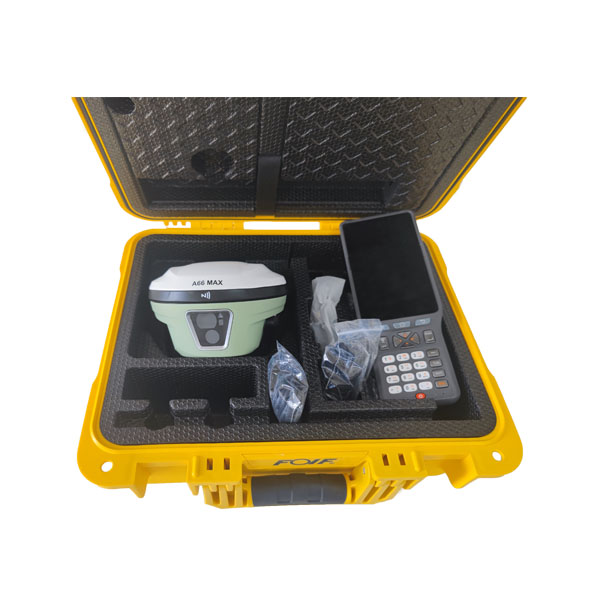
Real-time kinematic positioning, or RTK, has become the standard for high-precision surveying and construction applications worldwide. When implementing RTK systems, antenna selection plays a critical role in determining overall accuracy and reliability. The choice between a choke ring antenna and a standard patch antenna directly affects RTK performance, multipath rejection, and the consistency of positioning results across varying environmental conditions. Understanding these differences helps professionals make informed decisions about their RTK infrastructure investment.
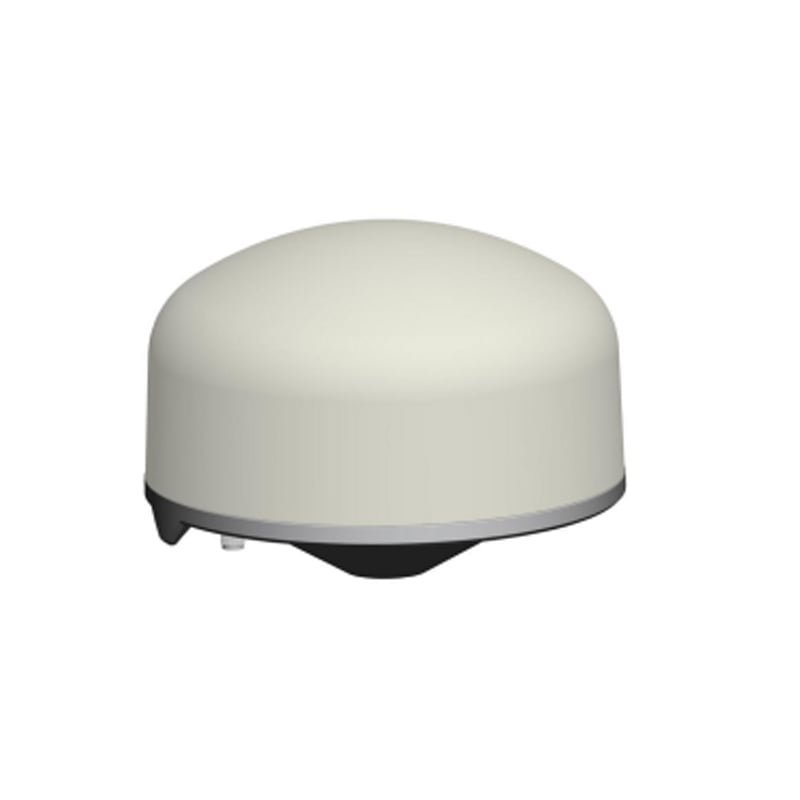
Both choke ring and standard patch antennas serve RTK applications, but they differ significantly in construction, electromagnetic performance, and practical deployment scenarios. A choke ring antenna features concentric metal rings that suppress ground reflections and interference, whereas a standard patch antenna relies on a flat, planar design optimized for direct signal reception. For RTK professionals evaluating antenna technology, recognizing these structural differences and their operational consequences is essential to selecting the right solution for your specific surveying environment and accuracy requirements.
Multipath Rejection and Signal Quality in RTK Systems
How Choke Ring Antennas Reduce Multipath in RTK Operations
Multipath error represents one of the greatest challenges in achieving consistent RTK accuracy. When radio waves bounce off nearby objects—buildings, metal structures, ground surfaces—before reaching an RTK antenna, they create false signal echoes that degrade positioning quality. Choke ring antennas combat this through their distinctive ring geometry, which creates a controlled electromagnetic environment that rejects signals arriving from oblique angles. This rejection mechanism allows the choke ring antenna to isolate direct satellite signals while suppressing the reflected waves that undermine RTK performance, making RTK positioning more stable in urban and built-up environments where multipath is most severe.
The concentric rings of a choke ring antenna work by creating resonant cavities tuned to suppress out-of-phase signals typical of ground-reflected multipath. For RTK users operating near structures or in signal-rich environments, this capability delivers measurable benefits in solution convergence time and integer ambiguity resolution speed. Standard patch antennas lack this specialized multipath suppression, which means RTK systems using patch antennas often experience longer convergence periods and reduced confidence in critical positioning moments, particularly in challenging urban RTK deployment scenarios.
Signal Reception Performance in Standard Patch Antennas
Standard patch antennas take a different approach to RTK signal reception, prioritizing broad-spectrum antenna gain and omnidirectional sensitivity. The flat, microstrip patch design offers simpler manufacturing, lower cost, and straightforward mechanical integration into RTK rover units and base stations. For RTK applications in open-sky environments—agricultural fields, large construction sites, mining operations—where multipath sources are minimal, a standard patch antenna delivers acceptable performance. The RTK accuracy achievable with standard patch antennas remains within acceptable tolerances for many surveying applications, provided the antenna operates in environments with clear signal paths and minimal ground interference.
However, standard patch antennas show performance degradation as RTK operational environments become more complex. The absence of multipath suppression means RTK base stations and rovers equipped with standard patch antennas are more susceptible to signal contamination, which translates to slower convergence, noisier solutions, and occasionally loss of RTK fix status during critical measurements. For mission-critical RTK surveying, the performance ceiling of standard patch antennas may prove limiting, whereas choke ring antennas provide greater margin and stability for sustained RTK operations.
Environmental Resilience and RTK Deployment Flexibility
Choke Ring Antenna Advantages in Challenging RTK Environments
Professional RTK surveyors often find themselves operating in hostile signal environments where traditional antennas struggle to maintain reliable positioning. Urban canyons, dense forest areas, industrial sites with large metal structures, and proximity to radio transmission towers all create electromagnetic stress that demands antenna robustness. Choke ring antennas excel in these challenging RTK scenarios due to their superior interference rejection and ground-bounce suppression. The RTK professional deploying a choke ring antenna in an urban environment gains confidence that their RTK system will maintain positioning continuity even amid elevated multipath energy and electromagnetic noise that would otherwise compromise standard patch antenna performance.
The environmental resilience of choke ring antennas extends to variable ground conditions as well. When RTK operations occur on metal-covered surfaces, near water bodies, or adjacent to reflective materials, the choke ring antenna's controlled reception pattern minimizes the adverse effects that these reflective environments create. Standard patch antennas, by contrast, absorb these reflections more readily, causing RTK solution variance and reduced positioning reliability. For RTK users committed to consistent performance across diverse job sites, the choke ring antenna investment delivers environmental flexibility that standard patch antennas cannot match.
RTK Cost-Benefit Considerations for Standard Patch Antenna Deployments
Organizations implementing RTK systems must balance performance requirements against budget constraints. Standard patch antennas offer a significant cost advantage, typically 40 to 60 percent less expensive than equivalent choke ring antennas, which makes them attractive for RTK programs with limited capital budgets. For RTK applications where operating environments remain predictable and multipath sources are well-understood and managed, standard patch antennas deliver adequate performance at a lower total RTK system cost. Many RTK users successfully operate standard patch antennas in dedicated, controlled environments where environmental variables remain known and manageable.
However, this cost savings becomes a liability when RTK operational scope expands or environmental conditions vary unexpectedly. An RTK project that begins in an open field and transitions to urban survey work may expose the limitations of a standard patch antenna through performance degradation that occurs too late to recover without equipment replacement. Conversely, RTK programs that select choke ring antennas from the outset eliminate this risk, treating superior performance as a hedge against future operational demands that may emerge as RTK projects evolve and scope expands across new environments.
RTK Convergence, Fix Quality, and Mission-Critical Accuracy
Integer Ambiguity Resolution and RTK Fix Reliability
The core promise of RTK positioning—centimeter-level accuracy in real time—depends on the antenna's ability to resolve integer ambiguities with speed and confidence. Integer ambiguity resolution is the process by which RTK receivers determine the correct number of complete satellite wavelengths between receiver and satellites, a calculation that is impossible without precise, multipath-free signal reception. Choke ring antennas accelerate this RTK ambiguity resolution by delivering cleaner signals with lower noise characteristics, allowing the RTK receiver to reach integer fix status faster and maintain that fix with greater stability during dynamic surveying operations. This translates to reduced waiting time at each surveying point and increased productive working hours on RTK projects.
Standard patch antennas introduce signal uncertainty that extends RTK ambiguity resolution time and reduces fix stability, particularly in variable environmental conditions. For RTK professionals charging by the hour or managing time-sensitive surveys, these delays compound into real productivity costs and scheduling pressure. The choke ring antenna eliminates much of this RTK-related timing uncertainty, enabling surveyors to collect measurements with confidence and maintain RTK fix status through dynamic rover motion without repeated convergence cycles. In mission-critical RTK applications—precision agriculture, construction staking, cadastral surveying—this reliability improvement justifies the antenna upgrade investment.
Performance Metrics and RTK Accuracy Validation
RTK accuracy specification sheets typically promise centimeter-level performance, but antenna selection determines whether that promised accuracy achieves realization consistently across varied job sites. Choke ring antennas deliver RTK accuracy metrics that remain stable and predictable across changing environmental conditions, which simplifies project planning and quality assurance. Standard patch antennas exhibit performance variability that introduces uncertainty into RTK accuracy predictions, particularly when environmental conditions include multipath sources or signal obstructions. For RTK applications where accuracy validation is contractually required or where measurement errors carry legal or safety consequences, the consistent performance of a choke ring antenna provides defensible evidence of RTK system capability.
Validation and certification of RTK positioning often require baseline testing and performance documentation. Projects that select choke ring antennas typically document stronger baseline RTK performance from inception, creating audit trails and quality records that demonstrate superior system capability. This documentation becomes valuable when RTK accuracy results are questioned or when regulatory compliance requires verification of measurement precision. Standard patch antenna systems, while perfectly capable of meeting specifications under ideal conditions, generate less consistent performance records that may invite additional scrutiny or request for retesting when accuracy verification is demanded.
FAQ
What is the primary difference between RTK choke ring and standard patch antennas?
The primary difference lies in multipath rejection capability. RTK choke ring antennas feature concentric metal rings that suppress ground-reflected signals and interference, while standard patch antennas rely on a flat microstrip design that lacks specialized multipath suppression. This architectural distinction means RTK systems using choke ring antennas achieve faster convergence, superior fix reliability, and more stable performance in challenging environments compared to standard patch antennas, though at higher cost.
In what scenarios is a standard patch antenna sufficient for RTK applications?
A standard patch antenna proves adequate for RTK operations in open-sky environments with minimal multipath sources, such as agricultural surveying, large construction sites, or dedicated mining operations where signal paths remain clear and reflective surfaces are limited. RTK projects with fixed, predictable environments and budget constraints can successfully operate standard patch antennas, provided the RTK operational scope does not expand to urban or complex terrain where multipath becomes problematic and RTK performance demands increase.
How much performance improvement does an RTK choke ring antenna provide over standard patch?
RTK systems using choke ring antennas typically achieve 20 to 40 percent faster ambiguity resolution, improved fix stability in dynamic conditions, and superior performance in multipath-rich environments compared to standard patch antennas. The exact RTK performance improvement depends on specific environmental conditions, satellite geometry, and baseline configuration, but choke ring antennas consistently deliver measurable advantages in convergence time, fix reliability, and positioning consistency that translate to improved productivity and reduced survey time for mission-critical RTK applications.