
 EN
EN
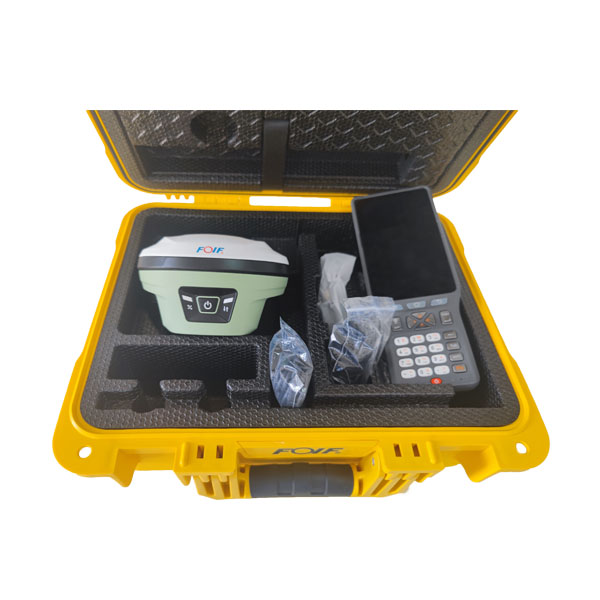
Choosing the right GNSS receiver is one of the most consequential decisions a surveying professional, GIS technician, or construction engineer can make. The right device will deliver the accuracy, reliability, and workflow compatibility your projects demand, while the wrong choice can result in costly rework, field delays, and frustrated teams. Whether you are equipping a new survey crew, upgrading aging hardware, or expanding into precision agriculture, understanding the key selection criteria will save you both time and money in the long run.
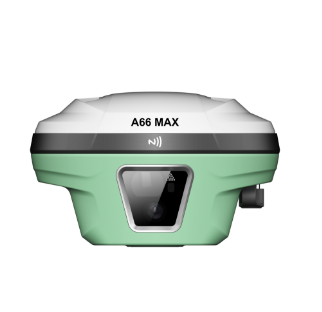
A GNSS receiver is not a one-size-fits-all instrument. Different applications impose very different requirements on positioning accuracy, constellation support, data output formats, and environmental durability. This article breaks down every major factor you should evaluate before committing to a purchase, helping you match the capabilities of a GNSS receiver to the real-world conditions of your specific operations.
Understanding Positioning Accuracy Requirements
Accuracy Grades and Their Practical Meaning
The first question to answer when evaluating any GNSS receiver is how much positional accuracy your work actually requires. Accuracy specifications are typically expressed in centimeters or millimeters, and they vary widely across product categories. A sub-meter GNSS receiver might be perfectly adequate for asset tracking or basic GIS data collection, while a land survey or machine control application may demand centimeter-level or even millimeter-level precision.
Most professional-grade GNSS receiver units on the market today support Real-Time Kinematic (RTK) positioning, which can achieve horizontal accuracies of 8 mm and vertical accuracies of 15 mm or better under optimal conditions. Understanding the difference between single-frequency and dual-frequency or multi-frequency designs is critical here. Multi-frequency receivers resolve ambiguities faster and maintain higher accuracy over longer baselines, making them preferable for demanding field conditions.
Before selecting a GNSS receiver, clearly document the accuracy tolerances specified in your project contracts or regulatory standards. Overbuying accuracy you do not need wastes budget, while underbuying creates compliance risks. A careful review of your application's requirements is the foundation of any sound purchasing decision.
RTK Versus Post-Processing Workflows
Accuracy is also heavily influenced by the correction method you intend to use. RTK workflows deliver real-time centimeter accuracy by communicating with a base station or a Continuously Operating Reference Station (CORS) network, making them ideal for time-sensitive fieldwork. Post-processing workflows, by contrast, record raw observations and compute precise positions in the office, which can be more accurate but introduces a time lag that is unacceptable in certain applications.
When selecting a GNSS receiver for RTK use, verify that the device supports your local correction network's communication protocols, including NTRIP over cellular or UHF radio links. The receiver's ability to maintain a stable correction link in challenging terrain or under heavy canopy directly affects field productivity. Evaluate not just the stated accuracy specifications, but also the initialization time and the reliability of ambiguity resolution under your typical working conditions.
Constellation and Signal Compatibility
Why Multi-Constellation Support Matters
A modern GNSS receiver should ideally support all major global navigation satellite systems, including GPS, GLONASS, BeiDou, and Galileo, as well as regional systems like QZSS and NavIC where relevant. Tracking more satellite constellations means the receiver has access to more visible satellites at any given time, which directly improves positioning geometry, reduces initialization time, and enhances performance in constrained environments such as urban canyons, forested areas, and deep valleys.
When reviewing constellation support in a GNSS receiver, do not simply count the number of systems listed. Verify which specific signal frequencies are tracked for each constellation. A receiver that tracks GPS L1/L2, GLONASS L1/L2, BeiDou B1/B2/B3, and Galileo E1/E5 simultaneously offers substantially better sky coverage and redundancy than a device that only partially supports these signals. Greater signal diversity also provides resilience against interference and multipath errors.
Multi-Frequency Signal Processing
The number of frequencies a GNSS receiver can track simultaneously has a direct impact on both initialization speed and accuracy under challenging conditions. Dual-frequency receivers use two carrier frequencies to model and correct ionospheric delay, which is one of the dominant error sources in GNSS positioning. Triple-frequency or five-frequency receivers go further, enabling faster ambiguity resolution and better performance over longer baselines or in high-ionospheric-activity periods.
For professional survey work, a minimum of dual-frequency L1/L2 support has long been the industry baseline. However, as multi-frequency GNSS receiver units have become more affordable, there is strong justification for selecting a triple-frequency or all-frequency device, especially if your work spans large geographic areas or involves remote locations where correction network coverage may be sparse or intermittent.
Environmental Durability and Field Robustness
IP Ratings and Mechanical Resilience
Survey and construction work takes place in demanding outdoor environments. A GNSS receiver that fails due to rain, dust, extreme temperatures, or accidental drops creates operational disruptions that are expensive and frustrating. When evaluating hardware durability, the Ingress Protection (IP) rating is the most standardized measure of environmental resistance. An IP67 rating indicates complete dust protection and the ability to withstand submersion in water up to one meter for thirty minutes, which is a practical minimum for field instruments.
Beyond the IP rating, assess the operating temperature range specified for the GNSS receiver. Professional devices should function reliably from -40°C to +65°C or beyond, covering the extremes encountered in arctic surveys, desert construction projects, and tropical infrastructure work. Also examine the physical casing material and the design of connectors and ports, which are common failure points in field instruments exposed to repeated rough handling.
Battery Life and Power Management
Battery endurance is a practical durability factor that is easy to overlook during product evaluation but becomes a daily concern in the field. A GNSS receiver with inadequate battery life forces teams to carry multiple spare batteries, plan around charging schedules, or accept shortened working days. Look for devices that offer a minimum of six to eight hours of continuous RTK operation per charge, and verify whether the battery is hot-swappable so that work can continue without powering down the unit.
Power management features such as auto-shutdown timers, low-power tracking modes, and external power input options add operational flexibility. For long-duration static observation campaigns or remote deployments where recharging is impractical, the ability to connect an external battery pack can be decisive. Evaluate the stated battery capacity alongside real-world user experiences and independent field test data rather than relying solely on manufacturer specifications.
Connectivity, Integration, and Data Ecosystem
Communication Interfaces and Protocols
A GNSS receiver does not operate in isolation. It must integrate smoothly with your existing data collection software, total stations, drones, autonomous machinery, or GIS platforms. Evaluate the communication interfaces available on the device, including Bluetooth, Wi-Fi, USB, UHF radio, and cellular modems. A receiver with built-in multi-band cellular support can connect directly to NTRIP correction services without relying on a separate paired controller with a data connection, simplifying the field setup considerably.
Also verify which data output formats the GNSS receiver supports. Industry-standard formats such as NMEA 0183, RTCM 3.x, and raw binary observation data are essential for interoperability with third-party software. If you rely on a specific field data collection application or office processing suite, confirm compatibility before purchasing, since format incompatibility can require costly middleware solutions or workflow redesign.
Software Ecosystem and Firmware Updateability
The long-term value of a GNSS receiver is strongly influenced by the quality of its companion software and the manufacturer's commitment to ongoing firmware updates. Field data collection software should offer an intuitive interface, configurable coordinate systems, stakeout functionality, and direct export to common CAD and GIS formats. Devices with a robust, actively maintained software ecosystem give you access to new features, bug fixes, and compatibility improvements over the life of the hardware investment.
Firmware updateability is especially important given the ongoing modernization of global satellite constellations. New GNSS signals, such as GPS L5 and BeiDou B2b, are being brought online progressively, and a GNSS receiver that can be upgraded via firmware to support these signals has a longer effective lifespan than one with a fixed hardware architecture. Before purchasing, review the manufacturer's update history and support policy to gauge their commitment to keeping the product current.
Total Cost of Ownership and Support Considerations
Purchase Price Versus Lifecycle Value
The upfront price of a GNSS receiver is only one component of its true cost. Maintenance, calibration, repairs, software licensing, and eventual replacement all contribute to the total cost of ownership over a three-to-five-year horizon. A lower-priced device that requires frequent repairs or early replacement may ultimately cost more than a premium product that delivers consistent performance over many years of intensive use.
Evaluate warranty terms carefully. A comprehensive warranty covering both hardware defects and accidental damage provides meaningful financial protection for instruments that work in hazardous field conditions. Some manufacturers offer extended service plans or guaranteed repair turnaround times, which are valuable for operations where downtime directly translates to lost revenue. Factor these support economics into your buying decision alongside the technical specifications of the GNSS receiver.
Dealer Network and Local Technical Support
Even the most reliable GNSS receiver will occasionally require service, recalibration, or troubleshooting assistance. Access to a responsive and technically competent local dealer or authorized service center is therefore an important selection criterion that many buyers underestimate. A geographically close dealer who can provide loaner units, expedite repairs, and offer on-site training delivers tangible operational value that a distant or unresponsive supplier cannot match.
When assessing a potential GNSS receiver purchase, ask the supplier specific questions about their service turnaround commitments, the availability of spare parts, and the depth of their technical training programs. First-line technical support quality varies considerably across the market, and choosing a supplier with strong post-sale support reduces the operational risk of adopting a new platform, particularly for teams that lack in-house GNSS expertise.
FAQ
What is the difference between a single-frequency and multi-frequency GNSS receiver?
A single-frequency GNSS receiver tracks only one carrier frequency, such as GPS L1, and relies on models to estimate ionospheric delay, which limits its accuracy over long baselines. A multi-frequency GNSS receiver tracks two or more frequencies simultaneously, enabling direct measurement and correction of ionospheric errors, resulting in faster ambiguity resolution, higher accuracy, and better performance under challenging sky conditions. For professional survey applications, multi-frequency designs are strongly preferred.
How important is constellation diversity when choosing a GNSS receiver?
Constellation diversity is very important because it determines how many satellites are visible to the GNSS receiver at any given time. More visible satellites improve the geometric strength of the position solution, shorten initialization times, and reduce the impact of satellite outages or obstructions. A GNSS receiver that supports GPS, GLONASS, BeiDou, and Galileo simultaneously will outperform a GPS-only device in constrained environments such as urban areas, deep valleys, or heavily forested terrain.
Can a GNSS receiver be used without a correction service for centimeter accuracy?
Standard autonomous GNSS positioning without correction services typically achieves meter-level accuracy, which is insufficient for survey and construction applications. Achieving centimeter-level accuracy with a GNSS receiver requires either RTK corrections from a base station or CORS network, or high-accuracy post-processing using precise point positioning (PPP) services or static baselines. Some advanced GNSS receiver models now support PPP-RTK services that deliver centimeter accuracy globally using satellite-delivered corrections, reducing dependence on ground-based network infrastructure.
What IP rating should I look for in a field GNSS receiver?
For professional field use, a GNSS receiver should carry a minimum IP67 rating, which confirms complete dust ingress protection and resistance to temporary water immersion at one meter for up to thirty minutes. This level of protection covers the majority of rain, mud, and shallow water exposure scenarios encountered in survey and construction work. Some manufacturers offer IP68-rated devices with greater submersion tolerance for particularly demanding or aquatic survey environments. Always verify that the IP rating applies to the complete instrument including all ports and connectors, not just the main body.