
 EN
EN
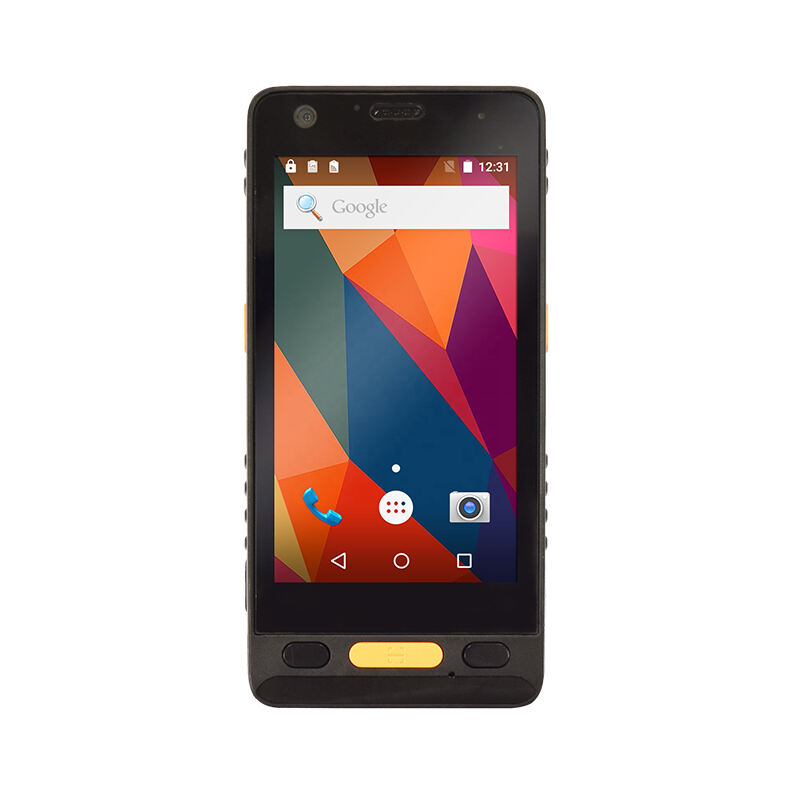
In the construction industry, capturing accurate spatial data is no longer optional — it is a foundational requirement for project success. A GIS data collector serves as the primary field instrument for recording, verifying, and transmitting geospatial information across every phase of a construction project, from site survey and utility mapping to as-built documentation and infrastructure inspection. Choosing the right device with the right capabilities directly determines how reliable, efficient, and defensible your spatial records will be.
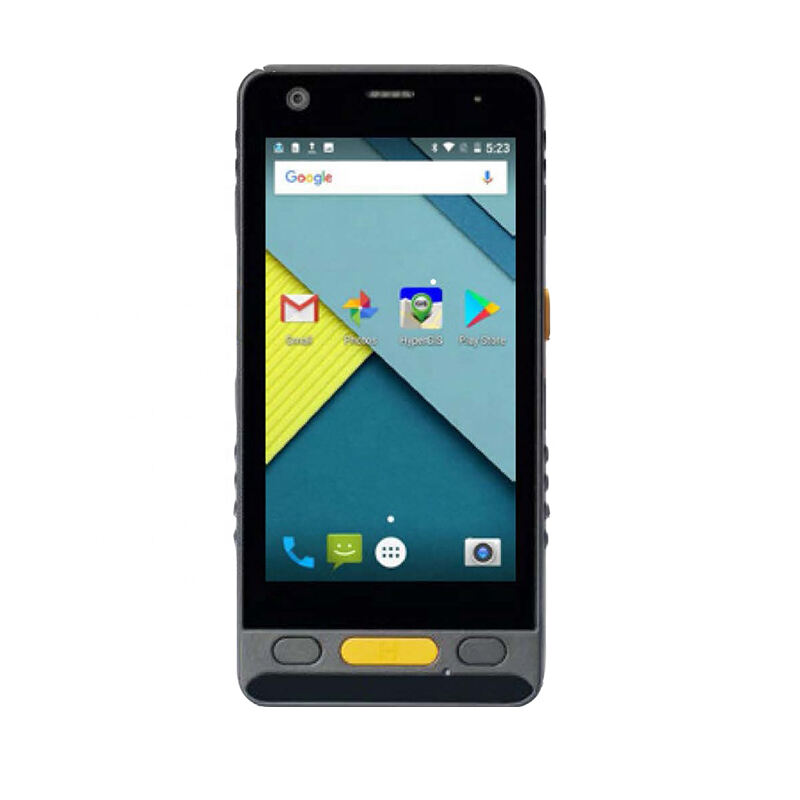
Construction environments are demanding in ways that office or light-fieldwork scenarios simply are not. A GIS data collector used on a construction site must endure dust, mud, vibration, and temperature swings while simultaneously delivering centimeter-level positioning accuracy and seamless data integration with project management platforms. Understanding which features are essential — and why — helps procurement teams, surveyors, and project engineers make informed investment decisions that reduce rework, improve compliance, and support long-term asset management.
Positioning Accuracy and GNSS Capability
Why Centimeter-Level Accuracy Matters on a Construction Site
Construction tolerances are tight. Whether you are staking out column footings, verifying road alignments, or documenting buried utility corridors, errors in positional data translate directly into costly field corrections and potential safety hazards. A professional-grade GIS data collector must support multi-constellation GNSS — including GPS, GLONASS, BeiDou, and Galileo — to maximize satellite availability in environments where buildings, cranes, and excavation equipment create signal obstructions.
RTK (Real-Time Kinematic) capability is increasingly regarded as the minimum standard for construction-grade spatial data collection. With RTK enabled, a GIS data collector can achieve horizontal accuracy within 1–2 centimeters, which is sufficient for the vast majority of construction stakeout, progress monitoring, and as-built verification tasks. Devices that support both network RTK via NTRIP and traditional base-rover configurations offer greater flexibility across different site conditions and project scales.
Tilt compensation is another positioning feature that significantly impacts productivity. In construction, field personnel often need to collect points without leveling the pole precisely, especially in confined trenches or around active equipment. A GIS data collector with built-in inertial measurement unit (IMU)-based tilt compensation allows accurate measurements even when the device is tilted, eliminating errors introduced by pole lean and reducing the time needed per observation.
Signal Robustness in Challenging Site Conditions
Construction sites are among the most GNSS-challenging environments in field surveying. Multipath interference from metal structures, signal blockage in deep excavations, and radio frequency noise from heavy machinery all degrade positioning performance. A GIS data collector designed for construction should incorporate advanced anti-multipath processing algorithms and high-sensitivity receiver hardware to maintain reliable lock under these conditions.
Support for L-band corrections or PPP (Precise Point Positioning) augmentation can also extend field operation to remote or infrastructure-poor sites where a cellular network connection for NTRIP is unavailable. This broadens the operational range of the GIS data collector and ensures that projects in rural or developing-area construction zones are not bottlenecked by connectivity limitations.
Ruggedness and Environmental Resilience
IP Ratings and Physical Durability Standards
A GIS data collector deployed on a construction site must meet serious environmental protection standards. The internationally recognized IP (Ingress Protection) rating system defines the degree to which a device resists dust and water intrusion. For construction applications, an IP67 or IP68 rating is recommended — this means the device can withstand complete dust ingress protection and immersion in water to specified depths. Sites where heavy rain, mud splatter, and accidental submersion in standing water are daily realities demand nothing less.
Physical shock resistance is equally important. Construction sites involve frequent drops, impacts from equipment, and vibrations from compactors or jackhammers. A rugged GIS data collector should comply with MIL-STD-810G or equivalent drop-test standards, ensuring the device survives repeated 1.5-meter drops onto concrete without loss of function. Housing materials — typically reinforced polymer composites — should be evaluated for their resistance to abrasion, UV degradation, and chemical exposure from fuels and construction solvents.
Operating Temperature and Battery Endurance
Construction projects span seasons and climates. A GIS data collector must operate reliably across an extended temperature range — typically from -20°C to +60°C — to remain functional during winter concrete pours in cold regions and summer road construction in arid zones. Thermal management within the device housing is a design consideration that less rugged consumer-grade tablets or handhelds simply cannot match.
Battery life directly affects field productivity. A GIS data collector that requires recharging after four to six hours forces unnecessary interruptions in survey workflows. Look for devices offering eight or more hours of continuous RTK operation on a single charge, along with hot-swappable or field-replaceable battery designs. External battery pack compatibility and USB-C charging support further enhance operational flexibility in areas where power access is intermittent.
Data Management and Software Integration
Field Data Collection Software Compatibility
A GIS data collector is only as useful as the software ecosystem it supports. For construction applications, the device should be compatible with industry-standard field collection platforms such as Esri's ArcGIS Field Maps, QGIS-based mobile solutions, or project-specific survey software that supports feature coding, attribute entry, and real-time data validation. The ability to load existing project CAD or GIS layers onto the device and collect observations relative to that context dramatically improves field accuracy and reduces post-processing overhead.
Support for open data formats — including SHP, GeoJSON, DXF, and LandXML — ensures that data gathered in the field can be transferred directly into BIM environments, project management platforms, or GIS databases without format conversion bottlenecks. A GIS data collector that locks users into proprietary formats creates downstream integration challenges that increase project costs and timelines.
Connectivity and Real-Time Data Transmission
Modern construction workflows increasingly depend on real-time data sharing between field crews, site managers, and remote engineering teams. A GIS data collector with integrated 4G LTE or 5G cellular connectivity, combined with Wi-Fi and Bluetooth, supports live data synchronization to cloud platforms, enabling project stakeholders to access updated field records within minutes of collection. This capability is particularly valuable for progress tracking, inspection reporting, and change order documentation.
Bluetooth connectivity allows the GIS data collector to pair with external sensors such as laser rangefinders, total stations, or barcode scanners, extending its data collection capabilities without adding bulky hardware to the field kit. Integration with UHF radio modem options is also valuable on large sites where a base station is used for RTK corrections rather than a network connection.
Ergonomics and Operational Efficiency
Form Factor and Display Readability
Field personnel using a GIS data collector throughout a full working day are highly sensitive to device ergonomics. A device that is too heavy causes fatigue and increases the chance of dropped measurements. Devices in the 600–900 gram range with balanced weight distribution are generally preferred for extended pole-mounted or handheld operation. Grip texture, button placement, and the position of the GNSS antenna all contribute to usability under realistic field conditions.
Display quality is particularly critical for construction environments. A screen that washes out in direct sunlight — which is the norm on open construction sites — forces operators to seek shade for every observation, wasting time and reducing accuracy. A GIS data collector with a high-brightness display rated at 800 nits or above, combined with an anti-glare coating, ensures readability even in harsh midday light. Touchscreen performance with gloved hands and in wet conditions is another usability requirement that should be verified before deployment.
Workflow Efficiency Features
Beyond the core hardware, a GIS data collector should support workflow automation features that reduce repetitive manual input. Configurable feature templates allow field crews to enter attribute data quickly by selecting from predefined value lists rather than typing, reducing errors and speeding up data entry at each observation point. Auto-increment point numbering, customizable symbology for different feature types, and photo attachment capability all contribute to a faster, more organized data collection workflow.
Integrated cameras with georeferencing capability add significant value for construction documentation. Capturing geotagged photos of material deliveries, structural elements, utility installations, and inspection findings directly within the GIS data collector workflow eliminates the need to manually match photos to spatial records in post-processing. This is a particularly high-value feature for compliance documentation and dispute resolution in construction projects.
Communication Protocols and Long-Term Support
Firmware Updates and Manufacturer Support
A GIS data collector represents a multi-year capital investment for construction firms. The manufacturer's commitment to ongoing firmware development, bug resolution, and feature updates directly affects the long-term value of that investment. Devices that receive regular over-the-air firmware updates can support new GNSS signals, updated correction protocols, and expanded software compatibility without requiring hardware replacement.
Technical support responsiveness is also a key selection factor. Construction projects operate on strict timelines, and a device failure or software issue that cannot be resolved quickly can halt critical survey operations. Evaluating the manufacturer's service infrastructure — including warranty terms, repair turnaround, and field support availability — should be part of the procurement process alongside hardware specification review.
Scalability for Multi-Site and Fleet Deployment
For construction companies managing multiple active sites simultaneously, the ability to deploy a fleet of standardized GIS data collector units with centrally managed software configurations is a significant operational advantage. Devices that support mobile device management (MDM) integration allow IT teams to push software updates, manage licenses, and enforce data security policies across all field units from a central console.
Standardization also reduces training overhead. When all field personnel use the same GIS data collector model with the same software configuration, onboarding new crew members and cross-training between project teams becomes faster and more consistent. This scalability consideration is often underweighted in initial procurement decisions but becomes increasingly important as organizations grow their digital field operations.
FAQ
What level of GPS accuracy is required for a GIS data collector used in construction?
For most construction applications — including stakeout, as-built documentation, and utility mapping — a GIS data collector should deliver RTK-corrected horizontal accuracy of 1–2 centimeters. Sub-meter accuracy may be sufficient for preliminary planning or asset inventory tasks, but precise construction work requires centimeter-grade GNSS positioning to avoid costly field errors and rework.
Can a GIS data collector replace a traditional total station on a construction site?
A GIS data collector with RTK GNSS capability can replace a total station for many construction surveying tasks, particularly in open or semi-open environments with good satellite visibility. However, total stations remain preferred for indoor work, heavily obstructed sites, and tasks requiring ultra-high angular precision such as structural alignment verification. Many construction teams use both instruments in complementary roles depending on site conditions and task requirements.
How important is ruggedness when selecting a GIS data collector for field use?
Ruggedness is a primary selection criterion for construction environments. A GIS data collector that fails due to water ingress, dust contamination, or physical impact creates project delays and replacement costs that far exceed any savings from choosing a less durable device. IP67 or higher water and dust protection, MIL-STD-810 drop resistance, and wide operating temperature range are the minimum ruggedness benchmarks worth requiring in a construction-grade specification.
What software should a GIS data collector support for construction workflows?
A GIS data collector intended for construction use should support widely adopted field data collection platforms such as ArcGIS Field Maps, QGIS mobile extensions, and project-specific survey software with feature coding and attribute management. Compatibility with open spatial data formats including SHP, DXF, GeoJSON, and LandXML is essential for seamless integration with BIM tools, construction management systems, and enterprise GIS databases. Proprietary format lock-in should be treated as a significant disqualifying factor during device evaluation.
Table of Contents
- Positioning Accuracy and GNSS Capability
- Ruggedness and Environmental Resilience
- Data Management and Software Integration
- Ergonomics and Operational Efficiency
- Communication Protocols and Long-Term Support
-
FAQ
- What level of GPS accuracy is required for a GIS data collector used in construction?
- Can a GIS data collector replace a traditional total station on a construction site?
- How important is ruggedness when selecting a GIS data collector for field use?
- What software should a GIS data collector support for construction workflows?