
 EN
EN
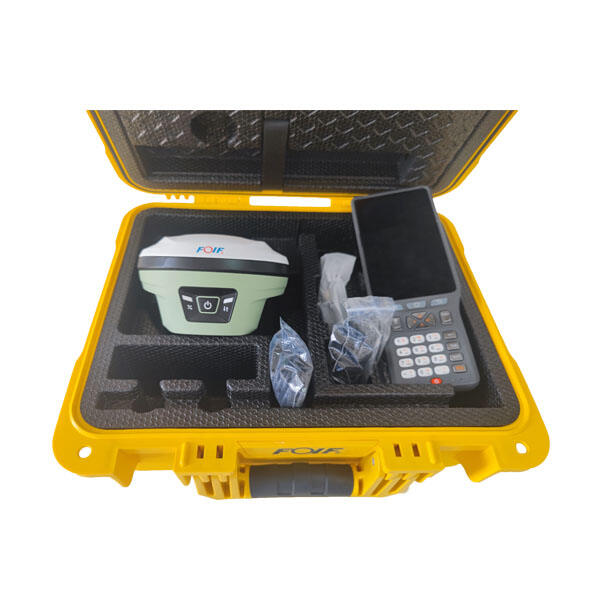
Understanding the factors that determine GNSS receiver performance quality is essential for professionals selecting positioning technology for surveying, mapping, construction, and precision agriculture applications. A GNSS receiver's ability to deliver accurate, reliable, and consistent positioning data depends on multiple interrelated technical characteristics, environmental considerations, and design choices that manufacturers incorporate into their devices. The quality of a GNSS receiver directly impacts project outcomes, operational efficiency, and the reliability of spatial data collected in the field, making informed selection critical for any organization investing in positioning infrastructure.
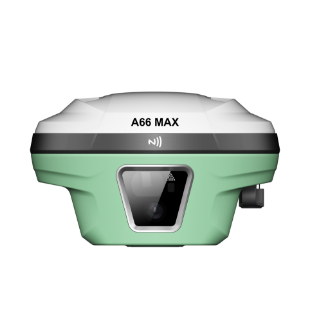
Performance quality in GNSS receivers encompasses several measurable dimensions including positioning accuracy, signal acquisition speed, multipath rejection capability, update rates, and operational reliability across varying environmental conditions. These performance characteristics stem from hardware design decisions, signal processing algorithms, antenna quality, and the receiver's ability to track multiple satellite constellations simultaneously. Professionals evaluating GNSS receiver options must understand how these technical factors interact to produce real-world performance, as specifications alone often fail to capture the nuanced differences between devices when deployed in challenging field conditions with obstructions, interference, or atmospheric disturbances.
Hardware Architecture and Signal Processing Capabilities
Multi-Frequency and Multi-Constellation Support
The ability of a GNSS receiver to track signals from multiple satellite constellations and across multiple frequency bands represents one of the most fundamental determinants of performance quality. Modern high-performance receivers support GPS, GLONASS, Galileo, and BeiDou constellations simultaneously, dramatically increasing the number of visible satellites at any given time and improving geometric dilution of precision. Multi-frequency capability, particularly the ability to process L1, L2, and L5 signals, enables advanced error correction techniques that eliminate ionospheric delay, the largest source of positioning error in single-frequency systems. A professional-grade GNSS receiver with full multi-constellation and multi-frequency support can maintain positioning accuracy even when satellite visibility is compromised by obstructions, providing operational reliability in urban canyons, under tree canopy, and near large structures.
The signal processing architecture within the GNSS receiver determines how effectively the device can extract positioning information from weak or degraded satellite signals. Advanced correlation engines with high sensitivity enable receivers to track signals below the noise floor, maintaining lock in challenging conditions where basic receivers would lose positioning entirely. The number of tracking channels available in the receiver's chipset directly impacts multi-constellation performance, with professional systems typically providing 555 channels or more to simultaneously track all available signals from all constellations and frequencies. This channel capacity ensures that the GNSS receiver can select the optimal satellite geometry for positioning calculations while maintaining redundancy that protects against signal interruptions from individual satellites.
Antenna Design and Phase Center Stability
Antenna quality exerts profound influence on GNSS receiver performance, yet this component often receives insufficient attention during equipment selection. The antenna serves as the critical interface between satellite signals propagating through space and the receiver's electronic processing systems, and its characteristics directly affect signal-to-noise ratio, multipath rejection, and phase center stability. High-quality geodetic antennas incorporate choke ring designs or advanced ground plane structures that suppress signals arriving from low elevation angles where multipath contamination is most severe. These design features ensure that the GNSS receiver processes primarily direct signals from satellites rather than reflected signals that introduce positioning errors.
Phase center stability represents a particularly important antenna characteristic for applications requiring millimeter-level accuracy such as deformation monitoring or precision engineering surveys. The electrical phase center of an antenna describes the effective point from which the receiver measures distances to satellites, and this point can vary with signal direction and frequency. Premium antennas maintain phase center stability across all elevation angles and azimuths, ensuring that the GNSS receiver produces consistent measurements regardless of satellite geometry. Manufacturers of professional-grade systems invest significant engineering effort in antenna calibration and characterization, providing detailed phase center variation models that survey software uses to correct measurements and achieve the highest possible accuracy.
Processing Power and Real-Time Kinematic Capabilities
The computational capacity within a GNSS receiver fundamentally determines its ability to implement sophisticated positioning algorithms and deliver results with minimal latency. Real-time kinematic positioning, which provides centimeter-level accuracy by processing carrier phase measurements with corrections from a base station, demands substantial processing power to resolve integer ambiguities and compute position solutions at high update rates. Modern professional receivers incorporate dedicated GNSS processing chips or field-programmable gate arrays that handle signal tracking and correlation, while separate processors manage RTK algorithms, coordinate transformations, and data output formatting.
The quality of RTK implementation within a GNSS receiver varies significantly across manufacturers and directly impacts initialization time, solution reliability, and performance in kinematic applications. Advanced receivers employ sophisticated ambiguity resolution algorithms that achieve fixed solutions more rapidly and maintain them more reliably when satellite signals are temporarily obstructed. The ability to support network RTK correction formats such as VRS, FKP, and MAC enables receivers to work with existing CORS networks and commercial correction services, providing flexibility for different operational scenarios. Processing power also determines the update rate at which a GNSS receiver can deliver position solutions, with high-performance systems supporting 20 Hz or higher rates essential for machine control applications and dynamic platform positioning.
Error Mitigation and Correction Mechanisms
Ionospheric and Tropospheric Modeling
Atmospheric effects represent significant error sources that high-quality GNSS receivers must address through modeling and correction techniques. The ionosphere, a layer of charged particles in the upper atmosphere, causes signal delays that vary with solar activity, time of day, and geographic location. Single-frequency receivers rely on broadcast models or empirical corrections that provide only approximate compensation, typically leaving residual errors of several meters. Dual-frequency and triple-frequency receivers can compute ionospheric delay directly by comparing signal propagation times across different frequencies, virtually eliminating this error source and dramatically improving positioning accuracy.
Tropospheric delay, caused by water vapor and temperature variations in the lower atmosphere, cannot be directly measured using multiple frequencies but must be modeled based on atmospheric conditions and satellite elevation angle. Advanced GNSS receiver firmware incorporates sophisticated tropospheric models that account for local meteorological conditions when available, or apply empirical models calibrated for different climate zones and seasons. The quality of atmospheric modeling implemented in a receiver becomes particularly important for applications requiring vertical accuracy, as atmospheric effects introduce greater errors in height determination than horizontal positioning. Professional-grade receivers designed for geodetic applications often support external meteorological sensor inputs, enabling real-time tropospheric modeling based on actual temperature, pressure, and humidity measurements.
Multipath Detection and Suppression
Multipath interference occurs when GNSS receiver antennas detect satellite signals that have reflected from nearby surfaces before reaching the antenna, creating measurement errors that vary with the receiver's position relative to reflecting objects. Unlike other error sources that can be modeled or measured, multipath effects depend on the specific site geometry and change as satellites move across the sky, making them particularly challenging to mitigate. High-quality receivers employ multiple strategies to minimize multipath impact, including antenna design features that reject low-elevation signals, signal processing algorithms that detect and exclude corrupted measurements, and correlation techniques that distinguish direct signals from delayed reflections.
Advanced GNSS receiver designs implement narrow correlator spacing in their tracking loops, enabling precise measurement of the signal correlation peak and reducing sensitivity to multipath reflections. Some professional receivers incorporate multiple correlators operating at different spacings to characterize the received signal's correlation function and detect the presence of reflected signals. The effectiveness of multipath mitigation directly impacts positioning quality in challenging environments such as construction sites with heavy equipment, urban areas surrounded by buildings, or industrial facilities with large metal structures. When evaluating receiver performance, professionals should consider specifications for multipath rejection capability, typically expressed as the maximum residual error under standardized test conditions with controlled reflections.
Code and Carrier Phase Measurement Quality
GNSS receivers determine position by measuring the time required for signals to propagate from satellites to the antenna, using both code phase measurements based on pseudorandom noise codes and carrier phase measurements of the underlying signal wave. Code measurements provide absolute ranges but with limited precision, typically achieving meter-level accuracy. Carrier phase measurements offer millimeter-level precision but with integer cycle ambiguities that must be resolved. The quality of both measurement types within a GNSS receiver determines its ultimate positioning performance and the reliability of high-accuracy solutions.
Measurement noise in code observations depends on the receiver's correlator design, bandwidth, and signal processing algorithms, with professional receivers typically achieving code measurement precision of several centimeters to decimeters depending on signal strength and multipath conditions. Carrier phase measurement quality depends on the stability of the receiver's oscillator, the effectiveness of phase-locked loop tracking, and the ability to maintain continuous phase tracking during signal interruptions. High-quality receivers incorporate temperature-compensated crystal oscillators or even atomic frequency standards to minimize measurement drift over time. The ability to rapidly reacquire carrier phase lock after brief signal interruptions, known as cycle slip detection and repair, represents another important quality indicator, as frequent cycle slips degrade positioning accuracy and increase convergence time for precise solutions.
Environmental Adaptability and Operational Robustness
Signal Acquisition and Tracking Sensitivity
The sensitivity of a GNSS receiver determines its ability to acquire and track satellite signals under varying conditions of signal strength, from open sky with optimal visibility to heavily obstructed environments where signals arrive significantly attenuated. Acquisition sensitivity describes the minimum signal strength required for the receiver to detect a satellite signal and begin tracking it, while tracking sensitivity indicates the minimum signal level needed to maintain lock on a satellite already being tracked. Professional-grade receivers typically achieve acquisition sensitivity of -148 dBm or better and tracking sensitivity of -162 dBm or lower, enabling operation in environments where consumer-grade receivers would fail completely.
Enhanced sensitivity allows GNSS receivers to maintain positioning capability under forest canopy, inside structures with roof penetration, and in urban canyons where building reflections and obstructions severely degrade signal quality. However, extreme sensitivity must be balanced against the risk of tracking reflected signals or low-quality observations that could degrade position accuracy. Quality receivers implement intelligent signal management that considers both signal strength and quality indicators when selecting observations for positioning calculations. The ability to track weak signals becomes particularly valuable for rapid static surveys and network RTK applications where maximizing the number of common satellites between rover and base stations improves ambiguity resolution speed and solution reliability.
Cold Start Performance and Time to First Fix
The time required for a GNSS receiver to acquire satellite signals and compute an initial position solution after being powered on represents an important performance characteristic, particularly for applications involving intermittent operation or frequent instrument setup. Cold start time assumes the receiver has no information about satellite positions, current time, or its own approximate location, requiring acquisition of satellite almanac and ephemeris data before computing a position. Warm start time applies when the receiver retains recent almanac data but requires fresh ephemeris information, while hot start time describes reacquisition when all orbital data remains valid.
Modern high-quality GNSS receivers achieve cold start times under 60 seconds by implementing rapid signal acquisition techniques, efficient search strategies across frequency and code phase space, and parallel processing of multiple satellite signals. Some advanced receivers support assisted GNSS functionality, downloading predicted orbital data and ionospheric models from cellular networks to reduce initialization time to just seconds even from cold start conditions. For RTK and precise point positioning applications, time to first fix includes the additional convergence period required to resolve carrier phase ambiguities or estimate atmospheric parameters, with quality receivers achieving RTK initialization in under 10 seconds under favorable conditions and PPP convergence in 15 to 30 minutes depending on constellation and correction service availability.
Electromagnetic Interference Resistance
GNSS receivers operate in an increasingly congested electromagnetic environment with potential interference from cellular networks, broadcasting facilities, radar systems, and intentional jamming. The extremely weak power levels of satellite signals, arriving at Earth's surface at approximately -130 dBm, make GNSS systems inherently vulnerable to interference that can degrade positioning accuracy or cause complete signal loss. High-quality receivers incorporate sophisticated interference detection and mitigation capabilities, including adaptive filtering that automatically identifies and suppresses narrowband interference, notch filters targeting specific frequency ranges, and antenna designs with controlled frequency response.
The effectiveness of interference mitigation within a GNSS receiver depends on both hardware design and signal processing algorithms. Front-end filters limit out-of-band signals that could saturate receiver amplifiers, while digital signal processing techniques detect interference characteristics and apply appropriate countermeasures. Some advanced receivers provide real-time spectrum monitoring displays that enable operators to identify interference sources and adjust antenna placement or operating parameters accordingly. For critical infrastructure applications and environments with known interference risks, GNSS receiver selection should prioritize demonstrated interference resistance, typically validated through testing with controlled interference injection at specified power levels and frequency offsets.
Data Quality Indicators and Output Characteristics
Position Dilution of Precision and Quality Metrics
High-quality GNSS receivers provide comprehensive data quality indicators that enable users to assess the reliability of position solutions and identify potential problems before they impact operational outcomes. Position dilution of precision describes how satellite geometry affects position accuracy, with lower PDOP values indicating better geometric configuration. Quality receivers continuously compute and output PDOP along with its components including horizontal DOP, vertical DOP, and time DOP, enabling software and operators to evaluate whether current satellite constellation provides adequate geometry for intended accuracy requirements.
Beyond basic dilution of precision metrics, professional GNSS receivers calculate and report sophisticated quality indicators including estimated position accuracy, which considers both satellite geometry and measurement quality, fixed/float solution status for RTK positioning, number of satellites used in the solution versus tracked, and residuals for individual satellite observations. Advanced receivers output full covariance matrices describing position uncertainty in all dimensions, enabling rigorous error propagation into derived products such as volumes, areas, or coordinate transformations. The ability to log detailed quality metrics alongside position data enables post-processing analysis, quality assurance workflows, and troubleshooting when positioning anomalies occur.
Update Rate and Latency Considerations
The frequency at which a GNSS receiver computes and outputs position solutions, known as update rate or output rate, directly impacts performance in dynamic applications including machine guidance, UAV navigation, and kinematic surveys. Standard receivers typically provide 1 Hz updates adequate for walking-speed surveys and static positioning, while high-performance systems support 5 Hz, 10 Hz, or 20 Hz rates required for vehicle-mounted systems, precision agriculture implements, and construction machinery operating at significant speeds. The achievable update rate depends on processing capacity within the receiver, measurement update rates from tracked satellites, and communication bandwidth for correction data in differential positioning modes.
Latency describes the time delay between when satellite signals are received and when the corresponding position solution is computed and output. For real-time guidance applications, low latency is critical to minimize positional lag that would cause implements to deviate from intended paths during turns or speed changes. Quality GNSS receivers minimize latency through optimized processing pipelines, predictive algorithms that compensate for communication delays in correction data, and efficient data formatting. When evaluating receivers for dynamic applications, professionals should consider specifications for both nominal update rate and worst-case latency under various correction data delivery scenarios, as performance can degrade significantly when network corrections experience delays or interruptions.
Data Logging and Post-Processing Support
The ability to log raw GNSS measurements including carrier phase, code pseudorange, and signal quality data enables post-processing workflows that achieve higher accuracy than real-time positioning, particularly for applications where RTK corrections are unavailable or unreliable. High-quality receivers support standard data formats including RINEX for interoperability with third-party processing software, proprietary binary formats optimized for efficient storage, and NMEA text output for compatibility with legacy systems. Internal memory capacity determines how long a GNSS receiver can operate in logging mode without external storage, with professional systems typically providing multiple gigabytes enabling multi-day continuous operation.
Post-processing capability depends not only on data logging features but also on the availability of compatible processing software, baseline processing algorithms, and network adjustment tools. Manufacturers of professional GNSS receivers typically provide proprietary post-processing software optimized for their hardware, implementing specialized algorithms that leverage unique receiver characteristics and proprietary correction formats. The quality of post-processing results depends on measurement quality, observation duration, satellite geometry during the observation session, and the spatial separation between stations for differential processing. When selecting a GNSS receiver for applications involving post-processed surveys, professionals should evaluate the complete workflow including field procedures, data transfer methods, processing software capabilities, and quality control reporting features.
Integration Capabilities and System Ecosystem
Communication Interfaces and Correction Data Delivery
Modern GNSS receivers function as components within broader positioning systems, requiring robust communication interfaces to receive correction data, exchange information with data collectors or control systems, and transmit positioning information to implement guidance or mapping applications. The range and quality of communication options directly impact operational flexibility and system reliability. Professional receivers typically incorporate multiple communication pathways including cellular modems supporting 4G/LTE networks, radio transceivers for traditional base-rover configurations, Bluetooth for local device connectivity, and WiFi for high-bandwidth data transfer and configuration access.
The ability to seamlessly switch between correction sources based on availability and signal quality represents an important characteristic of high-quality GNSS receiver implementations. Advanced systems can simultaneously monitor multiple correction sources including network RTK services, satellite-delivered corrections like SBAS or L-band services, and local base station broadcasts, automatically selecting the optimal source or blending corrections to maintain positioning continuity when individual sources experience interruptions. Communication reliability affects not only correction data delivery but also remote monitoring, firmware updates, and configuration management for receiver fleets deployed across multiple sites or regions.
Sensor Integration and Augmentation Systems
The integration of inertial measurement units, compasses, and tilt sensors with GNSS receivers significantly enhances positioning capability, particularly in challenging environments where satellite visibility may be compromised or during dynamic maneuvers. High-quality integrated positioning systems fuse GNSS measurements with inertial data using Kalman filtering or similar algorithms, providing continuous position and orientation output even during brief GNSS outages and enabling tilt compensation that allows pole-mounted receivers to maintain accuracy without requiring vertical pole alignment. The quality of sensor integration depends on calibration procedures, the sophistication of fusion algorithms, and the grade of inertial sensors employed.
For machine control applications, GNSS receivers may integrate with additional sensors including wheel encoders, steering angle sensors, hydraulic position sensors, and implement-mounted ultrasonic or laser detectors. The ability to accept and appropriately weight diverse sensor inputs, maintain calibration over varying environmental conditions, and provide reliable positioning output during complex maneuvers distinguishes professional-grade integrated systems from basic GNSS-only receivers. When evaluating GNSS receiver systems for applications requiring sensor fusion, professionals should assess not only the hardware integration but also the software ecosystem supporting calibration, validation, and troubleshooting of multi-sensor configurations.
Software Environment and Firmware Update Capabilities
The software environment surrounding a GNSS receiver significantly influences its long-term performance quality and operational utility. Regular firmware updates enable manufacturers to implement algorithm improvements, add support for new satellite signals or constellations, address identified issues, and enhance compatibility with evolving correction services and communication protocols. Quality manufacturers maintain active development programs with regular firmware releases, comprehensive release notes documenting changes, and straightforward update procedures that minimize downtime and technical expertise requirements.
Configuration software, mobile applications, and web interfaces for GNSS receiver management affect operational efficiency and the ability to optimize receiver settings for specific applications. Professional systems provide granular control over tracking parameters, data logging options, communication settings, and positioning modes, while also offering preset configurations optimized for common applications. The availability of software development kits and application programming interfaces enables system integrators to create custom solutions, integrate receivers into specialized workflows, and extract proprietary data formats. When selecting GNSS receivers for long-term deployments, professionals should evaluate not only current capabilities but also the manufacturer's track record for supporting products through software updates and the longevity of communication protocols and data formats across product generations.
FAQ
How does multi-constellation support improve GNSS receiver accuracy compared to GPS-only systems?
Multi-constellation GNSS receivers that track GPS, GLONASS, Galileo, and BeiDou simultaneously significantly improve positioning accuracy and reliability by increasing the number of visible satellites at any time, typically from 8-12 GPS satellites to 25-35 total satellites. This increased satellite availability improves geometric dilution of precision, reduces initialization times for RTK solutions from minutes to seconds, and maintains positioning capability in challenging environments like urban canyons or under partial canopy where single-constellation systems would lose lock. The diversity of satellite orbits and signal characteristics across constellations also provides redundancy against constellation-specific issues and enables receivers to select optimal satellite combinations for accuracy and reliability.
What accuracy difference should I expect between single-frequency and multi-frequency GNSS receivers?
Single-frequency GNSS receivers typically achieve positioning accuracy of 1-3 meters in autonomous mode and 10-30 centimeters with SBAS augmentation or post-processed differential corrections, limited primarily by uncorrected ionospheric delay. Multi-frequency receivers processing L1/L2 or L1/L2/L5 signals eliminate ionospheric error through direct measurement, enabling RTK accuracies of 8-15 millimeters horizontal and 15-25 millimeters vertical, with significantly faster ambiguity resolution and longer functional baselines up to 50 kilometers compared to 10-15 kilometers for single-frequency RTK. For applications requiring centimeter-level accuracy, professional surveying, or operation over long baselines, multi-frequency capability is essential and justifies the higher equipment cost through improved productivity and reduced measurement uncertainty.
How important is antenna quality relative to the receiver itself in overall system performance?
Antenna quality contributes equally to overall GNSS receiver system performance as the receiver electronics, particularly for high-accuracy applications requiring millimeter-level precision. A premium receiver paired with a low-quality antenna will underperform compared to a mid-range receiver with a geodetic-grade antenna, as the antenna determines signal-to-noise ratio, multipath rejection, and phase center stability. Professional antennas with choke ring designs or advanced ground planes can reduce multipath errors by 50-70% compared to basic patch antennas, while calibrated phase center corrections enable consistent measurements across all satellite directions. For applications like deformation monitoring, precision construction, or geodetic control surveys, investing in calibrated geodetic antennas with documented phase center variations is as critical as selecting an appropriate receiver, and the antenna-receiver combination should be evaluated as an integrated system rather than separate components.
Can a high-quality consumer GNSS receiver match professional-grade equipment performance for less demanding applications?
High-quality consumer GNSS receivers have significantly improved in recent years and can provide adequate performance for applications tolerating sub-meter to decimeter accuracy including recreational mapping, approximate area measurement, and basic navigation. However, professional-grade receivers offer critical advantages even for less demanding applications including superior performance in obstructed environments, faster initialization, comprehensive quality indicators, robust communication options, environmental durability, manufacturer support, and firmware update longevity. For business applications where positioning failures create operational delays or require rework, the productivity gains and reliability of professional equipment typically justify higher costs within one to two field seasons. Organizations should evaluate total cost of ownership including equipment lifetime, support requirements, and opportunity costs of positioning failures rather than comparing only initial purchase prices when selecting between consumer and professional GNSS receiver options.
Table of Contents
- Hardware Architecture and Signal Processing Capabilities
- Error Mitigation and Correction Mechanisms
- Environmental Adaptability and Operational Robustness
- Data Quality Indicators and Output Characteristics
- Integration Capabilities and System Ecosystem
-
FAQ
- How does multi-constellation support improve GNSS receiver accuracy compared to GPS-only systems?
- What accuracy difference should I expect between single-frequency and multi-frequency GNSS receivers?
- How important is antenna quality relative to the receiver itself in overall system performance?
- Can a high-quality consumer GNSS receiver match professional-grade equipment performance for less demanding applications?