
 EN
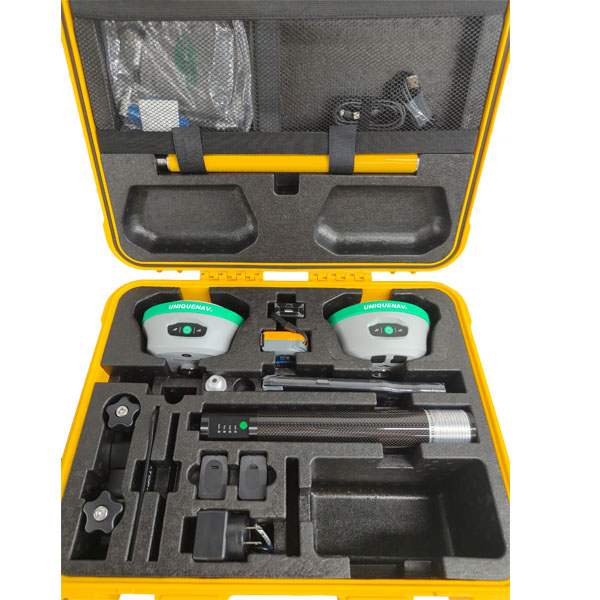
A choke ring antenna can improve RTK positioning in environments where reflected satellite signals distort measurements. Its design helps suppress multipath: signals that reach the antenna after bouncing off nearby surfaces. That makes it useful for precision surveying and other field work, but it does not remove every source of signal interference. Understanding the distinction helps teams set realistic expectations for RTK accuracy and reliability.
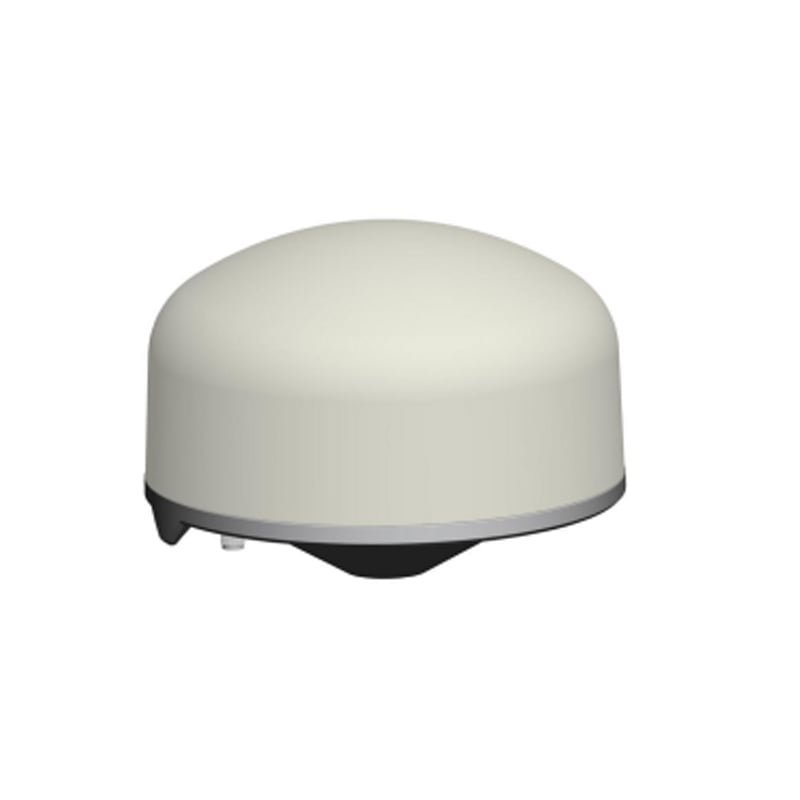
The antenna’s role is to provide cleaner satellite observations to an RTK receiver, not to generate corrections or replace a suitable correction service. Concentric conductive rings around the antenna element help reduce reception of low-angle reflected energy. In practice, RTK performance still depends on satellite visibility, correction quality, installation, receiver configuration, and the surrounding radio environment. A choke ring is one part of a considered positioning setup.
How the choke ring reduces reflected signals
Concentric rings control low-angle reception
Satellite signals usually arrive from above, while reflections can come from the ground, buildings, vehicles, or metal equipment nearby. The raised conductive rings surrounding a choke ring antenna shape its reception pattern and attenuate energy arriving at shallow angles. This reduces the influence of many reflections before they become measurements used by an RTK receiver. The benefit is especially relevant when a site has hard, reflective surfaces close to the antenna.
Multipath can introduce errors in code and carrier-phase observations, which matter because RTK resolves a precise position by comparing measurements from a rover and a reference source. If reflected energy contaminates those observations, the solution may take longer to settle or become less stable. By limiting some of that energy, the antenna can support more dependable RTK inputs. It cannot guarantee a fixed accuracy level, since reflections and satellite geometry vary by location and time.
Interference types the antenna can and cannot address
A choke ring is principally a multipath mitigation feature; it is not a universal radio-frequency filter. It may reduce reflected GNSS energy, but it does not necessarily reject a nearby transmitter operating in or near a relevant band. Nor can it restore signals blocked by a roof, terrain, or dense structures. RTK users should distinguish reflected-signal errors from jamming, electromagnetic noise, obstruction, and poor correction connectivity.
That distinction prevents an equipment change from being treated as a cure for every positioning problem. If RTK performance degrades beside machinery, first consider whether the issue is reflection, physical blockage, electrical noise, or a correction-link interruption. A choke ring can help when multipath is a material contributor; it cannot compensate for a failed data connection or a receiver that lacks a usable view of satellites. Diagnosis should precede equipment selection.
Where the antenna makes a practical difference
Survey stations and reflective work sites
Survey control points, construction sites, and infrastructure projects often place an RTK rover near pavement, walls, machinery, or other reflective objects. At these locations, a reflected signal can arrive alongside a direct satellite signal and complicate measurement quality. A choke ring antenna is worth considering when the work requires consistent observations and the setup cannot avoid every reflective surface. Positioning the antenna with a clear sky view remains essential.
In a fixed or semi-permanent RTK installation, repeatability also matters. A stable mount and consistent antenna orientation help teams compare observations over time and interpret changes in solution quality. The choke ring can reduce one environmental influence, while careful siting limits others. For mobile work, operators should still avoid placing the antenna immediately beside vehicle panels, racks, or raised equipment that may block satellites or create additional reflections.
Field conditions and installation choices
The best results come from treating the antenna as part of the full RTK measurement chain. Mount it securely, maintain the recommended separation from conductive objects, and keep its sky view as open as the task allows. Check the cable and connector condition, receiver settings, and correction source as well. These practical checks help determine whether a choke ring is addressing the actual source of unstable RTK observations.
Site conditions can change throughout a workday as equipment moves, vehicles arrive, or temporary structures are erected. Record where the antenna is mounted and note changes in satellite visibility or solution status. Comparing observations at the same point with consistent procedures can reveal whether multipath is likely influencing RTK results. Do not assume that an improved fix in one location proves the antenna will perform identically at every site.
Evaluating performance in an RTK setup
Assess the complete positioning workflow
Before deployment, define what the RTK task requires: repeatable positions, a reliable fix, or productive operation in a constrained environment. Then evaluate the receiver’s reported solution status, satellite tracking, correction age, and repeatability at representative locations. A choke ring should be judged by its contribution to the complete workflow, not by its appearance or a single successful observation. Keep the same receiver, correction input, and test procedure when comparing conditions.
A useful field assessment includes both open-sky and challenging points, with enough observation time to see whether the RTK solution remains stable. Note nearby reflective materials, obstructions, and sources of radio activity. If the results remain poor, review correction delivery, antenna placement, receiver configuration, and the local RF environment rather than attributing every issue to multipath. The antenna may reduce one error source while other limitations continue to affect the position.
Set realistic expectations and document results
No antenna can eliminate all signal interference in every operating condition. A choke ring is designed to mitigate multipath effects, so the degree of improvement depends on the signal paths and surroundings. An RTK solution also relies on usable satellite observations and valid corrections. Procurement and engineering teams should therefore assess mounting constraints, environmental exposure, connector compatibility, and operational needs alongside the antenna’s multipath-control purpose.
Document the test location, mounting height, nearby surfaces, receiver indicators, and observed RTK behavior. This gives field teams a basis for separating antenna-related changes from variations in satellite geometry or correction availability. When a site is particularly difficult, small changes in placement may be as important as antenna selection. The practical objective is not a promise of interference-free reception, but more trustworthy observations under the conditions the project actually faces.
FAQ
Does a choke ring antenna eliminate all RTK interference?
No. It is intended to reduce multipath from reflected satellite signals, not every interference source. RTK can still be affected by blocked satellites, radio-frequency noise, jamming, or a disrupted correction link. Identify the cause before deciding whether the antenna is the relevant solution.
Why does multipath matter for RTK positioning?
Reflected signals can distort satellite measurements used by the receiver, which may affect RTK solution stability or repeatability. A choke ring can reduce some low-angle reflected energy, but results depend on site geometry, antenna placement, satellite visibility, and the rest of the positioning system.
How should teams evaluate a choke ring in the field?
Test it at representative work locations using consistent mounting, receiver settings, and correction inputs. Compare solution status and repeatability while recording nearby reflective surfaces and obstructions. That process helps determine whether multipath affects RTK performance and whether the antenna contributes meaningfully to the intended workflow.