
 EN
EN
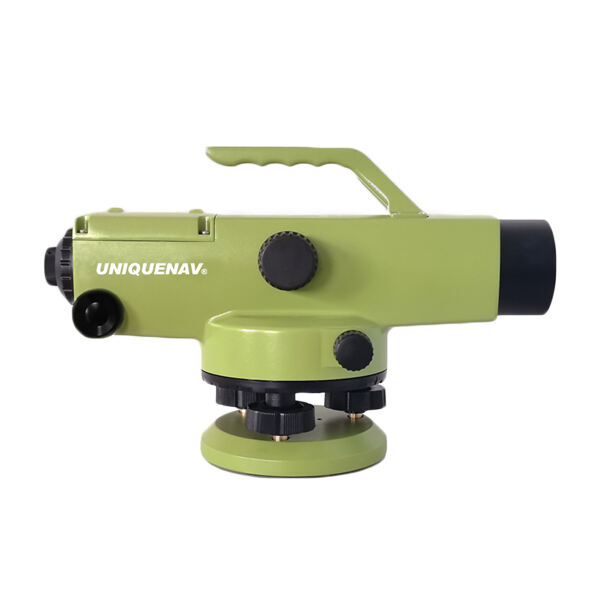
Choosing the right auto level for your project can directly affect the accuracy, efficiency, and outcome of your surveying or construction work. An auto level is a precise optical instrument that uses an internal compensator to maintain a horizontal line of sight automatically, making it far more reliable and faster to use than traditional manual leveling tools. Whether you are working on a large-scale civil engineering site or a smaller landscaping assignment, understanding how to evaluate and select the right auto level is essential before making any purchase decision.
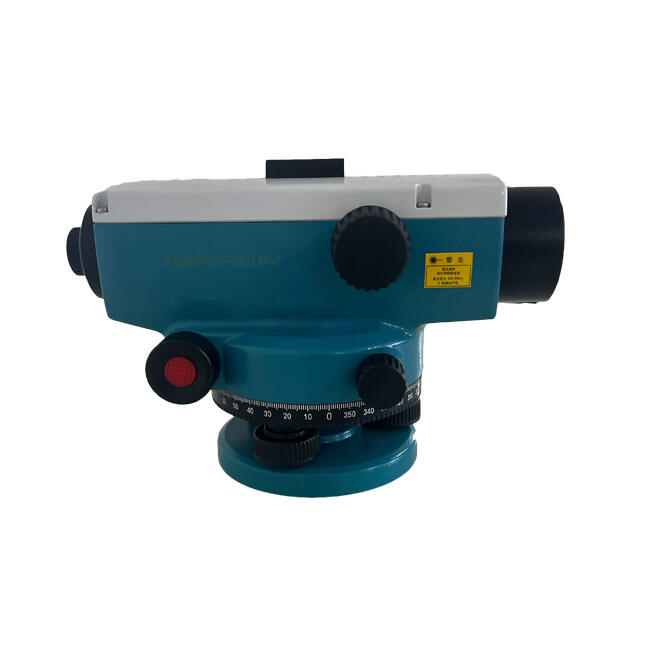
The market for the auto level has grown significantly, with many models offering different magnification ranges, compensation accuracies, and durability ratings. Selecting the wrong auto level not only wastes budget but also risks introducing measurement errors that compound over the course of a project. This guide walks through the most critical selection criteria, so you can confidently match the right auto level to the exact demands of your work environment.
Understanding Auto Level Specifications
Magnification and Objective Lens
One of the first specifications to examine when selecting an auto level is the telescope magnification. Most professional-grade auto level models offer magnification between 24x and 32x. Higher magnification allows the operator to read staff measurements from greater distances with greater clarity. For projects covering long sight distances, such as road alignment or large foundation layouts, choosing an auto level with at least 28x magnification is strongly recommended. A larger objective lens diameter also improves light transmission, which is especially valuable when working in low-light conditions or under dense tree cover.
Compensator Range and Accuracy
The internal compensator is the defining feature of an auto level, and its performance range matters greatly. A compensator in an auto level typically works within a leveling range of plus or minus 15 arcminutes. If the instrument is set up on uneven ground and exceeds this range, the compensator cannot self-correct and readings will be unreliable. Always check the compensator accuracy specification, usually expressed in standard deviation per kilometer of double-run leveling. For precision construction work, select an auto level with a standard deviation of 1.5mm per kilometer or better. For general site leveling tasks, an auto level with 2.0mm to 3.0mm standard deviation is usually sufficient.
Matching Auto Level Features to Project Type
Construction and Civil Engineering Projects
In heavy construction environments, an auto level must withstand dust, moisture, and mechanical vibration. When selecting an auto level for this context, prioritize models with a waterproof and dustproof housing rating. An auto level used on a construction site will often be transported and repositioned multiple times a day, so a robust protective casing and shock-resistant body are important practical considerations. Look for an auto level that includes a stable tribrach base and a wide horizontal circle for rough orientation, as these features speed up setup considerably on busy job sites.
Construction-grade auto level models also tend to feature a larger field of view and a fast-focus eyepiece, which reduces operator fatigue during long working sessions. When multiple crew members share the same auto level throughout a project, ease-of-use features like a simple reticle design and smooth focusing ring become meaningful productivity factors.
Surveying and Topographic Mapping
For topographic surveys or precise benchmarking, the accuracy demands on an auto level are higher. In these applications, selecting an auto level with a fine horizontal tangent screw and a high-quality reticle with stadia lines is important. A surveying auto level should deliver consistent readings across varying temperature conditions, so thermal stability of the optical path is worth checking in the product specifications. Some auto level designs also incorporate a coincidence bubble system for refined setup, reducing setup error and improving repeatability across multiple instrument stations.
Practical Factors in Auto Level Selection
Ease of Calibration and Maintenance
Even the most accurate auto level will drift out of calibration with regular use. When selecting an auto level, consider how straightforward the collimation adjustment process is. An auto level that allows field collimation without specialized tools gives the survey team more control over instrument performance between service intervals. Simple two-screw or four-screw diaphragm adjustment systems on an auto level are preferred by field operators who need to verify and correct line-of-sight errors quickly. Always check whether the manufacturer provides a clear adjustment guide with the auto level unit.
Tripod Compatibility and Accessories
An auto level does not work in isolation. The quality of the tripod paired with an auto level significantly affects reading stability, especially on soft or uneven ground. When selecting an auto level, confirm that it uses a standard 5/8-inch tribrach thread, which ensures compatibility with a wide range of aluminum or wooden tripods. The auto level package should ideally include a carrying case, lens cap, and a sun shade for the objective lens. A sun shade reduces glare and heat shimmer when using an auto level in direct sunlight, which is a common cause of degraded reading accuracy on open sites.
Battery-free operation is one of the key advantages of an optical auto level over electronic alternatives. An auto level relies entirely on its optical and mechanical components, which means it can function reliably in remote locations without access to charging infrastructure. For long-duration field projects or work in regions with unreliable power supply, this practical advantage of the optical auto level should factor into your selection decision.
FAQ
What is the typical working range of an auto level?
Most standard auto level models are designed for sighting distances between 3 meters and 100 meters, though some high-magnification auto level instruments can deliver reliable readings up to 150 meters. The effective range depends on the telescope magnification, atmospheric conditions, and the type of leveling staff being used with the auto level.
How often should an auto level be calibrated?
An auto level should be checked for collimation error at the start of every major project and after any significant impact or transportation event. For continuous fieldwork, performing a two-peg test on the auto level at least once per week is considered good practice. Regular calibration checks ensure the auto level maintains measurement integrity throughout the project duration.
Can an auto level be used for indoor construction tasks?
Yes, an auto level can be used effectively for indoor tasks such as setting floor levels, checking ceiling heights, and aligning interior walls. When using an auto level indoors, ensure adequate lighting for clear staff reading and use a short-range staff appropriate for the working distances involved. The self-leveling compensator in the auto level functions the same way indoors, making it a reliable choice for interior finishing and fit-out work.