
 EN
EN
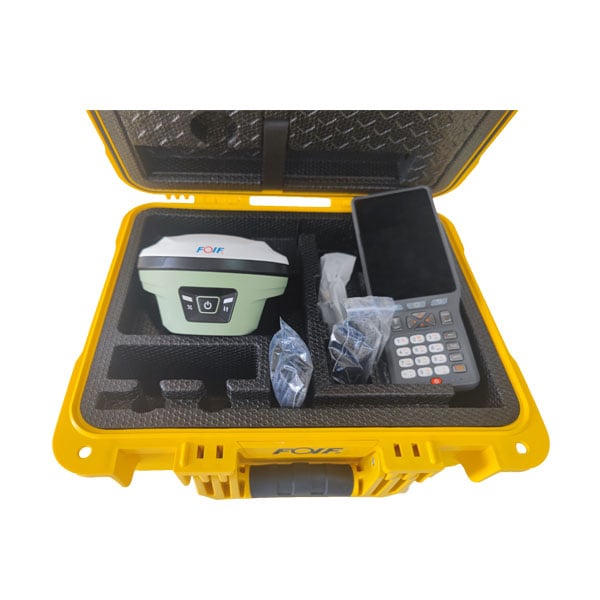
A gnss receiver depends on precise signal timing from multiple satellites to calculate accurate position, velocity, and time. When those signals arrive via indirect paths — reflected off buildings, terrain, or other surfaces — the gnss receiver processes corrupted data that degrades its overall efficiency. This phenomenon, known as multipath error, is one of the most persistent and technically complex challenges in satellite navigation today.
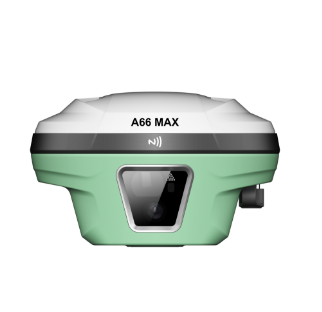
Unlike atmospheric disturbances or satellite clock errors, multipath interference originates in the immediate environment surrounding the gnss receiver. Because it is highly location-dependent, it cannot be corrected through global correction models alone. Understanding how multipath errors form, propagate through the signal chain, and ultimately affect gnss receiver efficiency is essential for engineers, surveyors, and system integrators who rely on consistent positioning performance.
The Mechanics of Multipath Signal Interference
How Reflected Signals Reach the GNSS Receiver
Satellite navigation signals travel in straight lines from orbit to the ground. In ideal conditions, the gnss receiver captures only the direct line-of-sight signal from each satellite. However, in real-world environments — urban canyons, industrial yards, coastal platforms, or even open fields near reflective structures — signals bounce off hard surfaces before arriving at the gnss receiver antenna. These reflected signals travel a longer path and arrive slightly later than the direct signal, causing the gnss receiver to miscalculate the true signal travel time.
The gnss receiver cannot easily distinguish between the direct signal and a reflected copy if both arrive within a short time window. The correlator inside the gnss receiver — the component responsible for matching incoming signals with known reference codes — registers a composite waveform instead of a clean direct signal. This composite introduces ranging errors that directly translate into position inaccuracy. The severity depends on the reflector geometry, signal frequency, and the gnss receiver's internal processing architecture.
Signal Degradation Inside the GNSS Receiver
Once a multipath-corrupted signal enters the gnss receiver's tracking loop, the damage propagates through two key subsystems: the delay lock loop and the phase lock loop. The delay lock loop in a gnss receiver controls code-phase tracking, which is the primary mechanism for pseudorange measurement. Multipath causes this loop to lock onto a biased correlation peak, introducing a pseudorange error that can range from centimeters to several meters depending on conditions. The phase lock loop, responsible for carrier-phase tracking, is similarly affected when the reflected signal has sufficient amplitude. A gnss receiver experiencing carrier-phase multipath will show elevated noise in its phase measurements, which is particularly damaging in high-precision applications such as RTK positioning or geodetic surveying.
Quantifiable Impacts on GNSS Receiver Efficiency
Positioning Accuracy Losses
The most visible consequence of multipath interference is degraded positioning accuracy in the gnss receiver output. In a clean open-sky environment, a quality gnss receiver can achieve sub-meter or even centimeter-level accuracy depending on its technology tier. Under heavy multipath conditions — such as operating near tall buildings or large metal structures — that same gnss receiver may produce errors of several meters. For applications like machine control, precision agriculture, or infrastructure survey, such deviations are operationally unacceptable. The gnss receiver appears functional because it continues to output position data, but the data itself is unreliable, making multipath errors particularly dangerous compared to a full signal outage.
Multipath also causes the gnss receiver to produce inconsistent results across short time intervals. Because reflectors change position relative to the gnss receiver as satellites move through the sky, multipath errors fluctuate rather than remain constant. This temporal instability makes it difficult to filter or compensate for the error in post-processing, reducing the gnss receiver's effective efficiency in dynamic applications.
Processing Load and Reacquisition Delays
Multipath places additional computational demands on the gnss receiver. When tracking loops lose lock due to severe multipath-induced phase distortion, the gnss receiver must reacquire the affected satellite signal. Reacquisition cycles consume processing resources and introduce temporary gaps in position output. In applications requiring continuous, real-time positioning — such as autonomous vehicles or marine navigation — these gaps reduce the gnss receiver's operational efficiency and reliability. Furthermore, a gnss receiver operating in a high-multipath environment may prematurely drop satellite signals from its solution, reducing the number of visible satellites and weakening the geometry used to compute position. Poor satellite geometry amplifies all existing errors within the gnss receiver solution.
Strategies to Reduce Multipath Impact on GNSS Receivers
Antenna Design and Placement
The gnss receiver antenna is the first line of defense against multipath. High-quality choke-ring antennas and ground-plane designs attenuate signals arriving from low elevation angles, which are the most common paths for reflected interference. Proper antenna placement significantly reduces multipath exposure for the gnss receiver. Mounting the gnss receiver antenna on a high, unobstructed surface, away from vertical reflectors and metallic structures, minimizes the number of reflected signals that reach the front end. Site surveys before permanent gnss receiver installations help identify local reflectors and optimize placement decisions.
Advanced Signal Processing in Modern GNSS Receivers
Modern gnss receiver designs incorporate narrow correlator spacing, multipath estimating delay lock loops, and signal quality monitoring algorithms to detect and suppress multipath-induced bias. A gnss receiver with narrow correlator architecture reduces sensitivity to delayed reflected signals by narrowing the correlation window, making the peak detection process more resistant to interference. Some gnss receiver platforms also implement signal-to-noise ratio monitoring per satellite channel, allowing the gnss receiver to assign lower weight to signals showing multipath characteristics during position computation. Combining multi-constellation support — tracking GPS, GLONASS, Galileo, and BeiDou simultaneously — allows the gnss receiver to maintain more satellite observations, which statistically dilutes the impact of any single multipath-corrupted measurement.
FAQ
What environments cause the most multipath errors for a GNSS receiver?
Urban areas with tall buildings, industrial sites with large metal structures, and environments near water bodies or reflective terrain are the most problematic for a gnss receiver. These locations create multiple signal reflection paths that the gnss receiver cannot easily separate from the direct signal, resulting in higher positioning errors.
Can software updates improve how a GNSS receiver handles multipath?
Yes. Firmware and software updates to a gnss receiver can enhance its multipath mitigation algorithms, improve tracking loop robustness, and refine signal quality monitoring. However, hardware-level improvements — such as better correlator spacing or upgraded antenna design — remain essential for significant gains in gnss receiver multipath performance.
How does multipath affect a GNSS receiver differently in static versus dynamic applications?
In static applications, a gnss receiver can average observations over time to partially reduce multipath effects, since the error pattern often repeats with satellite revisit cycles. In dynamic applications, the gnss receiver cannot rely on time-averaging, making each instantaneous measurement more vulnerable to multipath-induced error. Dynamic use cases therefore demand a gnss receiver with stronger real-time multipath rejection capabilities.