
 EN
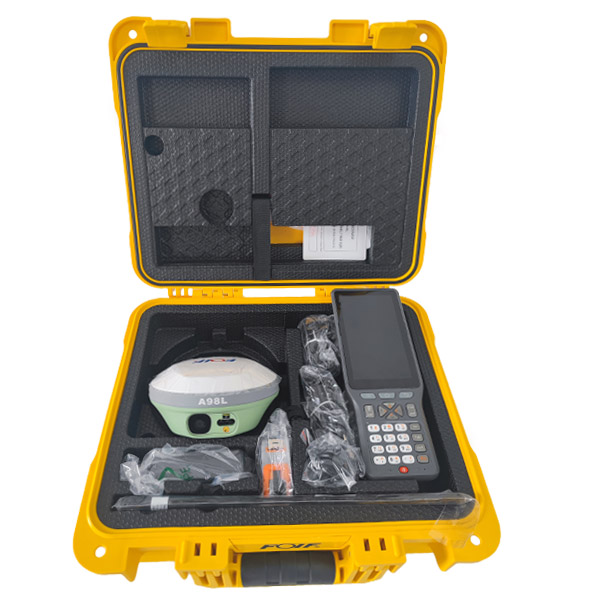
High-precision surveying depends on more than a capable receiver: the antenna must also deliver a clean, stable satellite signal. A choke ring antenna is essential to RTK work when nearby surfaces can reflect signals and introduce multipath error. Its design helps reduce those reflections before they affect positioning, supporting more dependable RTK measurements in challenging field conditions. The benefit is especially relevant when accuracy, repeatability, and confidence in collected coordinates matter to a project.
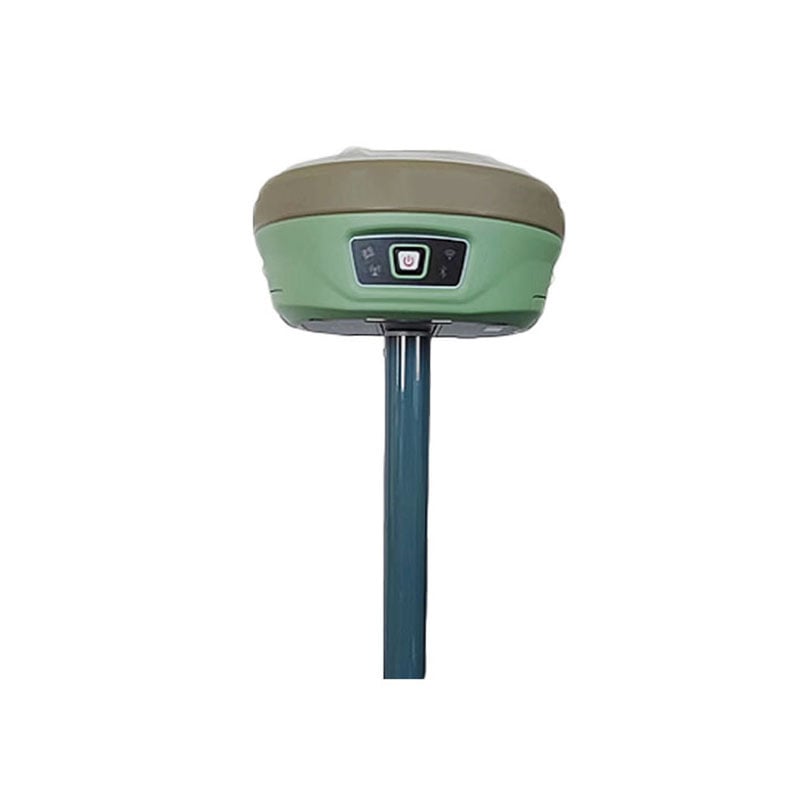
The reason comes down to signal quality at the point of reception. RTK uses satellite observations and correction data to calculate precise positions, so reflections that distort those observations can undermine the result. A choke ring antenna is designed to limit low-angle reflected signals while receiving satellite signals from above. For survey teams, that can make RTK performance more consistent around vehicles, buildings, equipment, and other reflective surroundings.
Why multipath matters in RTK surveying
Reflected signals can distort observations
Satellite signals may reach an antenna directly or after bouncing off a nearby surface. The reflected signal travels a different path, which can affect the phase and timing measurements used by RTK. When direct and reflected signals are received together, the receiver may have a harder time producing stable observations. A choke ring antenna helps address this specific source of error, making it a practical consideration for demanding RTK surveys.
The risk is not limited to obvious obstructions. Metal roofs, parked machinery, walls, fences, and even the ground can reflect signals into the antenna. In open terrain, multipath may be modest; in a compact site, the same RTK receiver can face a much more difficult signal environment. Recognizing those conditions helps survey managers decide when antenna design deserves particular attention instead of treating all RTK setups as equivalent.
Field conditions make signal control valuable
Construction and engineering surveys often take place beside structures that create reflective paths. A crew may need to collect RTK points close to a façade, near a road barrier, or around heavy equipment, where moving away from reflective objects is not always practical. A choke ring antenna can help reduce the influence of low-elevation reflections in these settings, supporting better-quality RTK observations without eliminating the need for sound field procedures.
The same issue can arise during control work, monitoring, or site layout, where repeat measurements need to agree closely. If multipath changes as equipment moves or a survey position shifts, RTK results may vary even when the operator follows the same workflow. Managing the antenna’s exposure to reflected signals can make the measurement environment more predictable. That is why a choke ring design is relevant to RTK precision, not simply a feature for specialized equipment lists.
How choke ring design supports cleaner reception
Concentric rings help suppress low-angle signals
A choke ring antenna uses concentric conductive rings around its receiving element. Their geometry is intended to reduce reception of signals arriving from low elevation angles, where ground and nearby objects commonly create reflections. Meanwhile, the antenna is designed to receive satellite signals from the sky. This directional behavior helps protect the signal quality on which RTK processing relies, although the exact performance depends on the antenna model and operating environment.
For field users, the important point is not that the rings remove every reflected signal. Rather, the design can reduce a significant pathway for multipath to enter the measurement. Cleaner observations can help RTK processing maintain a more reliable solution, especially when the site offers few options for avoiding reflective surfaces. In practice, the antenna complements the receiver and correction workflow; it does not replace either one.
Antenna setup still affects RTK results
Even a suitable choke ring antenna needs correct installation. Mount it securely, use the intended antenna reference point, and keep the pole or tribrach stable during measurement. A tilted or moving antenna can compromise RTK data regardless of its multipath-control design. Correct centering and height entry also matter, because a small setup mistake can carry directly into reported coordinates and obscure the benefit of improved signal reception.
Operators should also consider sky visibility, nearby surfaces, cable routing, and the antenna’s compatibility with the receiver and correction setup. These checks help ensure that RTK observations are supported by a well-configured system. Where possible, keep reflective objects away from the antenna and avoid placing it close to vehicles or walls. A choke ring antenna is a useful layer of signal control, but good site selection and careful setup remain essential parts of RTK work.
When the antenna choice improves survey confidence
Match the design to the site and task
A choke ring antenna is most relevant when multipath exposure is a realistic concern and the survey requires dependable positioning. Examples include dense construction sites, infrastructure corridors, monitoring locations, and control points surrounded by hard surfaces. Before choosing equipment, assess the expected satellite visibility, reflective surroundings, required repeatability, and how easily the crew can move to a clearer location. Those factors show whether the antenna’s design aligns with the RTK task.
For a wide-open site with few reflective objects, other workflow factors may have greater influence on day-to-day results. In a constrained environment, however, reducing reflected-signal effects may be especially valuable. Survey teams can review repeat observations and field notes to identify locations where RTK results fluctuate near structures or equipment. That evidence helps make an antenna decision based on actual site conditions rather than assuming every project needs the same setup.
Combine antenna design with disciplined field practice
A choke ring antenna should be part of a broader quality approach. Confirm the receiver configuration, correction source, antenna height, and pole stability, then observe the project’s required checks for repeat measurements and control. If an RTK solution becomes unstable, investigate the environment and setup rather than attributing every issue to multipath. Satellite geometry, obstruction, correction availability, and operator technique can also affect the result.
The practical value is a better chance of collecting consistent RTK data when reflected signals are present, not a guarantee of error-free coordinates. Teams should document site conditions and follow project acceptance procedures so that measurement confidence is based on evidence. When RTK precision is important and reflective surroundings cannot be avoided, a choke ring antenna offers a purposeful way to improve signal reception conditions and support reliable surveying decisions.
FAQ
Why use a choke ring antenna for RTK?
It is designed to reduce low-angle reflected signals that can contribute to multipath. This can support more stable RTK observations in reflective environments, while careful setup and verification remain necessary.
Does a choke ring antenna eliminate RTK multipath?
No. It can help suppress some reflected signals, but it cannot remove every source of multipath or correct unrelated setup and satellite-visibility issues. RTK quality still depends on the full measurement workflow.
When should a survey team consider one?
Consider it when RTK work takes place near buildings, vehicles, equipment, or other reflective surfaces and the task calls for consistent observations. Evaluate site conditions and equipment compatibility before deployment.