
 EN
EN
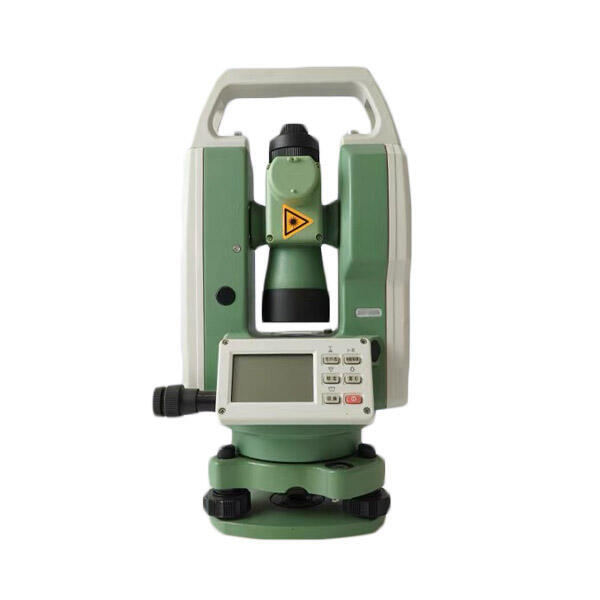
A theodolite is one of the most critical instruments in surveying, construction, and engineering applications. It measures horizontal and vertical angles with extraordinary accuracy, forming the backbone of tasks that range from land boundary determination to structural alignment. Yet the precision of a theodolite is not a permanent, self-sustaining quality — it depends heavily on a disciplined and consistent calibration regime. Without proper calibration, even the most advanced theodolite unit can introduce systematic errors that cascade through every measurement it produces.
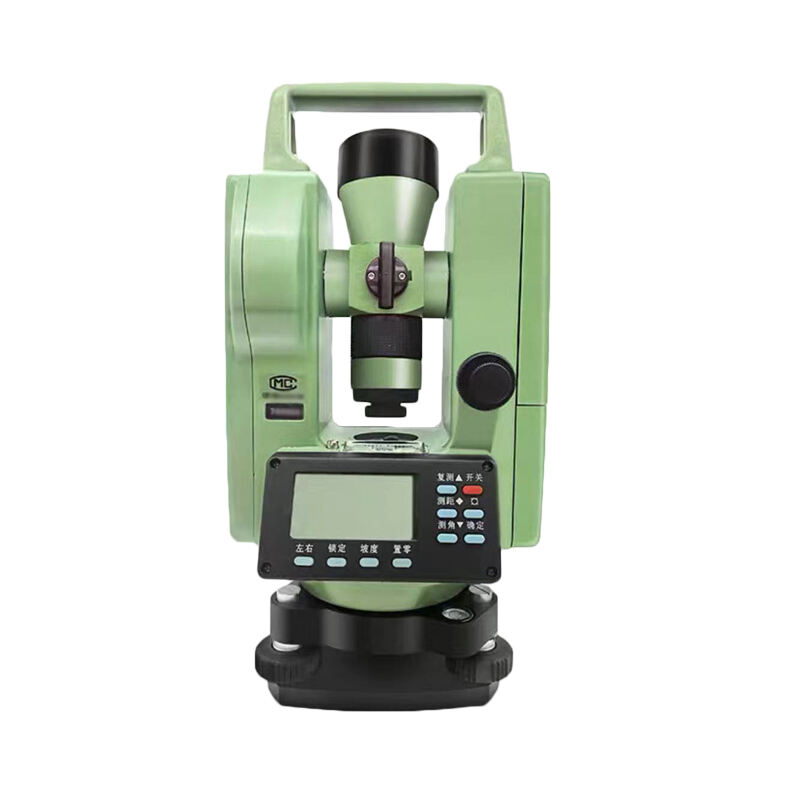
Understanding why theodolite calibration is essential requires looking at both the instrument's mechanical complexity and the downstream consequences of measurement error. When a theodolite drifts out of calibration, it does not simply reduce the quality of one reading — it introduces compounding inaccuracies that affect entire project outcomes. In industries where a few millimeters can mean the difference between structural integrity and costly rework, calibration is not optional. It is a foundational discipline that underpins everything a theodolite is trusted to do.
The Nature of Measurement Error in a Theodolite
Instrumental Errors and Their Origins
Every theodolite, regardless of its build quality, is subject to instrumental errors that can develop over time. These errors arise from physical wear, thermal expansion, mechanical shock, and even the gradual relaxation of materials under repeated use. The horizontal and vertical axes of a theodolite must maintain precise geometric relationships with one another, and any deviation from these relationships translates directly into angular measurement errors.
The most common instrumental errors include collimation error, trunnion axis error, and vertical index error. Collimation error occurs when the line of sight of the theodolite is not perpendicular to the horizontal axis. Trunnion axis error happens when the horizontal axis is not perfectly perpendicular to the vertical axis. Each of these issues, even when minor, leads to readings that appear accurate but carry hidden systematic bias.
What makes these errors particularly dangerous in professional settings is that they are not always visible to the user. A theodolite with drifted collimation can still produce readings that look internally consistent, masking the error entirely until results are cross-checked against independent measurements. This is precisely why scheduled calibration, rather than reactive correction, is the professional standard.
How Environmental Conditions Accelerate Drift
A theodolite does not exist in a laboratory vacuum — it operates in real-world conditions involving temperature swings, humidity, dust, vibration, and physical transportation. Each of these factors can accelerate the rate at which a theodolite drifts away from its calibrated state. Field instruments are especially vulnerable because they are routinely transported, set up on uneven terrain, and exposed to elements that stress their internal components.
Temperature cycling is particularly significant. When the internal components of a theodolite expand and contract repeatedly, the tight tolerances that define precise angle measurement can shift subtly. Over dozens of field deployments, these shifts accumulate into measurable errors. A theodolite used daily in a hot, dusty construction environment will drift faster than one stored carefully in a climate-controlled workshop.
Understanding this relationship between environment and instrument drift reinforces why calibration intervals should be adjusted based on usage intensity and field conditions, not simply set at fixed calendar intervals. Professionals who manage survey fleets recognize that high-use theodolite instruments demand more frequent checks and adjustment than those used intermittently in controlled settings.
Why Calibration Directly Protects Project Accuracy
The Cascading Effect of Angular Error
A single angular measurement error in a theodolite reading might seem trivial in isolation. However, angular errors are multiplicative with distance. An error of just a few arc seconds in a theodolite reading translates to a lateral displacement of several centimeters when projected over distances of several hundred meters. In large-scale infrastructure projects — tunnels, bridges, high-rise buildings — such displacements can have serious structural and safety implications.
Survey traverses and triangulation networks are particularly sensitive to this cascade effect. When a theodolite is used to establish control points across a site, each subsequent measurement builds on the accuracy of the previous one. An uncalibrated theodolite introduces a systematic bias at the very first station, and this bias propagates forward through every derived coordinate and elevation throughout the survey network.
Calibration interrupts this cascade before it begins. By verifying and correcting the instrument's geometric constants, calibration ensures that each theodolite reading starts from a known, verified baseline. This is what separates a measurement from a guess — and in engineering, that distinction is everything.
Meeting Contractual and Regulatory Standards
In many jurisdictions and industries, the use of a calibrated theodolite is not just good practice — it is a contractual and regulatory requirement. Standards bodies and professional surveying associations around the world mandate that instruments used in certified surveys carry current calibration documentation. Failing to maintain this documentation can invalidate survey results, trigger liability claims, and cause costly project delays.
Construction projects governed by international quality frameworks such as ISO 9001 or industry-specific codes require that all measuring instruments, including the theodolite, be traceable to national or international measurement standards. This traceability is only achievable through formal calibration procedures conducted by qualified technicians using reference instruments of known accuracy.
Beyond compliance, calibration records serve as a defense mechanism. If a project's measurements are challenged legally or technically, a complete calibration history for the theodolite used demonstrates due diligence and protects the survey professional from accusations of negligence. Calibration, in this sense, is as much a legal safeguard as it is a technical one.
Key Components of a Proper Theodolite Calibration Process
Axis and Collimation Checks
A thorough theodolite calibration begins with verifying the fundamental geometric relationships within the instrument. The first step is checking and adjusting the plate bubble or electronic leveling compensator to confirm the vertical axis is truly vertical. This is the foundation of all subsequent angle measurements, and any error here contaminates every other value the theodolite produces.
Collimation adjustment involves sighting a distant target in both face-left and face-right positions and comparing the resulting readings. A perfectly collimated theodolite will show no difference between the two face readings. Any discrepancy indicates that the line of sight is not perpendicular to the trunnion axis, and the instrument must be mechanically or optically adjusted to eliminate this offset.
Trunnion axis verification follows a similar principle. Sighting a steeply inclined target from both faces reveals whether the horizontal axis of the theodolite tilts relative to true level. Correcting this error is critical for any application involving steep angles, such as the theodolite work done during tall building construction or hillside surveys.
Verification Against Reference Standards
Beyond internal geometric checks, a complete calibration of a theodolite also involves verification against external reference standards. This typically means measuring known angular benchmarks — precisely established reference directions — and confirming that the theodolite's readings fall within the manufacturer's specified tolerance. If they do not, the instrument requires adjustment before returning to service.
Professional calibration laboratories use reference collimators, angle decoders, and laser-based systems to evaluate theodolite performance at multiple points across its angular range. This full-range evaluation is important because some instruments may perform accurately at certain angles but exhibit errors at the extremes of their range. A calibration that only checks a single reference angle may miss these zone-specific errors.
After calibration is complete, the results are documented in a calibration certificate that records the instrument's serial number, test conditions, measured errors, adjustments made, and the date of next recommended calibration. This document becomes a permanent part of the theodolite's instrument record and is typically required for quality audits on regulated construction and engineering projects.
Practical Consequences of Skipping Calibration
Rework Costs and Project Delays
The financial consequences of deploying an uncalibrated theodolite can far exceed the cost of the calibration itself. When angular errors are discovered late in a project, they often require the re-measurement of large areas, the adjustment of as-built structures, or in the worst cases, the demolition and reconstruction of elements that were built to incorrectly positioned control lines. These rework scenarios are not hypothetical — they occur regularly on projects where instrument maintenance is deprioritized under schedule pressure.
A single session of theodolite calibration typically takes a few hours and costs a fraction of the daily operating cost of a construction project. By contrast, rework triggered by accumulated measurement error can cost days or weeks of lost progress, significant material waste, and damage to the project's contractual relationships. The return on investment for regular calibration is, by any measure, strongly positive.
Project managers who understand this dynamic build instrument calibration into their quality management plans from the outset. They treat the theodolite not as a passive tool but as a critical piece of measurement infrastructure that requires active maintenance to perform its role reliably.
Reputational Risk for Survey Professionals
For surveying and engineering firms, the accuracy of their measurements is their professional reputation. A firm that delivers survey data produced by an uncalibrated theodolite risks more than a single project error — it risks the trust of its clients, the validity of its professional certifications, and in some cases, its licensing status. Survey professionals who operate without proper calibration protocols expose themselves to professional liability claims that can be difficult to defend.
In competitive markets, clients increasingly ask for proof of instrument calibration as part of their vendor qualification process. A survey firm that cannot produce current calibration certificates for its theodolite fleet may find itself disqualified from tendering on high-value projects. Calibration, therefore, is not just a technical issue — it is a business qualification requirement in the modern survey and construction sector.
Building a culture of calibration discipline within a survey organization also has internal benefits. When technicians know that their instruments are properly maintained, they work with greater confidence, make better decisions in the field, and are less likely to question whether an anomalous reading is caused by an instrument fault or a genuine site condition. A calibrated theodolite gives its operator a reliable reference point for professional judgment.
FAQ
How often should a theodolite be calibrated?
The appropriate calibration interval for a theodolite depends on its frequency of use, the harshness of its operating environment, and the accuracy requirements of the projects it supports. As a general rule, instruments used daily in demanding field conditions should be calibrated every three to six months. Instruments used less frequently or in controlled environments may be calibrated annually. Any theodolite that has been dropped, subjected to significant temperature shock, or produced suspicious readings should be calibrated immediately, regardless of schedule.
Can a theodolite be calibrated in the field?
Some basic adjustment checks — such as plate bubble leveling and preliminary collimation checks using the face-left and face-right method — can be performed in the field by an experienced operator. However, a full calibration that provides traceable certification requires laboratory conditions and reference standards that are not available in field environments. Field checks are useful for detecting obvious problems and making minor adjustments, but they do not replace formal laboratory calibration for compliance or certification purposes.
What are the signs that a theodolite needs calibration?
Common indicators that a theodolite may have drifted out of calibration include inconsistent face-left and face-right readings that exceed expected tolerances, difficulty achieving a stable level, measurements that do not close properly in traverse surveys, and readings that conflict with independent check measurements. Visual inspection may also reveal physical damage, loosened components, or optical misalignment. When any of these signs are present, the theodolite should be removed from service and sent for calibration before further use.
Does calibration affect the usable lifespan of a theodolite?
Regular calibration actually extends the effective lifespan of a theodolite by identifying developing mechanical issues before they become serious failures. During calibration, technicians inspect the instrument's optics, mechanics, and electronics, catching wear and misalignment early. An instrument that receives consistent calibration and maintenance will remain fit for precision work far longer than one that is used hard and serviced only when it visibly malfunctions. Calibration is, in this way, both a quality assurance measure and a form of preventive maintenance.