
 EN
EN
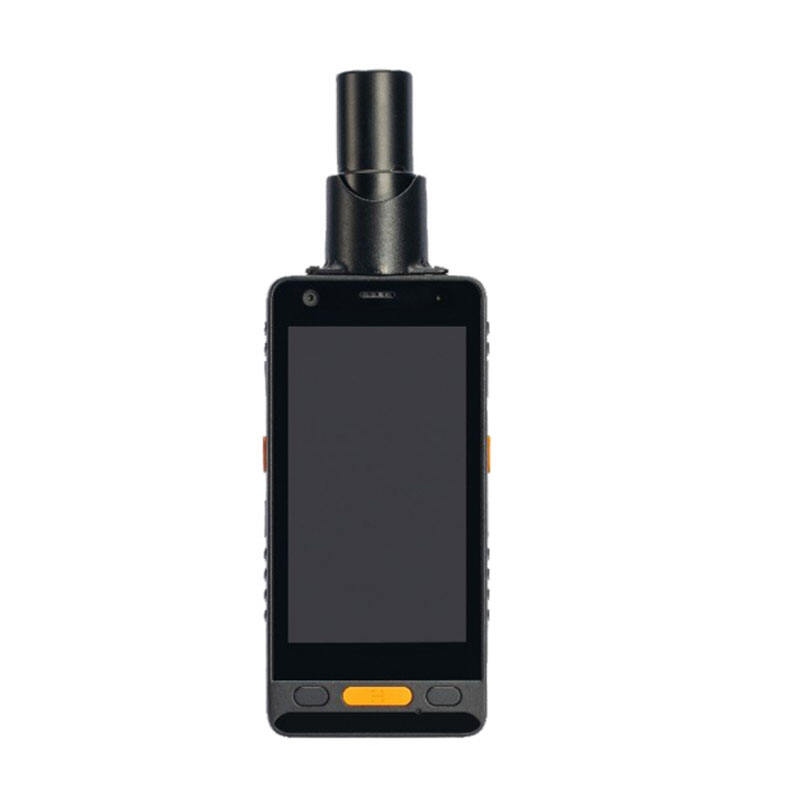
When accuracy defines the success of a mapping project, the choice of positioning technology becomes one of the most consequential decisions a surveyor or project manager can make. RTK, which stands for Real-Time Kinematic, is widely regarded as the gold standard for field-based positioning tasks. RTK delivers centimeter-level accuracy in real time, making it the preferred solution for professionals who cannot afford errors in their spatial data. Whether you are conducting topographic surveys, infrastructure planning, or land boundary work, RTK gives your team the precision foundation that every reliable map depends on.
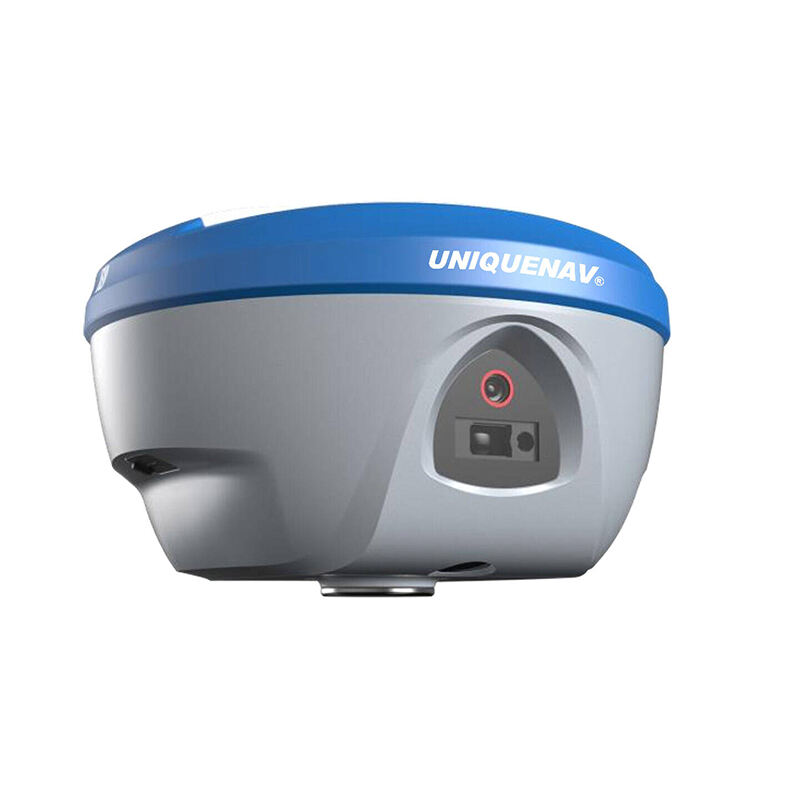
The demand for accurate geospatial data continues to grow across industries including construction, agriculture, transportation, and environmental monitoring. RTK has evolved alongside this demand, offering faster setup times, improved satellite connectivity, and more intuitive integration with modern field software. Understanding why RTK stands out among positioning technologies helps teams make smarter procurement choices and design more efficient survey workflows. This article breaks down the core reasons why RTK is the right choice for mapping projects of all scales.
The Precision Advantage RTK Provides
Centimeter-Level Accuracy in the Field
The defining strength of RTK is its ability to deliver centimeter-level positioning accuracy while the operator is actively working in the field. Traditional GNSS receivers may achieve meter-level or sub-meter accuracy, but RTK refines raw satellite signals using correction data transmitted from a fixed base station or a network correction service. This correction process happens in real time, which means every point collected with an RTK receiver reflects true ground coordinates with minimal offset. For mapping projects where boundary precision or elevation accuracy is critical, this level of performance is not a luxury — it is a requirement.
RTK achieves this by computing the difference between the known position of a reference station and the raw satellite measurements at the rover unit. The resulting corrections remove most sources of signal error, including atmospheric delay and satellite orbit drift. When RTK locks onto a fixed solution, position errors are typically within one to two centimeters horizontally. This makes RTK uniquely reliable for high-stakes mapping environments where re-surveys are costly and errors have downstream consequences.
Reliable Performance Across Diverse Terrain
Modern RTK systems are engineered to maintain strong positioning performance across a wide range of terrain types. From open agricultural land to complex urban environments, RTK receivers now support multi-constellation GNSS signals, including GPS, GLONASS, BeiDou, and Galileo. This multi-frequency RTK capability shortens initialization time and reduces the chance of losing a fixed solution due to signal obstruction. Survey teams working in challenging environments benefit from RTK's ability to reacquire fixed solutions quickly after signal interruptions, keeping data collection moving without lengthy delays.
Operational Efficiency Gained with RTK
Faster Data Collection and Reduced Field Time
One of the most compelling operational reasons to choose RTK for mapping projects is the significant reduction in field time it enables. Because RTK processes corrections and outputs accurate coordinates instantly, there is no need to return to the office for post-processing before understanding whether data quality meets project standards. Surveyors using RTK can confirm point quality on-site, identify gaps in coverage before leaving, and collect data at a pace that traditional static GNSS methods cannot match. This real-time feedback loop is especially valuable on large-scale mapping projects where multiple site visits represent major cost increases.
RTK also simplifies crew requirements on many projects. A single RTK rover operator can cover ground efficiently with a streamlined workflow, whereas methods requiring post-processing may demand additional quality control steps and office personnel. By compressing the data collection and validation cycle, RTK directly reduces project overhead and accelerates delivery timelines for mapping clients.
Seamless Integration with UAV and Total Station Workflows
RTK is no longer limited to handheld rover setups. Modern RTK modules are now embedded into UAV platforms, enabling drone-based mapping to achieve ground-control-point-free accuracy. This RTK-enabled UAV workflow dramatically reduces preparation time for aerial surveys and delivers orthomosaic and point cloud outputs with centimeter-grade positional accuracy. Additionally, RTK can serve as a control network source when integrating with total stations or laser scanning instruments, creating a unified spatial reference across multiple data collection methods. The versatility of RTK across instrument types makes it a natural anchor technology for complex, multi-phase mapping projects.
Why RTK Reduces Long-Term Project Risk
Real-Time Quality Control and Error Prevention
Mapping projects that rely on post-processed positioning methods carry a hidden risk: errors may not be discovered until the data reaches the office. With RTK, quality indicators such as solution status, dilution of precision values, and satellite count are all visible to the operator in real time. This transparency allows immediate corrective action when conditions degrade. An RTK operator who notices a floating solution or an insufficient satellite constellation can pause collection, reposition, or wait for better conditions before recording critical points. This in-field quality assurance is one of RTK's most underappreciated advantages.
The cost of reoccupying a remote or difficult-to-access survey site due to data quality failures can be substantial. RTK reduces this risk by giving operators the tools to verify data integrity before leaving the field. For clients who depend on accurate deliverables to make infrastructure or investment decisions, the confidence that RTK provides is a measurable part of its value proposition.
Scalable RTK Solutions for Varied Project Budgets
RTK technology has become increasingly accessible across project budget levels. Network RTK services, where correction data is delivered via cellular connection from a continuously operating reference station network, eliminate the need to deploy a dedicated base station for every project. This reduces equipment overhead while maintaining the full accuracy benefit of RTK. For teams managing multiple simultaneous survey projects, network RTK enables broader geographic coverage with fewer hardware assets. Whether a team is equipping a single rover or building out a fleet-level RTK deployment, scalable options exist to match operational needs without sacrificing positioning performance.
FAQ
What makes RTK more accurate than standard GNSS for mapping?
RTK applies real-time differential corrections to raw satellite signals, removing errors caused by atmospheric conditions and satellite geometry. Standard GNSS receivers do not receive these corrections, which limits their accuracy to meter-level results. RTK consistently achieves centimeter-level horizontal accuracy, which is essential for professional mapping deliverables.
Can RTK be used effectively in areas with limited sky visibility?
RTK performance is strongest in open-sky conditions, but modern multi-constellation RTK receivers handle partially obstructed environments much better than older single-frequency systems. Tracking GPS, GLONASS, BeiDou, and Galileo simultaneously gives RTK more signal diversity, which helps maintain or quickly recover a fixed solution when trees or structures partially block the sky.
How does network RTK differ from base-and-rover RTK setups?
In a base-and-rover RTK setup, a physical base station is placed at a known control point and transmits corrections via radio to the rover. Network RTK replaces the physical base with a subscription-based correction stream delivered over cellular internet from a regional reference station network. Both methods deliver comparable RTK accuracy, but network RTK removes the need to transport, set up, and monitor a base station in the field, which can significantly improve operational efficiency on spread-out mapping projects.