
 EN
EN
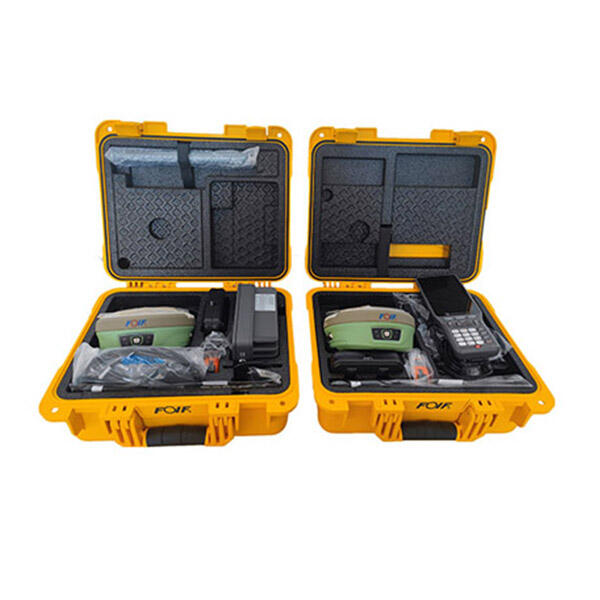
RTK technology has become a cornerstone of high-precision positioning across surveying, agriculture, construction, and mapping. When RTK performs well, it delivers centimeter-level accuracy that transforms field operations. But RTK signal performance is not constant — it is shaped by a complex mix of environmental, technical, and operational factors that every professional user must understand to get reliable results consistently.

Understanding what drives RTK signal quality allows teams to make smarter decisions in the field, reduce initialization time, and avoid costly re-surveys. This article breaks down the top factors that affect RTK signal performance, covering satellite visibility, atmospheric conditions, base station setup, multipath interference, and receiver hardware quality — each of which plays a direct and measurable role in how accurately and reliably RTK performs.
Satellite Geometry and Signal Availability
Why Satellite Geometry Matters for RTK
RTK relies on receiving signals from multiple satellites simultaneously. The geometric arrangement of those satellites in the sky — often measured by a value called PDOP (Position Dilution of Precision) — directly influences RTK positioning accuracy. A poor satellite geometry means satellites are clustered in one region of the sky, which weakens the RTK solution. A strong geometry, with satellites spread across different sky sectors, gives RTK the angular diversity it needs to resolve carrier phase ambiguities reliably.
RTK solutions typically require a minimum of five to six visible satellites for stable initialization. When RTK has access to multiple GNSS constellations — including GPS, GLONASS, BeiDou, and Galileo — signal availability improves significantly, especially in constrained environments. Multi-constellation RTK receivers lock onto more satellites and maintain RTK fix status under conditions that would cause single-constellation RTK to lose its solution entirely.
Sky Obstructions and Signal Blockage
Trees, buildings, terrain features, and overhead structures can block satellite signals, reducing the number of RTK observations available at any moment. When RTK receivers operate near tall structures or under dense tree canopy, satellite count drops and signal strength weakens. RTK fix is harder to achieve and easier to lose in these environments. Open-sky conditions consistently produce the fastest RTK initialization times and the most stable centimeter-level results.
Atmospheric and Environmental Interference
Ionospheric Effects on RTK Accuracy
The ionosphere introduces signal delays that directly affect RTK carrier phase measurements. During periods of high solar activity or geomagnetic disturbances, ionospheric gradients become large and variable, making it harder for RTK algorithms to resolve ambiguities correctly. RTK performance degrades noticeably during ionospheric storms. Dual-frequency RTK receivers significantly reduce this issue by using two signal frequencies to model and correct ionospheric delay in real time, giving RTK a clear accuracy advantage over single-frequency solutions in challenging atmospheric conditions.
Tropospheric moisture and temperature gradients also introduce RTK signal delays, particularly at low satellite elevation angles. RTK receivers apply tropospheric models to compensate, but residual errors remain larger when humidity is high or weather conditions change rapidly. Avoiding low-elevation satellites in the RTK processing mask helps minimize tropospheric impact on RTK fix quality.
Multipath Interference and Signal Reflection
Multipath is one of the most disruptive factors for RTK in real-world deployments. It occurs when satellite signals bounce off reflective surfaces — metal structures, water bodies, glass facades, or paved surfaces — before reaching the RTK antenna. These reflected signals create phase measurement errors that RTK algorithms interpret as positioning noise. RTK antennas with ground planes, choke rings, or anti-multipath designs help reject reflected signals. Positioning the RTK base station and rover away from highly reflective surfaces reduces multipath impact and improves RTK positioning consistency.
Base Station Setup and Data Link Quality
Base Station Placement for RTK Networks
The RTK base station is the reference anchor for the entire RTK correction workflow. A poorly placed RTK base station — one near tall buildings, under tree cover, or on unstable ground — introduces systematic errors that propagate directly into the rover's RTK solution. RTK base stations should be placed on stable, open ground with a clear view of the sky above 15 degrees in all directions. When using a network RTK service, the quality and density of the reference station network determines how well RTK corrections match the local atmospheric environment at the rover's location.
Baseline length — the distance between the RTK base station and rover — affects RTK performance significantly. As the RTK baseline extends beyond 10 to 20 kilometers, the atmospheric conditions at the base and rover locations begin to diverge, weakening the RTK correction accuracy. For long-baseline RTK work, network RTK corrections generated from multiple reference stations produce more reliable RTK fix solutions than single-base RTK over extended distances.
Data Link Reliability and Latency
RTK requires a continuous, low-latency communication link to transmit correction data from the base to the rover. Whether using radio, cellular, or Wi-Fi data links, interruptions in RTK correction data cause the rover to lose RTK fix and fall back to lower accuracy modes. RTK correction latency above a few seconds degrades the accuracy of the RTK position solution, especially for moving platforms. A robust, low-latency data link is as important as GNSS signal quality for maintaining stable RTK fix in demanding field conditions.
FAQ
What is the most common reason RTK loses its fixed solution?
The most common reason RTK loses fixed solution is a combination of signal obstruction and multipath interference. When trees, buildings, or other structures block satellite signals, RTK cannot maintain the minimum satellite count needed for ambiguity resolution. Multipath from reflective surfaces adds noise to RTK carrier phase measurements, causing the RTK solution to drop from fixed to float or single mode. Improving antenna placement and sky visibility typically restores RTK fix faster.
How does baseline distance affect RTK accuracy?
As the distance between the RTK base station and rover increases, atmospheric differences between the two locations grow larger. The RTK corrections sent by the base become less representative of the atmospheric conditions at the rover, weakening RTK ambiguity resolution and expanding RTK position error. Keeping RTK baselines short — ideally under 10 kilometers for single-base RTK — or using network RTK with dense reference stations helps maintain centimeter-level RTK accuracy over larger areas.
Does using dual-frequency improve RTK performance significantly?
Yes, dual-frequency RTK receivers offer a meaningful improvement in performance compared to single-frequency RTK. With two signal frequencies, RTK algorithms can directly measure and correct ionospheric delays, enabling faster ambiguity initialization and more robust RTK fix under challenging atmospheric conditions. Dual-frequency RTK also performs better in longer baseline scenarios and maintains RTK fix more reliably during periods of high ionospheric activity, making it the preferred choice for professional-grade RTK applications.