
 EN
EN
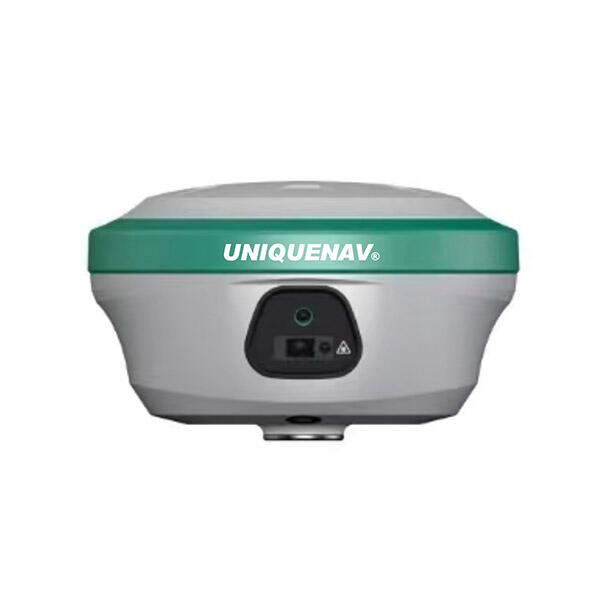
Modern surveying demands precision that traditional methods simply cannot guarantee. Whether working across large construction sites, agricultural fields, or complex infrastructure corridors, professionals need positioning solutions that deliver centimeter-level accuracy without delays. RTK, which stands for Real-Time Kinematic, has become the defining technology that addresses these demands head-on. By processing satellite signals in real time, RTK eliminates the guesswork and post-processing delays that have historically slowed surveying workflows.
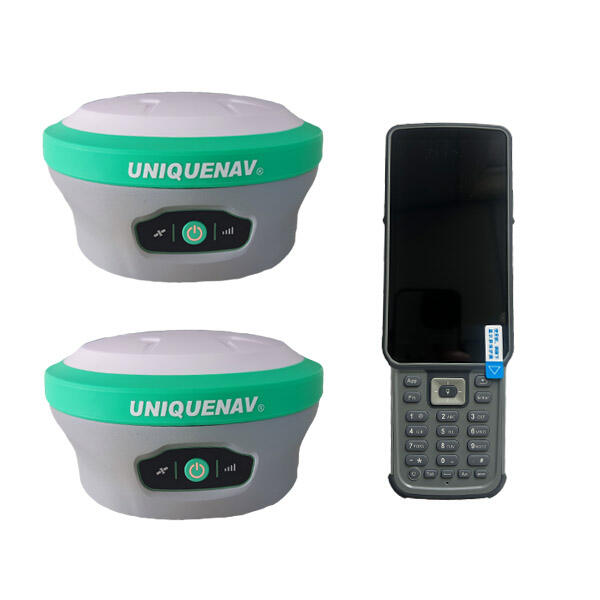
The adoption of RTK across industries has grown rapidly because it directly solves pain points that surveyors encounter daily. From managing signal interference to maintaining accuracy over vast distances, RTK provides a structured and dependable solution. Understanding how RTK works, what specific challenges it resolves, and how it reshapes field operations is essential for any team looking to modernize their surveying approach. This article explores each of those dimensions in practical detail.
The Core Mechanics Behind RTK Precision
How RTK Achieves Real-Time Accuracy
RTK works by pairing a base station with a rover unit. The base station, positioned at a known reference point, continuously receives GNSS satellite signals and calculates any errors in those signals caused by atmospheric distortion or satellite orbit deviation. It then transmits correction data to the rover in real time. The rover applies these corrections instantly, achieving positional accuracy within one to two centimeters. This RTK correction loop happens continuously, ensuring that every measurement the rover captures is already corrected before it is recorded.
This real-time correction mechanism is what separates RTK from conventional GNSS methods. Standard GNSS can have errors ranging from several meters to tens of meters depending on conditions. RTK reduces that error margin to a fraction of what was previously acceptable. For surveying professionals, this means that RTK delivers reliable data that does not require extensive post-processing validation, saving both time and computational resources in the field.
RTK Signal Architecture and Data Flow
RTK systems rely on a communication link between the base and the rover, typically through UHF radio, cellular networks, or internet-based RTK network services. When RTK operates over a network, it accesses correction data from a cluster of reference stations rather than a single base. This network RTK approach extends coverage range and maintains accuracy even in challenging terrain where a single base station might struggle to maintain line of sight. RTK network integration makes the technology scalable for large-area projects where portability matters.
Specific Surveying Challenges RTK Resolves
Eliminating Post-Processing Bottlenecks
One of the most persistent challenges in traditional surveying has been the gap between data collection and usable results. Conventional GNSS methods require raw data to be processed in the office before coordinates are confirmed, which can delay project timelines by hours or days. RTK eliminates this bottleneck entirely. Because RTK provides corrected coordinates in the field as measurements are taken, teams can verify accuracy on-site and make immediate decisions based on confirmed data. This RTK-driven efficiency reduces rework cycles and keeps project schedules intact.
RTK also reduces human error associated with manual post-processing steps. When corrections are applied automatically in real time, the risk of processing mistakes is minimized. Teams relying on RTK can trust the data they collect without needing to cross-check against post-processed outputs, streamlining quality control significantly.
Handling Dynamic and Remote Environments
Surveying does not always take place in ideal conditions. Remote construction zones, open farmland, coastal areas, and sloped terrain all introduce environmental challenges that degrade positioning accuracy in non-RTK systems. RTK handles these environments more effectively because its correction mechanism actively compensates for signal delays introduced by the ionosphere and troposphere. In dynamic environments where conditions shift rapidly, RTK maintains accuracy by continuously updating its error model rather than relying on a static assumption of signal quality.
For agricultural and drone-based surveying applications, RTK enables precise georeferencing of captured images and sensor data. Drones equipped with RTK modules can map large areas with consistent ground control accuracy, reducing or eliminating the need for manual ground control points. This RTK integration with aerial platforms has transformed land mapping workflows, cutting mission setup time and improving output reliability across wide-area surveys.
RTK Integration in Modern Surveying Workflows
Compatibility With Survey-Grade Instruments
Today's RTK systems are designed to integrate with a wide range of surveying instruments, including total stations, laser scanners, and drone platforms. The RTK modules embedded in modern devices communicate with onboard data collectors and field software, creating a seamless flow from measurement to digital output. RTK-compatible instruments allow surveyors to switch between measurement modes without interrupting field operations, increasing productivity across mixed-task assignments.
RTK also supports stakeout operations, where surveyors must locate specific design points in the field based on pre-loaded coordinates. With RTK guiding the rover to each target position, stakeout accuracy improves significantly. The continuous RTK correction feed ensures that even as the surveyor moves across the site, positional drift does not accumulate, and each stakeout point is reached with consistent precision.
Data Reliability and Field Confidence
RTK provides surveyors with immediate quality indicators during data collection. Most RTK systems display a fix status that confirms whether the RTK solution is fully initialized and delivering centimeter-level accuracy or still converging. This transparency gives field teams confidence in their measurements and allows them to pause and reinitialize RTK if signal conditions deteriorate. Having this real-time diagnostic capability built into RTK workflows reduces the risk of collecting low-quality data without knowing it.
As surveying projects grow more complex, RTK also supports integration with geographic information systems and building information modeling platforms. Coordinates captured via RTK feed directly into these systems, supporting accurate mapping, asset management, and construction layout. RTK-sourced data meets the accuracy thresholds required by most regulatory and engineering standards, making it a trusted foundation for professional deliverables.
FAQ
What is the typical accuracy range of RTK in field surveying?
RTK typically achieves horizontal accuracy of one to two centimeters and vertical accuracy of two to three centimeters under good satellite visibility and stable correction link conditions. These RTK accuracy figures are sufficient for most engineering, construction, and cadastral surveying requirements.
Can RTK be used effectively in areas with limited satellite visibility?
RTK performance depends on receiving signals from multiple satellites simultaneously. In areas with heavy tree cover, deep valleys, or dense urban canyons, RTK may experience initialization delays or reduced fix stability. Modern RTK receivers mitigate this by tracking multiple constellations including GPS, GLONASS, Galileo, and BeiDou, improving RTK availability in partially obstructed environments.
How does network RTK differ from single-base RTK setups?
Single-base RTK uses one physical reference station transmitting corrections to a rover, which limits effective range to roughly ten to thirty kilometers. Network RTK connects to a cluster of continuously operating reference stations via cellular or internet links, providing RTK corrections over much larger areas without requiring the user to set up or manage a base station. Network RTK is preferred for regional projects where mobility and coverage range are priorities.