
 EN
EN

Construction professionals face critical decisions when selecting positioning technology for site operations, surveying tasks, and machine guidance systems. The GNSS receiver has become an essential tool across excavation, grading, paving, and structural layout activities, yet not all units deliver the performance required in demanding field environments. Understanding which technical characteristics directly impact accuracy, reliability, and productivity helps project teams avoid costly equipment mismatches and operational delays that compromise timelines and budgets.
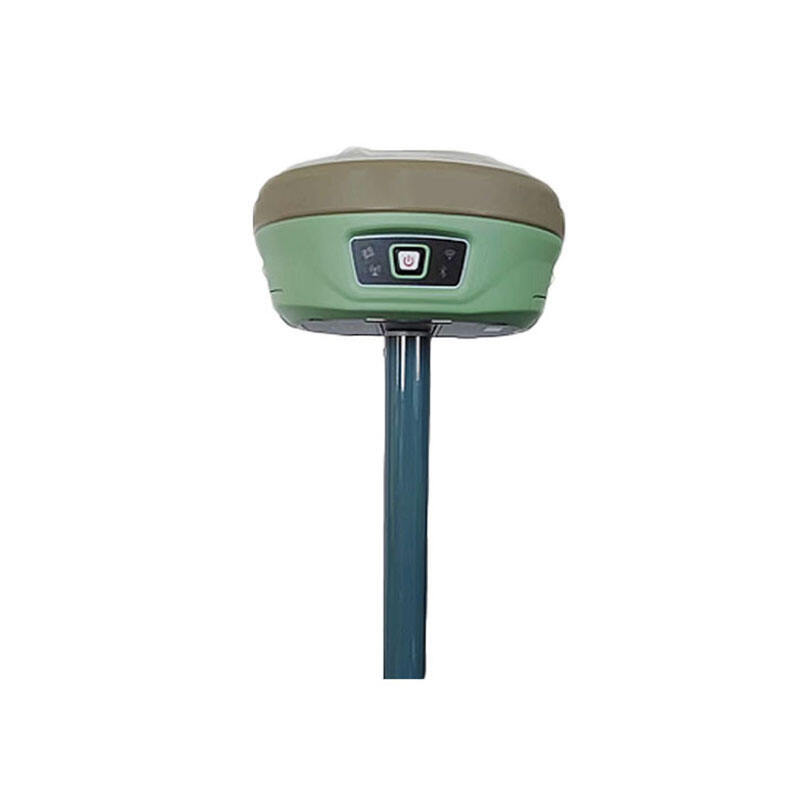
This evaluation centers on the specific functional attributes that determine whether a GNSS receiver will perform effectively in construction contexts rather than generic industrial applications. Real-world construction sites present unique challenges including heavy machinery interference, temporary obstructions, multipath signal distortion from metal structures, and the need for rapid initialization after signal loss. The features that matter most are those addressing these specific operational realities while supporting integration with total stations, design software, and equipment control systems already deployed on modern construction sites.
Signal Tracking Capability and Constellation Support
Multi-Constellation Access Requirements
Construction environments demand robust satellite visibility because buildings, terrain features, and equipment frequently obstruct portions of the sky. A GNSS receiver limited to a single satellite system faces significant vulnerability when working near structures or in urban construction zones. Modern construction-grade units must track signals from GPS, GLONASS, Galileo, and BeiDou simultaneously to maintain positioning solutions even when individual constellations experience reduced visibility. This multi-constellation capability typically increases the number of trackable satellites from twelve to thirty or more, substantially improving solution reliability.
The practical impact becomes evident during foundation work adjacent to existing buildings or roadway construction alongside elevated structures. Single-constellation receivers often lose positioning solutions or experience degraded accuracy exactly when precision matters most. Multi-constellation GNSS receiver systems maintain centimeter-level positioning by drawing from whichever satellites remain visible, regardless of constellation origin. This redundancy directly translates to continuous productivity rather than work stoppages waiting for satellite geometry to improve.
Signal frequency diversity adds another critical dimension beyond constellation quantity. Construction-focused GNSS receiver models should process L1, L2, and preferably L5 frequency bands across multiple constellations. Dual-frequency and tri-frequency capability enables the receiver to measure and correct ionospheric delays that introduce positioning errors, particularly important for projects spanning large areas where atmospheric conditions vary across the site. Single-frequency units sacrifice accuracy potential that construction tolerances increasingly cannot accommodate.
Channel Quantity and Tracking Continuity
The number of tracking channels within a GNSS receiver determines how many satellite signals it can process simultaneously. Construction applications benefit from receivers offering at least 800 channels capable of tracking all available GNSS signals and augmentation systems concurrently. Higher channel counts prevent the receiver from discarding useful signals when many satellites are visible, which commonly occurs in open construction sites during optimal conditions. This ensures the receiver utilizes all available data to compute the most accurate position solution.
Tracking continuity becomes particularly critical during dynamic construction activities where the receiver experiences constant movement, vibration, and orientation changes. Equipment-mounted GNSS receiver units on excavators, graders, and dozers must maintain signal lock despite chassis movement, engine vibration, and rapid heading changes. Advanced tracking algorithms within construction-grade receivers employ predictive filtering and adaptive signal processing to maintain lock on satellites even under these challenging kinematic conditions, preventing the repeated reinitialization delays that halt productivity.
Construction teams should specifically evaluate how quickly a GNSS receiver reacquires positioning solutions after complete signal loss, a common occurrence when equipment passes under bridges, through tunnels, or behind temporary structures. Recovery time directly impacts cycle times for earthmoving operations and surveying productivity. High-performance construction receivers achieve reinitialization within seconds rather than minutes, minimizing operational interruption.
Accuracy Specifications and Real-World Performance
Static Versus Kinematic Accuracy Distinctions
Manufacturer specifications for GNSS receiver accuracy often cite optimal static conditions that rarely reflect construction reality. Understanding the difference between static surveying accuracy and kinematic performance helps teams select appropriately. Static accuracy typically represents performance during stationary control point measurements with extended observation periods, while kinematic accuracy reflects real-time positioning during movement. Construction applications predominantly operate in kinematic mode, making those specifications more relevant than static figures.
For construction layout and machine guidance, horizontal accuracy requirements typically fall between one and three centimeters, while vertical accuracy demands may reach one centimeter for finish grading operations. A GNSS receiver meeting these thresholds must demonstrate this performance not just in open sky conditions but also with moderate obstructions, during movement, and throughout varying atmospheric conditions. Verification through independent field testing under construction-relevant conditions provides better performance indicators than laboratory specifications alone.
Precision consistency over time matters equally to absolute accuracy specifications. Construction projects span weeks or months, requiring positioning measurements to remain consistent across multiple days and sessions. A GNSS receiver exhibiting accuracy drift or inconsistency between sessions creates cumulative errors that manifest as dimensional discrepancies in completed work. Construction-grade units incorporate temperature compensation, calibration stability, and robust reference frame management to maintain measurement consistency throughout project duration.
RTK Performance and Initialization Speed
Real-time kinematic positioning forms the operational backbone of construction GNSS receiver applications, delivering centimeter accuracy through differential correction from a base station or network service. RTK initialization time the interval required to resolve carrier-phase ambiguities and establish fixed solutions directly impacts construction productivity. Modern construction receivers should achieve RTK fixed solutions within thirty seconds under normal conditions and maintain those solutions despite temporary obstructions or interference.
The ability to maintain RTK fixed status during dynamic operations separates construction-capable GNSS receiver models from survey-grade units optimized for static work. Construction equipment generates substantial vibration, experiences rapid acceleration changes, and operates in environments with intermittent signal blockage. Receivers lacking robust tracking algorithms and advanced filtering frequently drop from RTK fixed to float solutions or lose positioning entirely, requiring reinitialization that interrupts work cycles and reduces equipment utilization rates.
Baseline length capability determines how far a GNSS receiver can operate from its RTK base station while maintaining centimeter accuracy. Construction sites often span several kilometers, and topography may prevent optimal base station placement. Receivers supporting RTK baselines exceeding ten kilometers with maintained accuracy provide operational flexibility for large projects. Network RTK capability offers an alternative, connecting the receiver to correction services via cellular data, eliminating base station management but introducing subscription costs and cellular coverage dependencies.
Environmental Durability and Operational Reliability
Physical Construction and Ingress Protection
Construction sites expose GNSS receiver equipment to dust, moisture, vibration, impact, and temperature extremes that rapidly degrade consumer-grade electronics. Construction-appropriate receivers require military-specification ruggedization with ingress protection ratings of IP67 or higher, ensuring complete dust sealing and temporary water immersion survival. This protection level prevents contamination damage from concrete dust, hydraulic fluid spray, rain exposure, and accidental submersion in standing water or mud.
Housing materials and structural design must withstand repeated impacts from drops onto concrete, collisions with equipment, and exposure to sharp rebar or formwork edges. Magnesium alloy or reinforced polycarbonate housings with internal shock mounting systems protect sensitive electronics while keeping total unit weight manageable for handheld and pole-mounted applications. External antenna elements require similar protection since antenna damage immediately degrades GNSS receiver performance regardless of internal electronics condition.
Temperature operating ranges must accommodate both cold-weather concrete pours and summer asphalt operations where surface temperatures exceed forty degrees Celsius. GNSS receiver units with industrial temperature ratings from negative thirty to positive sixty degrees Celsius ensure year-round functionality across climate zones. Internal thermal management prevents performance degradation or automatic shutdowns during temperature extremes that would otherwise halt construction activities despite suitable working conditions for personnel.
Power Management and Battery Performance
Construction workdays frequently extend ten to twelve hours, demanding GNSS receiver power systems supporting full-shift operation without mid-day battery changes that interrupt productivity. Hot-swappable battery designs allow field replacement without powering down the receiver and losing RTK initialization, maintaining continuous operation across extended shifts. Minimum acceptable battery life for construction applications reaches eight hours of continuous RTK operation under typical processing loads.
Battery technology selection impacts both runtime and temperature performance. Lithium-ion batteries offer superior energy density but may require protection circuitry preventing operation in extreme cold. Construction GNSS receiver models optimized for cold climates incorporate battery heating elements or specify cold-tolerant lithium chemistries maintaining capacity below freezing. Battery charging speed also affects workflow since overnight charging between shifts represents the only practical recharging window for many construction operations.
Power consumption characteristics vary significantly across GNSS receiver models based on tracking channel quantity, processor demands, and communication module activity. Units supporting power-saving modes during periods of reduced activity extend battery life without compromising performance during active positioning. External power compatibility allows machine-mounted receivers to operate from vehicle electrical systems indefinitely, while handheld units benefit from standardized battery formats enabling spare battery logistics and field replacement part availability.
Data Communication and System Integration
Correction Data Delivery Methods
RTK and differential correction data must reach the GNSS receiver reliably and with minimal latency to maintain positioning accuracy. Construction sites employ various correction delivery methods including radio modems, cellular networks, and satellite services, each with distinct advantages and limitations. Radio-based systems provide independence from cellular infrastructure but require base station setup and line-of-sight propagation. Cellular correction services eliminate base station management but depend on network coverage that may prove unreliable in remote construction locations.
Construction-focused GNSS receiver units should support multiple correction input methods, allowing contractors to select the approach matching their specific site conditions and existing infrastructure. Internal cellular modems with multi-carrier compatibility ensure connection flexibility, while external radio ports accommodate high-power UHF transceivers for extended range applications. Support for multiple correction formats including RTCM 2, RTCM 3, and CMR ensures compatibility with various base station types and correction service providers.
Correction age latency between correction generation and application affects positioning accuracy, particularly during dynamic operations. Construction GNSS receiver systems should process corrections with latency under one second for optimal RTK performance. Higher latency introduces positioning lag that manifests as path errors during equipment operation and dimensional inaccuracies during rapid surveying traverses. Receiver specifications should explicitly state maximum acceptable correction age for maintaining rated accuracy levels.
Output Protocols and Equipment Integration
Modern construction operations integrate GNSS receiver positioning data with machine control systems, design software platforms, and project management tools. Standard output protocols including NMEA 0183, NMEA 2000, and manufacturer-specific binary formats enable this integration, but compatibility verification remains essential. Construction teams should confirm that prospective GNSS receiver models explicitly support the protocols required by their existing equipment ecosystem before procurement.
Machine control integration demands additional capabilities beyond basic positioning output. Three-dimensional machine guidance systems require the GNSS receiver to output not just position coordinates but also heading, pitch, and roll orientation data derived from dual-antenna configurations or inertial measurement unit fusion. Update rates must meet or exceed ten hertz to provide smooth machine control without perceptible lag between operator input and system response. Lower update rates create choppy control feedback that reduces operator confidence and slows production rates.
Data logging capability within the GNSS receiver enables quality documentation, as-built verification, and productivity analysis. Construction-grade units should store positioning data with associated metadata including satellite counts, solution status, accuracy estimates, and timestamps. Exportable formats compatible with common survey processing and CAD software streamline post-processing workflows. Storage capacity should accommodate multiple shifts of continuous logging without requiring frequent data downloads that interrupt field operations.
User Interface Design and Field Usability
Controller Integration and Display Requirements
GNSS receiver operation in construction environments typically occurs through dedicated controller units rather than the receiver itself. Controller selection significantly impacts field usability, with critical factors including screen readability in direct sunlight, touch interface responsiveness with gloved hands, and software intuitiveness for operators with varying technical backgrounds. Sunlight-readable displays with brightness exceeding 800 nits ensure visibility during midday operations, while resistive or glove-compatible capacitive touchscreens maintain functionality with protective gloves required on most construction sites.
Controller software should present positioning data and status information with minimal cognitive load, allowing operators to verify system health and accuracy at a glance. Large fonts, color-coded status indicators, and simplified menus reduce training requirements and minimize operational errors. Construction GNSS receiver systems benefit from controller software emphasizing essential information while relegating advanced configuration to separate technician-level interfaces, preventing accidental setting changes by field operators.
Physical controller design must withstand construction site handling including drops, vibration, and all-weather exposure matching GNSS receiver durability requirements. Integrated controllers mounted to range poles experience constant jarring during walking traverses and occasional drops on hard surfaces. Separate controllers carried in pockets or mounted on equipment face similar abuse. Construction-rated controllers incorporate protective cases, reinforced housings, and shock-absorbing designs preventing damage from routine field handling.
Workflow Efficiency and Setup Simplicity
Construction schedules demand rapid equipment deployment without extended setup procedures consuming productive time. GNSS receiver systems optimized for construction applications support simplified initialization workflows, storing site parameters and reducing daily startup to power-on and RTK connection verification. Automatic base station connection, saved coordinate system definitions, and persistent configuration settings eliminate repetitive setup steps that consume time and introduce error opportunities.
Field calibration procedures for site coordinate system establishment should follow clear step-by-step processes within controller software, guiding operators through control point occupation and transformation computation. Construction personnel may lack formal surveying education, making intuitive calibration workflows essential for accurate site setup. The GNSS receiver system should validate calibration quality and alert operators to potential issues before accepting transformations that could introduce systematic errors throughout subsequent measurements.
Troubleshooting support built into the GNSS receiver and controller software reduces downtime when issues occur. Diagnostic displays showing satellite visibility, signal quality, correction status, and connection health enable field personnel to identify problems without specialized training. Clear error messages with suggested remediation steps empower operators to resolve common issues independently rather than requiring technical support calls that delay work. Remote diagnostic capability allows technical support personnel to connect to GNSS receiver systems and verify configuration when field troubleshooting proves insufficient.
FAQ
What accuracy level do construction GNSS receivers actually need for typical projects?
Most construction applications require horizontal accuracy between one and three centimeters for layout and machine guidance work, with vertical accuracy of one to two centimeters for finish grading operations. Foundation work and structural element placement may demand higher accuracy approaching sub-centimeter levels, while rough earthwork accepts three to five centimeter tolerances. The required accuracy depends on specific project specifications rather than general construction standards, so teams should verify project requirements before selecting GNSS receiver equipment to avoid either over-specification that increases costs or under-specification that fails to meet contractual obligations.
Can construction sites use network RTK instead of setting up base stations?
Network RTK correction services provide a viable alternative to base station deployment when reliable cellular data coverage exists at the construction site and subscription costs fit project budgets. Network RTK eliminates base station setup and management while often providing broader coverage than single base stations can achieve. However, remote construction locations frequently lack adequate cellular coverage, making radio-based RTK with dedicated base stations the only reliable option. Construction GNSS receiver systems supporting both correction methods offer operational flexibility, allowing contractors to select the approach matching each specific project location and conditions.
How important is multi-constellation tracking for construction GNSS receivers?
Multi-constellation capability dramatically improves GNSS receiver performance in construction environments where buildings, equipment, and terrain frequently obstruct portions of the sky. Tracking GPS, GLONASS, Galileo, and BeiDou simultaneously typically doubles or triples the number of visible satellites compared to single-constellation receivers, substantially improving positioning reliability and accuracy. Construction sites with significant obstructions benefit most from multi-constellation receivers, while open sites with clear sky visibility show less dramatic improvements. Given minimal cost differences between modern single and multi-constellation receivers, multi-constellation support represents a practical standard for construction applications rather than an optional enhancement.
What communication features matter most in construction GNSS receivers?
Construction GNSS receiver systems require flexible correction data delivery supporting both radio and cellular methods to accommodate varying site conditions and existing infrastructure. Internal cellular modems with multi-carrier compatibility provide the most versatile solution, while external radio ports enable high-power UHF systems for extended range when needed. Equally important are standard output protocols compatible with machine control systems, design software, and project management platforms already deployed in construction operations. GNSS receiver models lacking integration capability with existing equipment ecosystems create data silos that reduce overall system value despite potentially strong positioning performance.
Table of Contents
- Signal Tracking Capability and Constellation Support
- Accuracy Specifications and Real-World Performance
- Environmental Durability and Operational Reliability
- Data Communication and System Integration
- User Interface Design and Field Usability
-
FAQ
- What accuracy level do construction GNSS receivers actually need for typical projects?
- Can construction sites use network RTK instead of setting up base stations?
- How important is multi-constellation tracking for construction GNSS receivers?
- What communication features matter most in construction GNSS receivers?