
 EN
EN
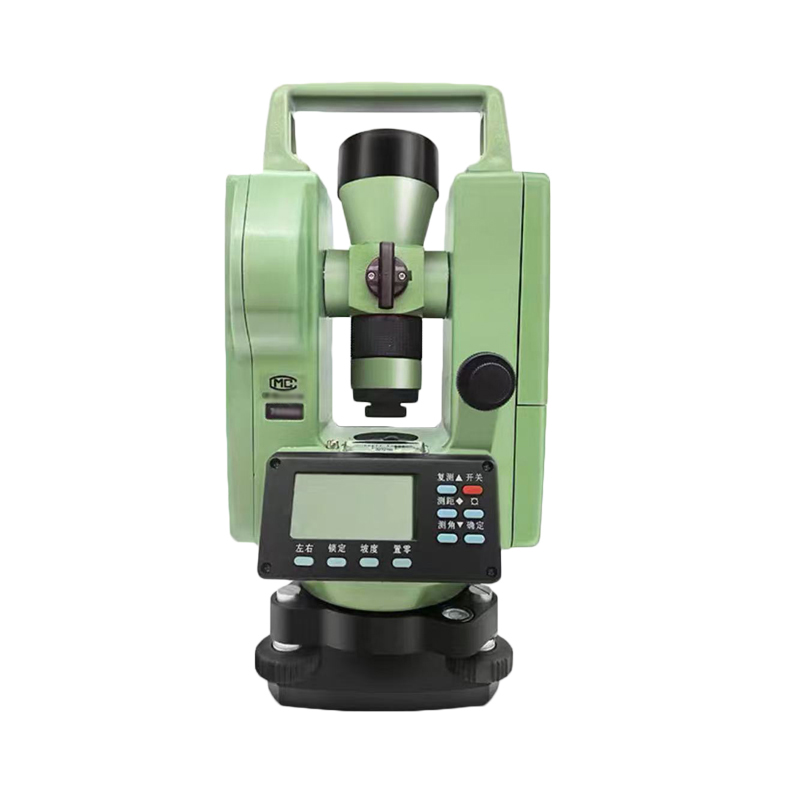
In professional surveying and construction layout, the accuracy of a theodolite can be the difference between a project that aligns perfectly and one that requires costly corrections. Whether you are measuring horizontal angles, vertical angles, or establishing reference lines across complex terrain, the precision of your theodolite readings depends on a surprising number of interdependent factors. Understanding these factors is not just academic knowledge — it directly determines whether fieldwork results can be trusted for downstream engineering decisions.
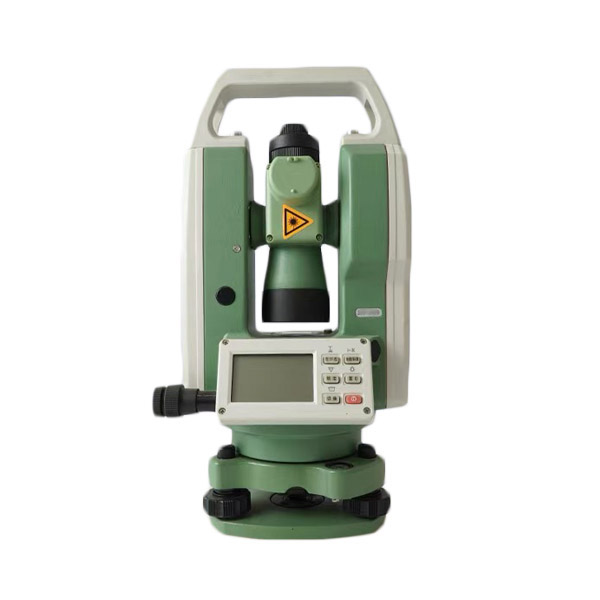
A theodolite is a precision optical or electronic instrument designed to measure angles in the horizontal and vertical planes with high repeatability. However, even the most advanced theodolite on the market will deliver unreliable results if the surrounding conditions, setup procedures, or instrument condition are not properly managed. This article examines the key factors that affect theodolite accuracy in real fieldwork environments, giving surveyors, engineers, and project managers the insight they need to achieve consistently reliable measurements.
Instrument Quality and Internal Calibration
Optical and Electronic Grade of the Instrument
The fundamental accuracy of any theodolite begins with the quality of its manufacturing and the precision of its internal components. High-grade instruments use superior optical glass, finely machined circles, and stable electronic encoders that minimize reading errors from the start. A theodolite with a lower angular resolution will inherently produce less precise measurements regardless of how carefully it is set up. When selecting a theodolite for critical fieldwork, always verify that the stated angular accuracy matches the tolerance requirements of your project.
Electronic theodolites use digital angle encoders that convert physical rotation into measurable values. The resolution and quality of these encoders determine how finely the instrument can distinguish between adjacent angle positions. Even small imperfections in the encoder disk or reading system can introduce systematic errors that accumulate over repeated measurements. Investing in a theodolite with certified factory accuracy is the first and most foundational step toward reliable fieldwork results.
Collimation and Axis Errors
Every theodolite has three principal axes: the vertical axis, the horizontal axis, and the line of sight or collimation axis. When these axes are perfectly perpendicular and properly aligned, the instrument performs as designed. However, manufacturing imperfections or physical wear can cause deviations from perfect geometry, which are known as collimation errors, trunnion axis errors, and vertical axis tilt errors.
Collimation error occurs when the line of sight is not exactly perpendicular to the horizontal axis. Trunnion axis error occurs when the horizontal axis is not exactly perpendicular to the vertical axis. Both types of errors can introduce measurable inaccuracies, especially when observing targets at steep vertical angles. The best practice to eliminate these errors is to observe targets in both the face-left and face-right positions of the theodolite and take the mean of the two readings. This technique effectively cancels out most residual axis errors and is standard practice in professional surveying.
Setup and Leveling Procedures in the Field
Precise Centering Over the Station
Even the most precisely calibrated theodolite will produce inaccurate results if it is not correctly centered over the ground mark or station point. Centering errors introduce what is called 'station eccentricity,' which directly translates into angular measurement errors that grow more significant as the distance to the target decreases. For short-range work, even a few millimeters of centering error can cause angular errors that exceed the instrument's stated accuracy.
Modern theodolite instruments are typically mounted on a tribrach with an optical or laser plummet to aid precise centering. The optical plummet should be checked and adjusted regularly to ensure that the plummet's line of sight coincides with the vertical axis of the instrument. Neglecting this check is a common source of systematic centering errors that often go unnoticed until discrepancies appear during closure checks or as-built verification.
Leveling Accuracy and Bubble Sensitivity
The vertical axis of a theodolite must be truly vertical during measurement. Any tilt of the vertical axis introduces errors in both horizontal and vertical angle readings, particularly when observing targets at high or low vertical angles. Leveling is achieved using either a plate bubble or, in more advanced models, a compensator that automatically corrects for residual tilt within a small range.
The sensitivity of the leveling bubble determines how precisely the operator can achieve a truly vertical axis. A bubble with a lower sensitivity value per division is more sensitive and allows finer leveling. However, even with a sensitive bubble, thermal expansion of the tripod legs or soft ground subsidence during a long observation session can cause the instrument to drift out of level. Checking the bubble position before and after critical angle sets is a simple but essential discipline that directly supports the overall accuracy of the theodolite.
For high-accuracy applications, many electronic theodolite instruments include a dual-axis compensator that continuously monitors tilt in both the longitudinal and transverse directions and automatically applies a mathematical correction to the displayed angle values. This feature significantly reduces leveling-related errors, especially on windy days or on slightly unstable ground surfaces.
Environmental Conditions and Their Impact
Temperature Gradients and Thermal Effects
Environmental temperature has a direct effect on the performance of a theodolite in fieldwork. Temperature gradients cause atmospheric refraction, which bends light rays and makes distant targets appear displaced from their true positions. Horizontal refraction is especially problematic in open fields where heat shimmer near the ground can cause the line of sight to curve laterally, introducing errors in horizontal angle measurements.
Thermal expansion also affects the mechanical components of the theodolite itself. Sudden temperature changes, such as taking an instrument from an air-conditioned vehicle and immediately setting it up in hot sunlight, can cause temporary distortions in the instrument's geometry until thermal equilibrium is reached. Best practice recommends allowing the theodolite to acclimatize to ambient temperature for at least fifteen to twenty minutes before beginning precise measurements.
Wind, Vibration, and Atmospheric Disturbances
Wind creates two types of problems for theodolite accuracy: it physically vibrates the instrument and tripod, and it creates pressure differences that cause atmospheric shimmer. Even moderate wind speeds can cause the crosshairs to appear to oscillate when targeting distant objects, making precise bisection difficult and introducing random errors into angle readings. In high-wind conditions, using a wind shield or positioning the instrument in a sheltered location can significantly improve reading consistency.
Vibration from nearby machinery, vehicle traffic, or pile-driving activity transmits through the ground to the tripod and into the theodolite. These vibrations cause the instrument to oscillate during reading, reducing repeatability. When working near active construction machinery, surveyors should time their observations during brief pauses in vibration-producing activity whenever possible. The quality of the tripod and its leg-locking mechanism also plays an important role — a rigid, well-maintained tripod is far less susceptible to transmitted vibrations than a worn or loosely tightened one.
Target Design and Observation Techniques
Target Size, Clarity, and Bisection Method
The accuracy of angle measurement with a theodolite depends not only on the instrument itself but also on the quality of the target being observed. A poorly defined or incorrectly sized target leads to inconsistent bisection, meaning the operator cannot reliably identify the exact center of the target across repeated readings. Target design should be matched to the distance at which it will be observed, with larger targets used at longer ranges and fine targets reserved for short-range precision work.
The bisection technique — the method by which the surveyor aligns the crosshairs with the center of the target — also affects accuracy. Approaching bisection always from the same rotational direction eliminates backlash in the horizontal drive mechanism and ensures that the reading circle is consistently loaded in the same direction. This is a subtle but important technique that experienced surveyors apply routinely when working with any theodolite at high accuracy levels.
Number of Sets and Redundant Observations
Professional surveying practice rarely relies on a single observation. Instead, multiple sets of observations are taken, with readings in both telescope positions, and the results are averaged. This approach reduces the influence of random errors and many systematic errors simultaneously. The number of sets required depends on the required accuracy and the type of project, but even for routine work, a minimum of two sets provides a meaningful check against gross errors or instrument movement during observation.
When using an electronic theodolite, the instrument often includes the ability to automatically track and average multiple pointings in real time, which simplifies the workflow while still delivering the statistical benefits of redundant observation. Building this discipline into standard field procedures is one of the most cost-effective ways to improve the overall reliability of angular measurements without requiring any additional equipment investment.
Tripod Stability and Instrument Mounting
Tripod Leg Condition and Ground Contact
The tripod is the foundation of the entire theodolite system, and its stability directly affects measurement accuracy. A tripod with worn leg friction clamps, damaged leg extensions, or loose metal shoes at the feet will introduce movement into the instrument during measurement. Each time the operator touches the instrument or the wind exerts pressure, the tripod may shift slightly, causing the theodolite to move off its centered and leveled position.
On soft ground such as sand, mud, or freshly disturbed fill, tripod legs can slowly sink during an observation session. On hard surfaces such as concrete or rock, the metal shoe tips may slip if not properly secured with the operator's foot before each observation. Taking time to firmly seat tripod legs into the ground surface and checking for stability before beginning observations is a routine discipline that protects measurement accuracy across the entire session.
Tribrach Condition and Footscrew Tightness
The tribrach connects the theodolite to the tripod head and houses the leveling footscrews and centering device. If the tribrach itself has play or wear in its base plate, the instrument may shift position when the footscrews are adjusted, making precise centering and leveling very difficult. Over time, footscrews can develop backlash due to wear, causing the instrument to move after the surveyor releases their hand.
Regular inspection and maintenance of the tribrach is an essential but often overlooked part of instrument care. The tribrach should be cleaned, lubricated as specified by the manufacturer, and checked for tightness of all moving parts at regular service intervals. A well-maintained tribrach behaves predictably and supports the accurate setup that a quality theodolite requires to deliver its full performance potential in the field.
FAQ
How often should a theodolite be calibrated to maintain fieldwork accuracy?
A theodolite should undergo formal calibration by a certified service center at least once per year under normal use conditions. However, any time the instrument is subjected to a significant impact, dropped, or transported in rough conditions, it should be checked and recalibrated before further use. In high-stakes fieldwork, surveyors should also perform field checks of collimation and two-peg tests regularly to verify that the instrument remains within tolerance between full calibrations.
Does the length of the sighting distance affect theodolite accuracy?
Yes, sighting distance affects accuracy in several ways. Atmospheric refraction increases with distance, causing the line of sight to curve and targets to appear displaced. At very long distances, target resolution decreases, making precise bisection more difficult. Centering errors at the instrument station also have less angular impact at longer distances. The practical solution is to design survey networks with observation distances that balance these competing effects while keeping atmospheric disturbance to an acceptable minimum.
Can a digital theodolite compensate for most of these accuracy factors automatically?
Modern electronic theodolite instruments include several automatic compensation features, such as dual-axis compensators, digital angle averaging, and automatic vertical index correction. These features reduce the impact of certain errors significantly compared to older optical instruments. However, they cannot compensate for poor centering, worn tribrachs, unstable tripods, extreme atmospheric conditions, or degraded target quality. Automatic compensation supplements good field practice — it does not replace it.
What is the most commonly overlooked factor affecting theodolite accuracy in construction surveys?
The most commonly overlooked factor is tripod and tribrach stability. Surveyors often focus heavily on instrument leveling and centering but neglect to verify that the tripod is firmly seated and that the tribrach has no mechanical play. In active construction environments where ground vibration and soft ground conditions are common, even a well-calibrated and correctly leveled theodolite will produce inconsistent results if the physical support system beneath it is not solid and stable.
Table of Contents
- Instrument Quality and Internal Calibration
- Setup and Leveling Procedures in the Field
- Environmental Conditions and Their Impact
- Target Design and Observation Techniques
- Tripod Stability and Instrument Mounting
-
FAQ
- How often should a theodolite be calibrated to maintain fieldwork accuracy?
- Does the length of the sighting distance affect theodolite accuracy?
- Can a digital theodolite compensate for most of these accuracy factors automatically?
- What is the most commonly overlooked factor affecting theodolite accuracy in construction surveys?